
Reviewed · OAXACA CITY TOURS
Bicycle Tour through Oaxaca learning about its Urban Art and History
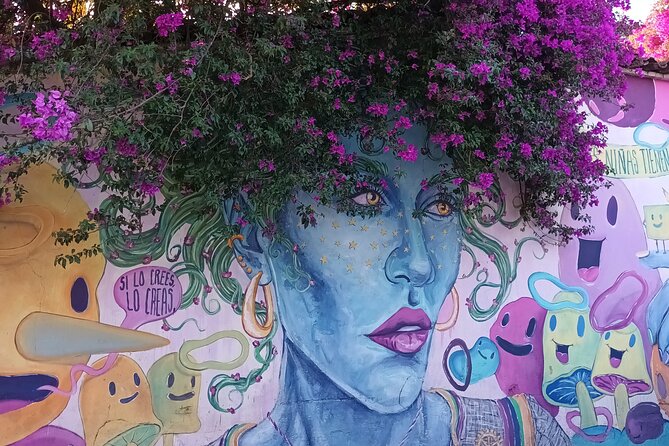
Oaxaca’s street art is not tucked away in a gallery. It spills across walls, lanes, old houses, and neighborhood corners. This small bicycle tour gives you a lively way to find it, while guide Daniel adds the stories behind the murals and the city’s past. I especially like the route through Jalatlaco and Xochimilco, two old neighborhoods where the art feels part of daily life rather than a staged attraction.
I also like the tour’s useful mix of riding and stopping. You get photographs, churches, aqueduct arches, city views, and advice on what to eat and see next. The main drawback is the riding surface: cobblestones and city traffic can be uncomfortable, and bike setup may reduce the actual riding time if the full two-hour schedule is not tightly managed.
Key points at a glance
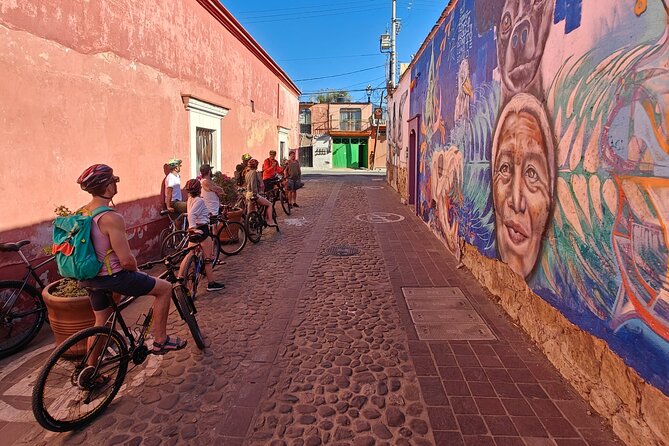
- Street art in Jalatlaco: See colorful murals tied to Day of the Dead imagery and Oaxaca’s traditional comparsas.
- Old Xochimilco: Ride past colonial aqueduct arches, old houses, and streets from one of Oaxaca’s oldest neighborhoods.
- Daniel’s local guidance: Expect English commentary on art, history, neighborhoods, and useful ideas for the rest of your stay.
- A small group of up to eight: The size makes it easier to ask questions and ride as a group.
- Cerro del Fortín option: Depending on the group’s fitness, the route may include a viewpoint over the city.
- Good value at $34.65: A bicycle, helmet, guide, and technical assistance are included, with no separate entrance fees on the route.
Why a bicycle is a smart way to see Oaxaca’s art
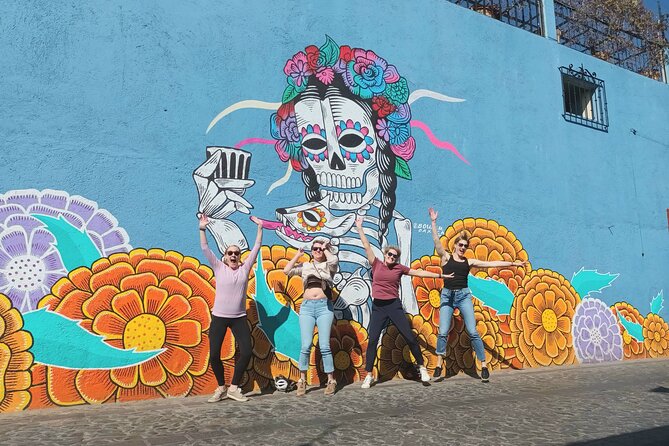
Central Oaxaca is compact enough to explore on foot, but a bicycle changes the pace. You can cover more ground than you would walking, yet still stop quickly when a painted wall catches your eye. That matters here because the route is built around streets and neighborhoods, not a single major attraction.
I like that this is not just a ride past famous buildings. The focus is urban art, and the stops give you time to look closely and take photographs. Daniel explains the city and the art in English, making this a useful choice if you want context instead of a fast circuit with names and dates only.
The tour is capped at eight people. That is a practical size for city riding. A guide can keep an eye on the group, and you have a fair chance to ask about a mural, a church, or a neighborhood you want to return to later.
The advertised duration is about two hours. Allow some flexibility at the start. One account of the ride found that bicycle setup took around 25 minutes, leaving roughly an hour and a half on the route. Another description places the ride at two hours or a little more, so the exact pace may depend on the group, stops, and bicycle fitting.
More historic sites around Oaxaca City:
- Private Historic City Tour + Street Food of Oaxaca – Best Rated
★ 5.0 · 53 reviews - Historic Downtown Walking Tour
★ 5.0 · 1,289 reviews - Historic Center Food Tour in Mexico City
★ 5.0 · 1,263 reviews
Starting near Abasolo in central Oaxaca
You meet at Bike & Roadtrips Oaxaca, at C. de Mariano Abasolo 315 in the Centro area. The activity returns to this same point, which makes it easy to combine with a stay in central Oaxaca or nearby public transportation.
Bikes are available in sizes S, M, L, and XL. Helmets and technical assistance are included. Bottled water is not, so bring your own water, particularly if you are riding in the afternoon or hoping to include the Cerro del Fortín viewpoint.
Wear clothing you can pedal in. One local-language review specifically recommends sportswear, water, and a willingness to have fun. That is sensible advice, though the route is not described as a strenuous athletic ride.
Before setting off, pay attention to the bicycle fit and ask questions about the route. A good fit makes cobblestones less tiring and helps you feel more secure in traffic. Daniel’s role is especially useful here, since several parts of Oaxaca require careful group riding rather than a carefree cruise.
Jalatlaco, where murals meet old streets
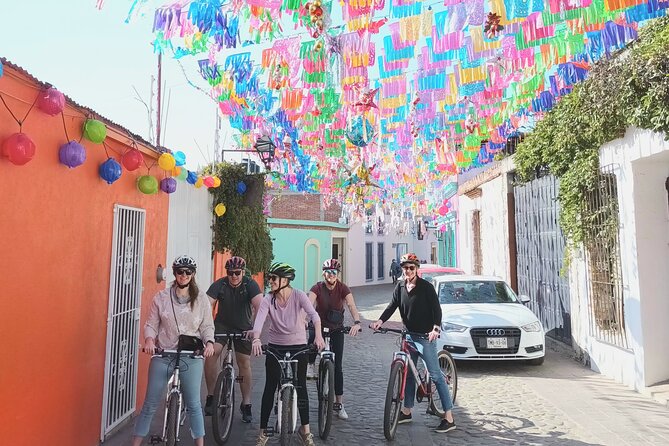
The ride begins with Oaxaca’s central sights and then moves into the old neighborhoods of Jalatlaco and Xochimilco. The first broad portion includes several stops for art and photographs, with time to notice alleys, architecture, and places used by local residents.
Jalatlaco is one of the most photogenic sections. The Templo de San Matías Jalatlaco anchors a neighborhood known for colorful walls and traditional street celebrations called comparsas. Day of the Dead themes appear often in the murals, so this is a good place to see how public art connects with Oaxaca’s festival culture.
I would not rush this part. The value is in the small details: painted doorways, narrow lanes, old facades, and the way the artwork works with the neighborhood rather than replacing it. Daniel’s explanations help you read the images and connect them to Oaxaca’s customs.
The stop at the temple lasts about 20 minutes. That is enough for a short look and photographs, but not a full architectural study or church visit. Think of it as a neighborhood introduction, not a formal religious tour.
Jalatlaco also shows why a bicycle can be useful. You can reach several lanes without making a long walk between them, and you can move on once the guide has explained the key points. The tradeoff is the street surface. Cobblestones can make the ride bumpy, and you will need to stay alert around traffic and pedestrians.
Xochimilco and the eighteenth-century aqueduct
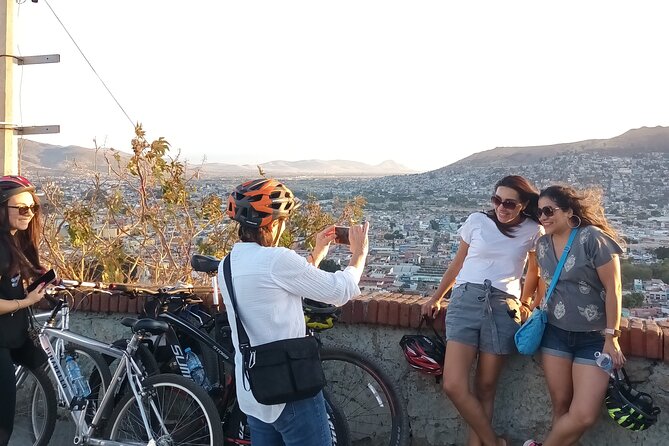
Next comes Los Arquitos de Xochimilco, a set of colonial arches connected to the San Felipe aqueduct. The aqueduct was built in the mid-eighteenth century to bring water to the population, and the arches remain one of the area’s most recognizable features.
The Xochimilco neighborhood is described as one of Oaxaca’s oldest, founded in 1486 by Xochimilca, Aztec warriors. You will see old houses, colorful streets, and older structures that give the district a different feel from the central plaza area.
This stop adds useful depth to the art theme. Murals may be the headline attraction, but the built setting gives them meaning. The aqueduct points to the practical work of an earlier city, while the painted walls show how present-day artists use the same streets as a public canvas.
You get about 20 minutes here. Bring a camera, but keep it easy to reach. The route is designed for repeated short stops, so you will take pictures in several places rather than spend one long block of time at a single site.
A few other Oaxaca City days to price up
- Hierve el Agua, Tule Tree, Mitla and Mezcal Distillery Tour
★ 4.5 · 1,094 reviews - Explore Hierve el Agua, Mitla, Tule, Textile and Mezcal for a day
★ 5.0 · 1,043 reviews - Monte Alban Guided Half Day Tour
★ 5.0 · 880 reviews - From Oaxaca de Juarez: Hierve el Agua and Mezcal Distillery
★ 4.9 · 615 reviews
Cerro del Fortín and the question of fitness
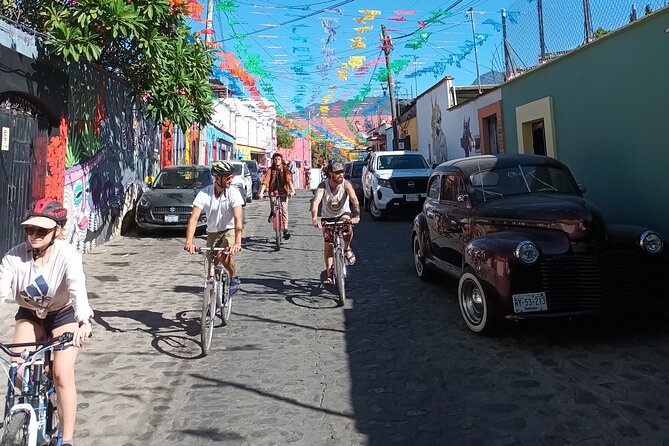
The Cerro del Fortín section depends on the physical condition of the group. If the ride includes the viewpoint, you can look across Oaxaca from the highest hill near the city center and take broad photographs of the city.
That conditional wording matters. The route does not promise the hill on every departure. If the group includes mixed fitness levels, the guide may adjust the plan. You should not book this expecting a guaranteed climb or a long hill ride.
For riders who make it up, the viewpoint adds a welcome change from street-level art. You see how Oaxaca sits around the center, and the stop can be especially appealing near sunset. The tour also passes the Oaxaca crafts house and the former home of Benito Juárez García, the Oaxacan who became one of Mexico’s best-known presidents.
The scheduled time for this portion is about 30 minutes. That includes the possible viewpoint and the nearby cultural sights. It is the most physically uncertain part of the route, so tell Daniel early if you have concerns about hills, pace, or the condition of the group.
Santo Domingo, Oaxaca’s grand architectural finish
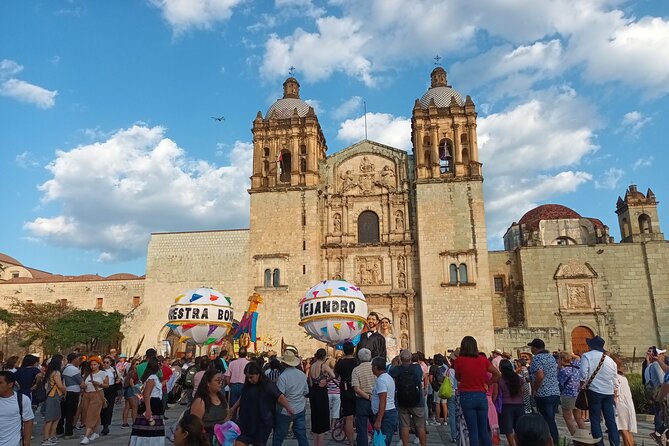
The final major stop is the Templo de Santo Domingo de Guzmán. This is one of Oaxaca’s key buildings and a strong closing point for a route that links public art with the city’s past.
The church began construction in 1570 and is known for its New Spain baroque design. The larger complex includes the former convent, the Museum of the Cultures of Oaxaca, the Ethnobotanical Garden, the Burgoa Library, and the Public Newspaper Archive.
The bicycle tour does not include admission to those institutions, and no entrance tickets are listed as part of the ride. The stop is about 20 minutes, so expect to view the exterior and learn about the complex rather than tour every museum and garden.
I like this ending because it gives the murals a wider setting. Oaxaca’s art scene is not separate from its churches, old neighborhoods, public celebrations, and political history. If you happen to see a calenda or wedding procession in the streets, Daniel may be able to explain what is happening. The city’s public life often provides the most memorable moments, though the tour cannot guarantee a celebration on your departure.
What Daniel adds to the ride
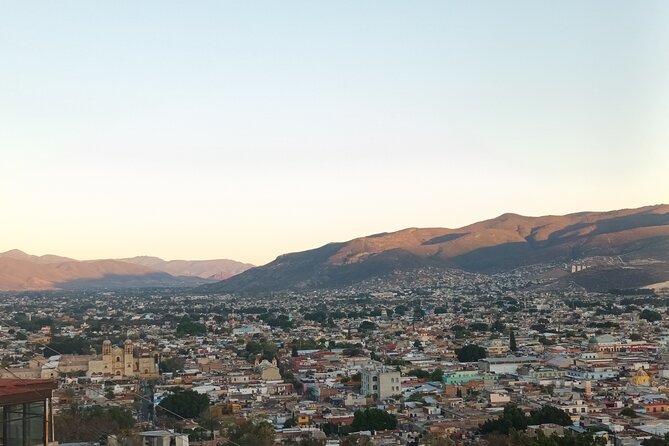
The guide makes a real difference here. Daniel is described as friendly, welcoming, and fluent in English, with a broad grasp of Oaxaca and Mexico. His work goes beyond leading the group from one stop to the next. He explains murals, points out places you might otherwise miss, and gives suggestions for food and later sightseeing.
That makes this a strong first-day activity. You get a quick orientation to several neighborhoods, then can return later on foot to spend more time in the spots you like. Several accounts also describe the ride as a good way to get the lay of the land early in a visit.
Daniel’s safety role is worth noting. Some riders felt nervous about traffic, but found that he took care of the group. Another rider found the cobblestones difficult, yet still felt safe because of the guide’s attention. That is reassuring, but it does not remove the basic demands of cycling in a city.
You should be comfortable starting, stopping, steering around uneven streets, and following group instructions. Most people can participate, but this is not a stationary art walk. If you dislike bikes, uneven paving, or city traffic, a walking tour may suit you better.
Is $34.65 good value?
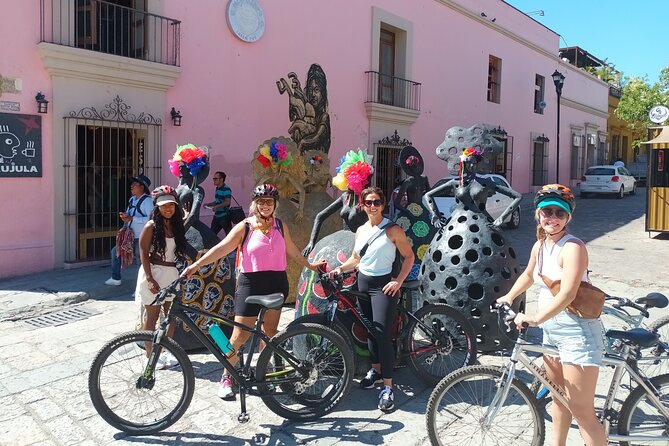
At $34.65 per person, the price is fair for a small-group ride that includes the bicycle, helmet, local guide, and technical assistance. You are paying for a moving introduction to several parts of Oaxaca, not just a rental bike.
The value is strongest if you want three things at once: street art, orientation, and local commentary. A bicycle rental alone would not give you Daniel’s explanations or the planned route through Jalatlaco, Xochimilco, Cerro del Fortín, and Santo Domingo.
The short duration keeps the price reasonable, but it also limits how much time you have at each place. You will not get a full museum visit, a long church tour, or hours to photograph every mural. If you want a slow art study, you may prefer to use this ride as an introduction and return independently.
The price does not include bottled water. Entrance fees are not required for the listed stops, but the museum, garden, and other parts of the Santo Domingo complex may require separate planning if you want to go inside later.
Practical advice for a smoother ride
Book this near the start of your Oaxaca stay if you want help choosing later stops. The activity is often reserved around 18 days ahead, so early booking is sensible if your dates are fixed.
Try to arrive with enough time for bicycle fitting. This is not just a formality. The reported 25-minute setup delay reduced one rider’s time on the route, and a properly adjusted bicycle will feel better on cobblestones.
Bring water, sun protection, and clothes suited to cycling. Keep your camera or phone secure but accessible for the frequent photo breaks. You will want both hands free while riding, then quick access when the group stops.
The tour is offered in English and accepts mobile tickets. It requires good weather. If poor weather cancels the ride, you are offered another date or a full refund. You can cancel for a full refund up to 24 hours before the start time, but changes or cancellations inside that window are not accepted.
Who should book this Oaxaca bike tour?
I would choose this for a solo visitor, couple, family, or small group that wants an active introduction to Oaxaca without committing to a full-day outing. It also suits anyone drawn to murals, local celebrations, old neighborhoods, and architectural details.
It is especially useful for first-time visitors. The route gives you a sense of where Jalatlaco and Xochimilco are, while Daniel’s recommendations can shape the rest of your stay.
I would be more cautious if you are not comfortable on a bicycle or if cobblestones and traffic cause worry. The guide works to keep the group safe, but no city bike ride is as calm as a museum visit. Ask about the hill section and the expected pace before setting out.
Should you book it?
Yes, if you want a friendly, active way to see Oaxaca’s street art and get your bearings. The strongest reasons are the small group, Daniel’s English guidance, the unusual neighborhood route, and the solid price with bicycle and helmet included.
Book it early in your visit, bring water, and allow for bicycle setup. Choose another type of tour if you need long museum visits, guaranteed Cerro del Fortín access, or a completely traffic-free route. For most reasonably confident riders, this is a fun and useful two-hour introduction to Oaxaca’s art, streets, and past.
FAQ
Where does the bicycle tour start?
It starts at Bike & Roadtrips Oaxaca, C. de Mariano Abasolo 315, RUTA INDEPENDENCIA, Centro, 68000 Oaxaca de Juárez, Oaxaca, Mexico.
Where does the tour finish?
The activity ends back at the same meeting point.
How long does the tour last?
The stated duration is approximately two hours. Bicycle setup can take part of that time, and the exact riding time may vary with the group and route.
Is the tour offered in English?
Yes. The tour is offered in English.
What is included in the price?
The price includes use of a bicycle, a helmet, a local guide, and technical assistance.
Is bottled water included?
No. Bottled water is not included, so bring your own.
How many people can join the tour?
The maximum group size is eight people.
What happens if bad weather cancels the tour?
You will be offered a different date or a full refund. For a regular cancellation, you must cancel at least 24 hours before the start time to receive a full refund.
New on the Oaxaca City list
- Private Historic City Tour + Street Food of Oaxaca – Best Rated★ 5.0 · 53 reviews
- Street Art Tour With An Artist in Oaxaca★ 5.0 · 54 reviews
- Private and safe transfer from the airport to the hotel in Oaxaca★ 4.5 · 58 reviews
- Paint your Alebrije with the Jimenez family.★ 5.0 · 66 reviews
- Hierve el Agua Half Day trip in the morning★ 5.0 · 66 reviews
- Tour Boil the “classic” water★ 4.5 · 67 reviews
- Tradicional Mezcal Experience in Oaxaca-Visit a Family Distillery★ 5.0 · 67 reviews
- Mezcal & Mole by a Certified Sommelier★ 5.0 · 70 reviews
Oaxaca City Tours, compared.
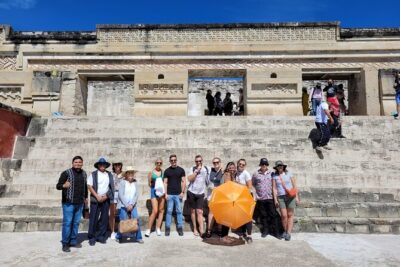
Hierve el Agua, Tule Tree, Mitla and Mezcal Distillery Tour
Read our review →

AUTHENTIC OAXACA CULTURAL FOOD TOUR, eat like a local.
Read our review →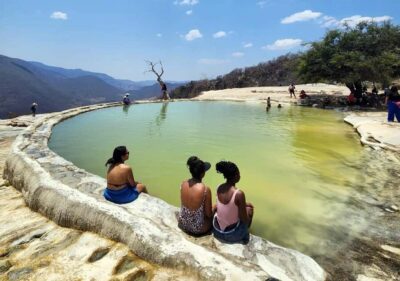
Browse the lists this tour appears in