
Reviewed · SAN MIGUEL DE ALLENDE TOURS
Queretaro: colonial architecture and history
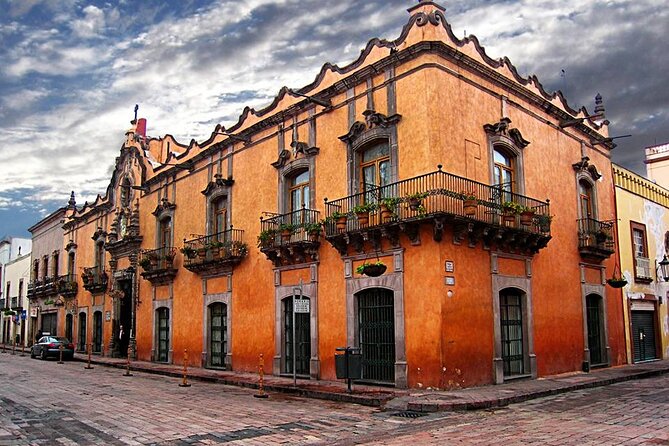
Querétaro’s story comes alive through its churches, convents, aqueduct, and grand old streets. This is not just a stroll past pretty buildings: Armando Magaña uses each stop to explain how silver, Spanish expansion, religious orders, independence, and Mexico’s later political struggles shaped the city. The history reaches well beyond Querétaro, often connecting local events with Mexico and the wider world.
I especially like the small maximum of six people, which gives you room to ask questions, and the route’s mix of major sights and less obvious historical corners. I also like that the tour ends in the old town, rather than sending you back to the starting point. The main caution is simple: this is a serious walking and listening tour. If architecture is your main interest, tell Armando at the start, since the experience leans more toward history, religion, and national events than detailed architectural analysis.
Key points to know before booking
- A history-led route: The focus is Querétaro’s role in Mexico’s founding, independence, religious life, and later national conflicts.
- Seven central stops: You visit the aqueduct, historic cemetery, convents, churches, Plaza de Armas, and former Capuchin convent area.
- Armando Magaña leads in English: His style connects local stories to Mexican and global events, with time for questions.
- Small groups matter: The tour accepts no more than six people, and some departures may feel nearly private.
- Plan for a half-day walk: The advertised length is about 3 to 4 hours, though the route can run longer when discussion and questions take hold.
- The end point is useful: You finish at Museo de la Ciudad, a central old-town location near places to eat, rest, or continue exploring.
Why this route gives Querétaro useful context
I like city tours that answer the question behind the monument. Why was the aqueduct built? Why were so many convents gathered in one part of town? Why did Querétaro matter so much during Mexico’s independence and later struggles?
This route is designed around those questions. Armando uses the buildings as evidence, then places them in a larger story. You may begin with a view of the aqueduct and end up discussing silver wealth, Spanish ambitions, the work of Franciscan friars, Mexico’s 1810 independence movement, and the French presence in the 1860s.
That broad approach is the tour’s strongest feature. You are not expected to arrive with a detailed grasp of Mexican history. The stops provide a clear sequence, and the guide fills in the links that are easy to miss when you explore alone.
The tour is also useful early in a visit. One person who took it late in a stay wished it had been the first activity because it provided a framework for the rest of Querétaro. I agree with that logic. Seeing the city first is pleasant, but understanding why its churches, grand houses, and civic buildings exist makes later wandering more rewarding.
More historic sites around San Miguel de Allende:
- Historical and Cultural Walking Tour of San Miguel de Allende
★ 5.0 · 641 reviews - Historical & Cultural Walking Tour of San Miguel de Allende
★ 4.8 · 225 reviews - Historic Downtown Walking Tour
★ 5.0 · 1,289 reviews
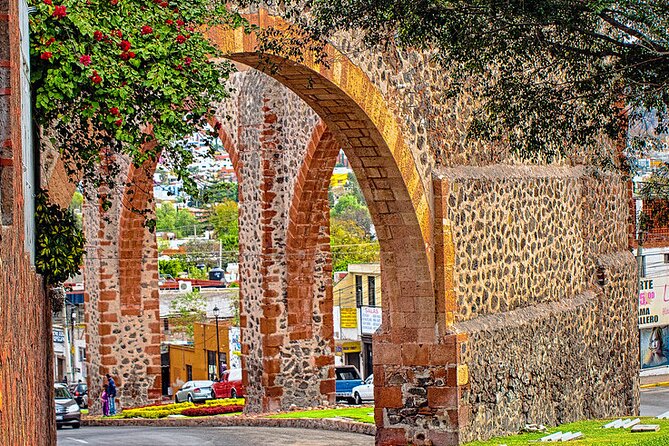
Starting beneath El Acueducto de Querétaro
The meeting point is Mirador de los Arcos, at Ejército Republicano 47 in the La Santa Cruz and La Pastora area. The aqueduct is a fitting opening because it introduces both the city’s physical development and the human stories attached to it.
You spend about 15 minutes here. Admission is free, and the stop is brief enough to avoid turning the first monument into a long lecture. The key story concerns the foundation of the city and the love story linked to the aqueduct’s construction.
That personal story gives the structure a human edge. Instead of treating the aqueduct as a string of arches to photograph, you begin by asking who needed it, why it mattered, and what local relationships helped bring it into being.
The aqueduct also sets the tone for the whole morning. Querétaro is presented as a place shaped by practical needs, religious institutions, money, politics, and individual decisions. You get a major visual landmark right away, but the point is the story attached to it.
Remembering local figures at the Panteón de los Queretanos Ilustres
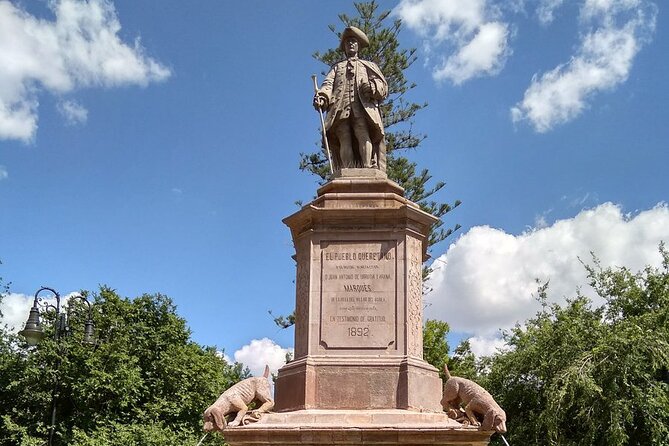
The next stop is the Panteón de los Queretanos Ilustres, where you spend roughly 15 minutes. This is a useful change of pace from the aqueduct because the focus shifts from construction to people.
Armando explains which important figures are buried here and how their actions influenced Mexican history. The stop helps make national events feel less abstract. Instead of hearing only about famous dates and movements, you connect those events with people who lived, worked, fought, or made decisions in this part of the country.
The cemetery visit is short, but it adds depth to the wider route. You begin to see Querétaro not simply as a colonial city preserved for sightseeing, but as a place where people played active roles in the formation of modern Mexico.
If your interest is mainly in buildings, this may feel less immediately visual than the aqueduct or Plaza de Armas. If you like political and social history, it is an important part of the morning.
Climbing to Santa Cruz and the city’s second foundation
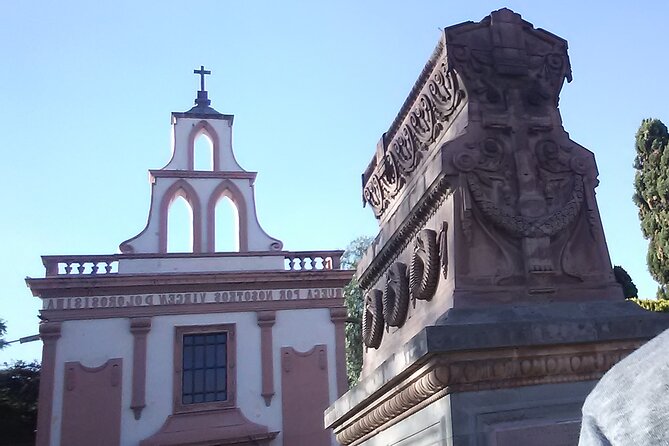
At Templo y Ex-Convento de la Santa Cruz de los Milagros, the tour allows about 40 minutes. This is one of the longer stops, and that makes sense. The convent sits on the hill where Querétaro was founded for the second time, giving the site both geographic and symbolic importance.
Here you hear legends tied to the place and learn about the Franciscan convent’s role in several chapters of Mexico’s national story. The religious setting is not treated as decoration. It becomes a way to understand how religious orders influenced settlement, education, local authority, and the Spanish expansion of the region.
This is also where the tour’s emphasis becomes clear. Several of the stops involve churches and convents, so you should expect religion to be a central subject. Armando links the buildings to political events and social change rather than presenting them only as places of worship.
Allow some patience for the uphill setting. The provided guidance calls for moderate physical fitness, and the full route includes several hours of walking and standing. Comfortable shoes and water are sensible choices, though the tour information does not promise a particular pace or rest schedule.
A few other San Miguel de Allende days to price up
- Immersive Cañada de La Virgen Pyramid Tour
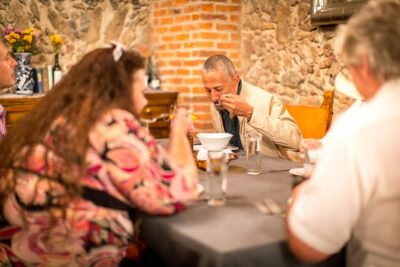
★ 5.0 · 789 reviews - Original Downtown Food Tour with Taste of San Miguel
★ 5.0 · 598 reviews - Tacos and Tequila Walking Tour with Taste of Miguel
★ 5.0 · 583 reviews - Half-Day Horseback Riding Adventure
★ 5.0 · 417 reviews
Reading Querétaro through Plaza de Armas
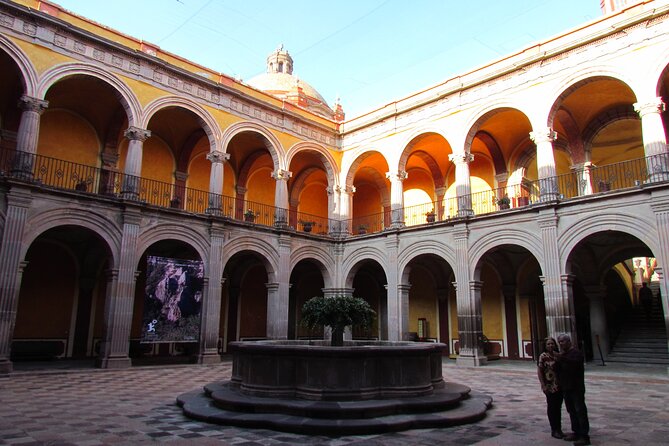
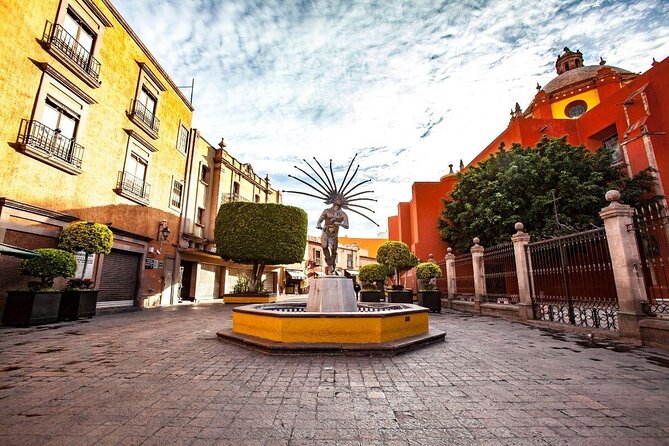
The route then moves to Plaza de Armas for about 35 minutes. After a couple of Neoclassical architectural examples, the group reaches the city’s picturesque main square and hears more stories tied to Querétaro.
This is where you get a chance to connect architectural styles with the people and institutions that commissioned them. The tour does not treat Neoclassical buildings as isolated design exercises. Instead, the style becomes part of a changing city, one shaped by wealth, civic ambition, religious foundations, and national politics.
The square is also a natural place for orientation. You can better understand how the old city fits together, and the route’s earlier stops begin to form a coherent pattern. The aqueduct supplied a growing settlement. Convents anchored religious and social life. Civic buildings and private homes reflected wealth and status.
The guide’s storytelling is especially valuable here because a public square can otherwise become a quick photo stop. Armando is praised for using teasers about later parts of the story, which helps maintain interest during a long morning. His approach appears to favor a connected narrative rather than a list of dates.
The Guadalupe sanctuary and the builder behind it
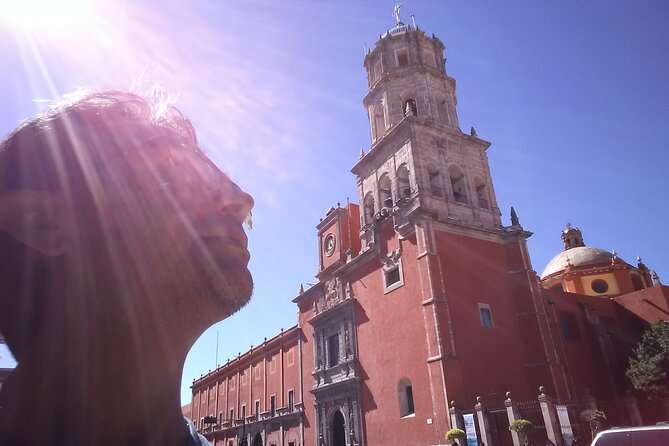
At the Santuario de la Congregación de Nuestra Señora de Guadalupe, you spend approximately 15 minutes. The stop centers on the temple of the Virgin of Guadalupe, the historical importance of that religious figure in Mexico, and the person who built the temple.
This is a compact stop, but it adds an essential part of Mexican identity to the route. The Virgin of Guadalupe is not presented simply as an image inside a church. You hear why the figure has held such importance in the country and how the temple fits into Querétaro’s story.
If you want a detailed study of interior decoration or architectural technique, this visit may not go far enough on its own. The guide’s main goal is to explain the historical meaning of the sanctuary and its builder.
San Francisco and the old inner-land road
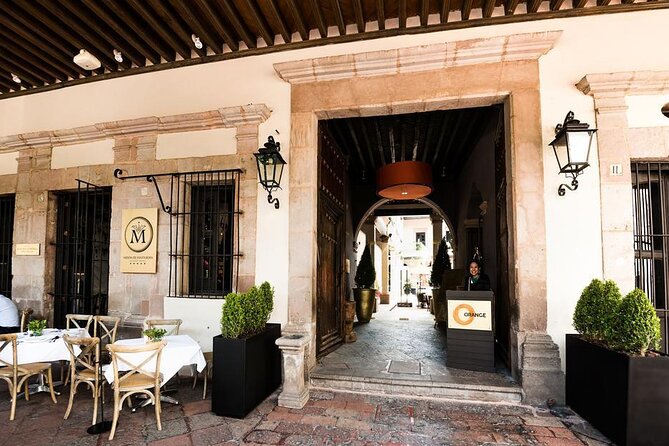
The Templo y Exconvento de San Francisco de Asís de Querétaro receives about 15 minutes. From inside the old convent premises, you learn how the building changed as Mexico passed through different historical periods.
That idea of transformation is worth watching for. Historic buildings are not frozen in the moment when they were first built. Their uses and forms change as political power shifts, religious institutions lose or gain influence, and the country moves through conflict and reform.
This stop also marks the place where the ancient inner-land road began. That detail gives the convent a practical role in regional movement and trade, not just a religious one. It helps explain why Querétaro became important as a connecting point.
The stop is short, so expect an overview rather than a room-by-room examination. Its strength is the link between the building and the wider movement of people, goods, and ideas.
Santa Clara, one corner with several layers
The Convento de Santa Clara is the final listed stop, with about 20 minutes devoted to it. The site brings several strands of Querétaro together: the city’s first and largest female convent, its former hospital, a notable Neoclassical fountain, and a major example of Baroque private-house architecture.
Having these subjects side by side makes this one of the best places to see how the city’s old fabric developed. Religious life, medical care, public water, and private wealth all occupied the same urban setting.
This stop also helps correct a common misunderstanding about colonial cities. Their history is not only about cathedrals and government buildings. Women’s religious communities, hospitals, wealthy households, and public infrastructure all shaped daily life.
The short visit is enough to point out the significance of the corner and explain its connections. You may want to return later for photographs or a slower look, since the morning’s main purpose is interpretation rather than extended free time at each site.
Ending at Museo de la Ciudad
The tour ends at Museo de la Ciudad on Calle Vicente Guerrero Norte 27, in the former Capuchin convent. This is a practical finish in the center of the historic old town.
You can walk onward, take a taxi back to your hotel, find a place to rest, or stop for dinner. That flexibility is useful after several hours on foot. It also means the tour does not end at an out-of-the-way point where you must arrange an immediate transfer.
The start and finish are different, so check your transport plan before booking. The experience is listed under San Miguel de Allende, but the meeting and ending addresses are in Santiago de Querétaro. The supplied information does not include transportation between those cities, so you should arrange that part yourself.
Armando’s style and the value of a small group
Armando Magaña is the central reason this tour works as more than a sightseeing walk. His English is described as excellent, and his approach links local history with events in Mexico and abroad. He is also praised for answering questions patiently and for adjusting when visitors show a stronger interest in history or architecture.
That last point matters. One piece of feedback found the tour less useful for architecture because the discussion focused more on religious sites and their role in history. Armando’s response was to recognize that he should ask more directly about each group’s expectations. I would tell him at the beginning if you want more attention to building materials, styles, dates, or design details.
The group limit of six is another real advantage. A small group makes it easier to hear in busy streets, ask follow-up questions, and keep the pace flexible. Some departures may effectively feel private, but the product is not advertised as a private tour, so do not book it on that assumption.
Is $50 a fair price?
At $50 per person, this is not the cheapest way to walk around Querétaro, especially since every listed stop has free admission. You are paying for the guide’s time, research, English presentation, route planning, and ability to connect separate sites into one story.
That value depends on how you like to travel. If you are happy reading plaques and taking photos, the price may feel high. If you want help understanding why Querétaro mattered in the independence movement, how religious orders shaped the city, and how local events connect to national history, the cost is easier to justify.
The small group improves the value. You are not paying for entry tickets, but you are getting a focused half-day with a guide who can respond to questions. The experience has a current rating of 5 from 62 reviews, with 98 percent recommending it, and the praise is especially strong for Armando’s storytelling, historical range, English, patience, and passion.
Who should take this walk?
I would choose this tour for adults, couples, solo visitors, and families with older children who can walk and listen for several hours. It suits anyone who wants a useful introduction to Querétaro before exploring independently.
History fans will get the most from it. The route covers the city’s foundation, Spanish expansion, silver, religious orders, independence, the 1810 revolution, and the French conflict of the 1860s. You also get architecture, art, culture, and religion, but history provides the main framework.
Families should think carefully about attention spans. The tour is not recommended by the supplied guidance for children who are not used to walking and listening for three to four hours. The route can also last longer when questions and explanations extend the morning.
Book it early if your schedule is fixed. It is commonly reserved about 10 days in advance, and the small group limit can reduce last-minute availability. Confirmation arrives at booking, mobile tickets are accepted, and service animals are allowed.
You may cancel for a full refund if you do so at least 24 hours before the local start time. Changes or cancellations inside that window are not accepted for a refund.
Should you book the Querétaro history tour?
Book it if you want the city explained, not just shown. Armando’s strongest contribution is the way he links an aqueduct, cemetery, convent, sanctuary, plaza, and private house to the larger story of Mexico.
Skip it if you want a short architecture-only walk, a tour with lots of free time, or a route built around admission-ticket interiors. The schedule is active, the religious sites receive substantial attention, and the discussion can run long.
For most history-minded visitors, I would take it near the start of a Querétaro stay. It gives you the background to notice more as you walk alone afterward, and the central ending makes it easy to continue your day.
FAQ
Where does the tour begin?
It begins at Mirador de los Arcos, Ejército Republicano 47, La Santa Cruz, La Pastora, 76025 Santiago de Querétaro, Querétaro, Mexico.
Where does the tour end?
It ends at Museo de la Ciudad, Calle Vicente Guerrero Norte 27, Centro, 76000 Santiago de Querétaro, Querétaro, Mexico. The museum occupies the former Capuchin convent and is in the historic old town.
What time does the tour start?
The start time is 9:00 am.
How long does the experience last?
The advertised duration is approximately 3 to 4 hours. Some departures may last longer when the guide spends extra time answering questions and explaining the sites.
How much does the tour cost?
The price is $50 per person.
Is the tour offered in English?
Yes. The tour is offered in English, and Armando Magaña is the named guide associated with the experience.
How many people can join?
The tour has a maximum of six participants.
Are admission tickets included?
All seven listed stops show free admission, so there are no stated entry fees for the route.
What level of fitness is needed?
You should have a moderate level of physical fitness. The experience involves walking and listening for several hours, and one stop is at the top of a hill.
Are service animals allowed?
Yes. Service animals are allowed.
Can I cancel for a full refund?
Yes, if you cancel at least 24 hours before the experience begins. Cancellations made less than 24 hours before the start time are not refunded, and changes inside that period are not accepted.
New on the San Miguel de Allende list
- Private Guanajuato City Tour From San Miguel★ 5.0 · 58 reviews
- Music Tour & Lunch★ 5.0 · 60 reviews
- Private Tour in Guanajuato Capital Leaving San Miguel Allende★ 4.5 · 63 reviews
- Combination Trail Riding and Hot Springs in San Miguel de Allende★ 5.0 · 68 reviews
- San Miguel: Landmarks and Lunch Walking Tour in English★ 4.9 · 70 reviews
- Guanajuato City Shared Tour from San Miguel de Allende★ 5.0 · 73 reviews
- Recorrido Histórico a Pie: Descubre y Explora San Miguel (ES/EN)★ 4.5 · 86 reviews
- Vineyard, tour, tasting and fun in San Miguel de Allende★ 4.5 · 87 reviews
San Miguel de Allende Tours, compared.
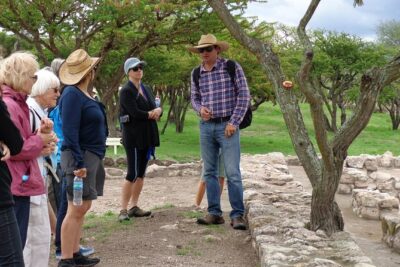
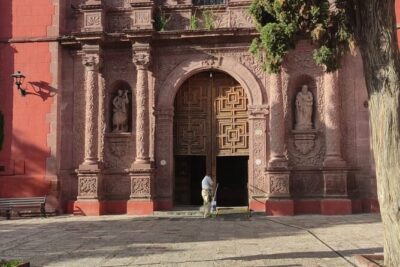
Historical and Cultural Walking Tour of San Miguel de Allende
Read our review →
Original Downtown Food Tour with Taste of San Miguel
Read our review →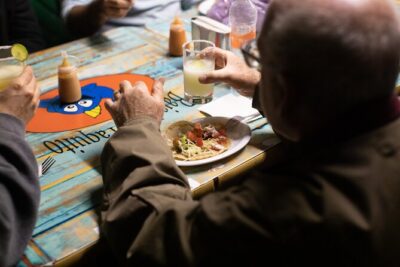
Tacos and Tequila Walking Tour with Taste of Miguel
Read our review →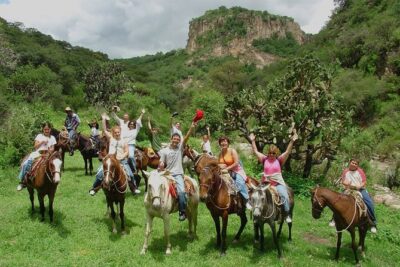
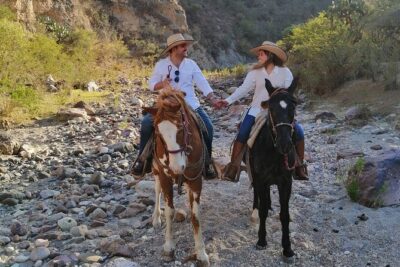
Half Day Excursion – Horseback Riding Adventure in SMA
Read our review →Browse the lists this tour appears in