
Reviewed · PUEBLA CITY TOURS
Puebla: Cholula Magical Town Tour by Double-Decker Bus
The Great Pyramid of Cholula is the headline here, and rightly so. It is considered the largest pyramid in the world by volume, with the Spanish-built Nuestra Señora de los Remedios church perched on top. You also get a quick look at Cholula’s two adjoining towns, San Pedro and San Andrés, plus three striking colonial churches.
I like the mix of major sights and smaller stops. The Mexican Baroque churches of Santa María Tonanzintla and San Francisco Acatepec are far more memorable than a simple pyramid photo stop, and the free time in San Pedro lets you choose between the market, churches, and archaeological area. The main drawback is language: the regular format lists Spanish audio and a Spanish-speaking driver, so English speakers should confirm what help will be available.
Key points to know before you go
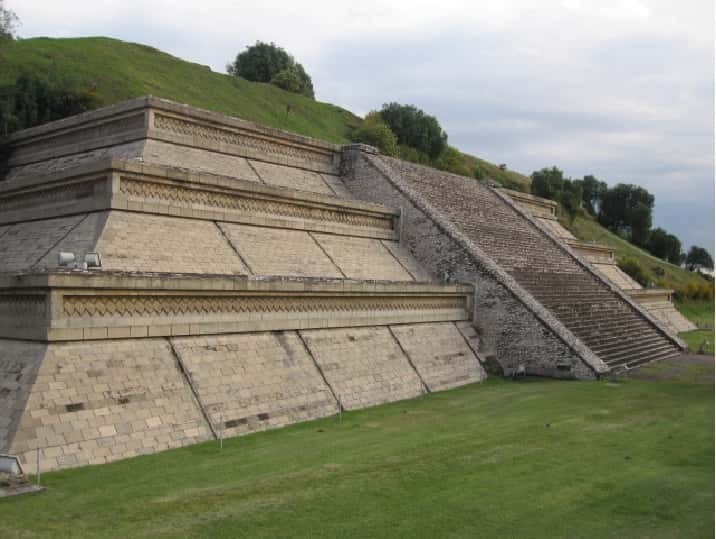
- The pyramid is wider than it looks: Most of Cholula’s Great Pyramid is covered by earth and vegetation, with the church on its summit.
- Two towns share one urban area: San Pedro and San Andrés Cholula each have their own square and church, but their borders are hard to notice.
- The churches are the visual surprise: Tonanzintla and Acatepec are packed with Mexican Baroque decoration.
- You get a useful overview for $11: Round-trip transport, the bus ride, audio guide, and transportation insurance are included.
- Free time matters: The final stop gives you a chance to choose your own focus instead of staying with the group all day.
- Plan for walking and sun: Comfortable shoes, sun block, and a hat are important, and the tour is not suited to people with mobility impairments.
From Puebla’s Zocalo to Cholula’s twin towns
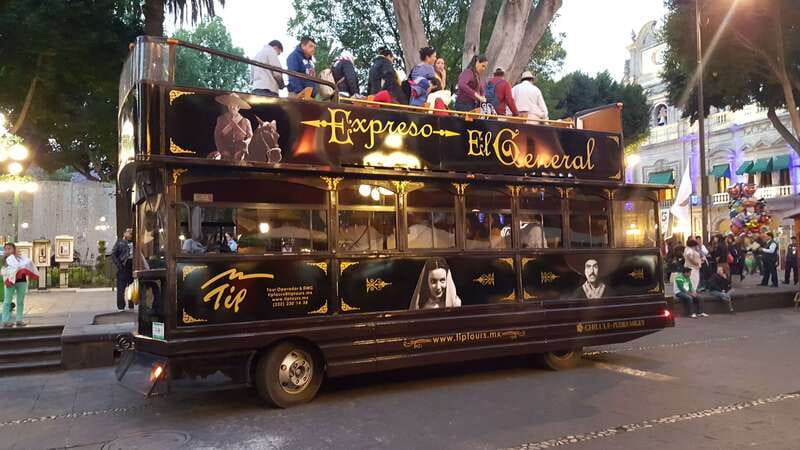
The tour begins at the Tip Tours DMC booth inside the Puebla Tourism Office at Portal Hidalgo 14, beside the Zocalo on Juan de Palafox y Mendoza Avenue. That central meeting point is handy if you are already exploring Puebla’s historic center.
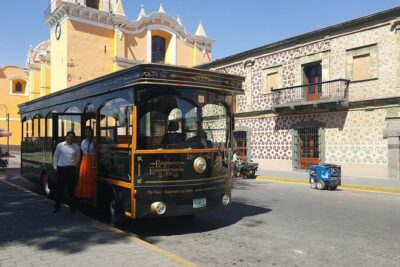
From there, the traditional double-decker bus travels about five miles west to Cholula. The ride is short, but it shifts the mood quickly from Puebla’s formal colonial center to a place where ancient religious history and everyday town life overlap.
Cholula is commonly described as one town, but it is really two neighboring municipalities: San Pedro Cholula and San Andrés Cholula. Each has its own central square and parish church. The urban area has grown together so closely that you may not notice exactly when one ends and the other begins.
The upper deck should give you a broad view of the road and surrounding volcano country when weather is clear. I would use the ride to get oriented rather than expect a long scenic journey. The transfer is practical, not the main event.
A few other Mexico days to price up
- From Puebla: Cholula and Atlixco Magical Towns Tour
★ 4.2 · 154 reviews - From Puebla: Guided Tour of Cholula
★ 4.9 · 78 reviews - Hiking Excursion to the Iztaccíhuatl Volcano from Puebla
★ 5.0 · 74 reviews
Plaza de la Concordia and San Gabriel Convent
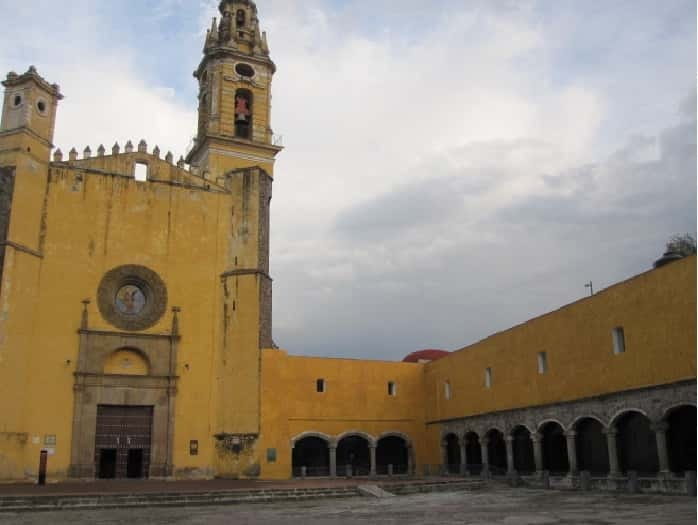
The first major stop is Plaza de la Concordia in San Pedro Cholula. The square is flanked by the Franciscan Convento de San Gabriel, built in 1549 on the site associated with a temple dedicated to Quetzalcóatl.
That location tells you a lot about Cholula. Spanish churches were not placed in a religious vacuum. They were built into a city that had been an important ceremonial center for centuries, and the convent’s position reflects the Spanish effort to replace older sacred spaces with Christian ones.
The convent is one of the clearest stops for understanding the meeting of Indigenous and Spanish traditions. Its setting also gives you a good starting point for seeing Cholula as more than an archaeological site. This is a living town, with a functioning square, churches, shops, and local routines around the old monuments.
The audio guide is listed in Spanish. On some earlier departures, visitors received extra help from an English-speaking guide named Carla, who explained church details, local customs, and food recommendations. That is useful context, but it should not be treated as a standard feature now. If English matters to you, ask the operator before paying.
The Great Pyramid and the church above it
The bus continues toward the Great Pyramid of Cholula, the central attraction. Calling it a pyramid can be misleading at first because much of the structure is hidden beneath a broad, grassy mound. It does not have the clean, exposed stepped profile many people picture when they hear the word pyramid.
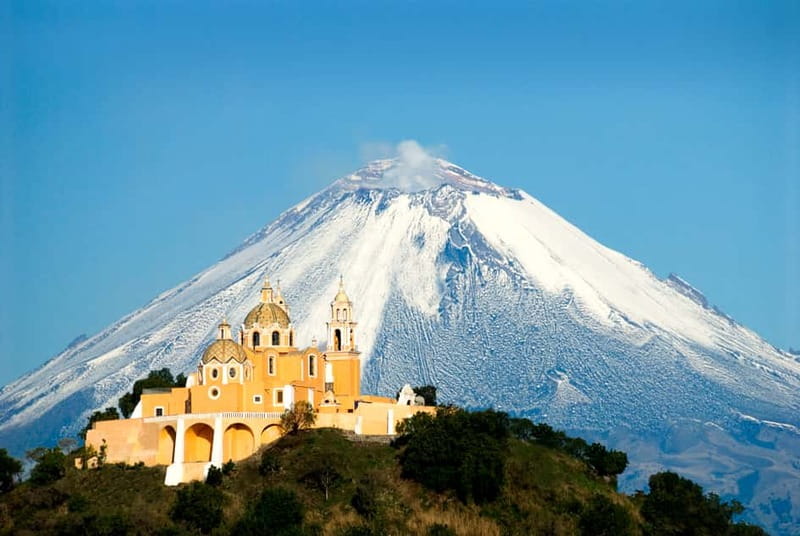
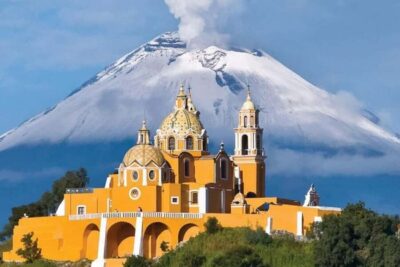
The size is the point. The Great Pyramid is described as the largest pyramid in the world, and its bulk spreads across a huge area. At the top sits the Nuestra Señora de los Remedios Temple, built by the Spanish in 1549.
That combination makes Cholula unusual. In one view, you have a pre-Hispanic monument and a colonial church sharing the same summit. The scene is visually striking, but it also raises the historical questions that make the stop worthwhile: how did older beliefs survive, change, or combine with the religion imposed by Spain?
Admission to the pyramid is not included in the $11 tour price. That is an important detail. The bus gets you there and gives you time to visit, but you should budget separately if you want to enter the archaeological area or any paid sections.
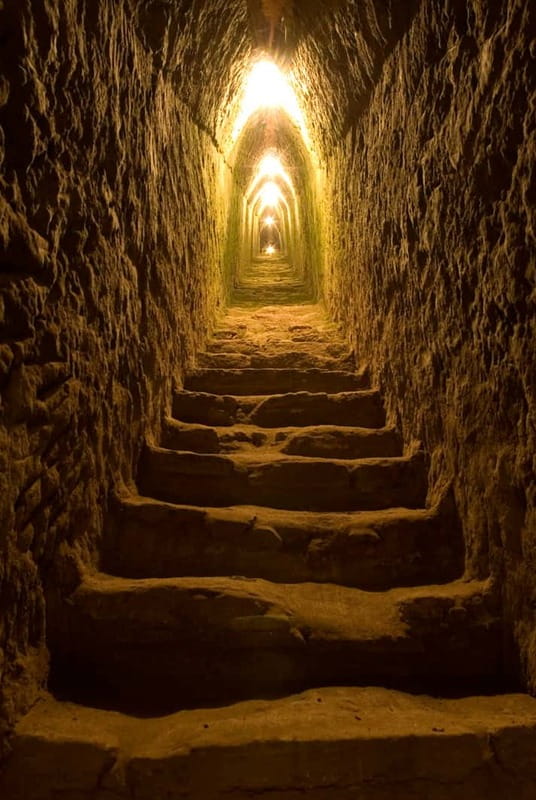
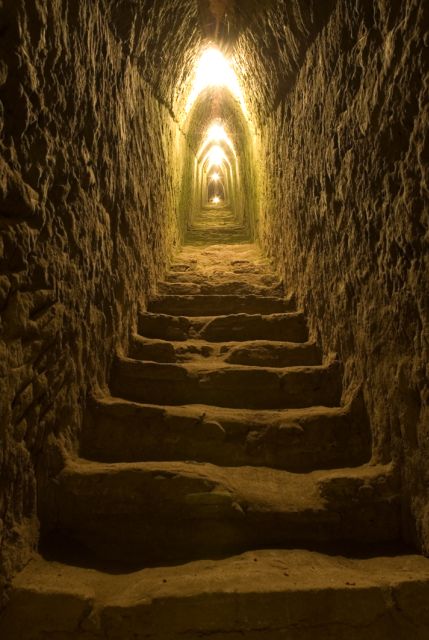
Some past English-guided departures included a walk through Cholula’s tunnels and an explanation of the pyramid’s construction. The current activity information does not promise tunnel access, so confirm this before booking if the underground passages are a priority.
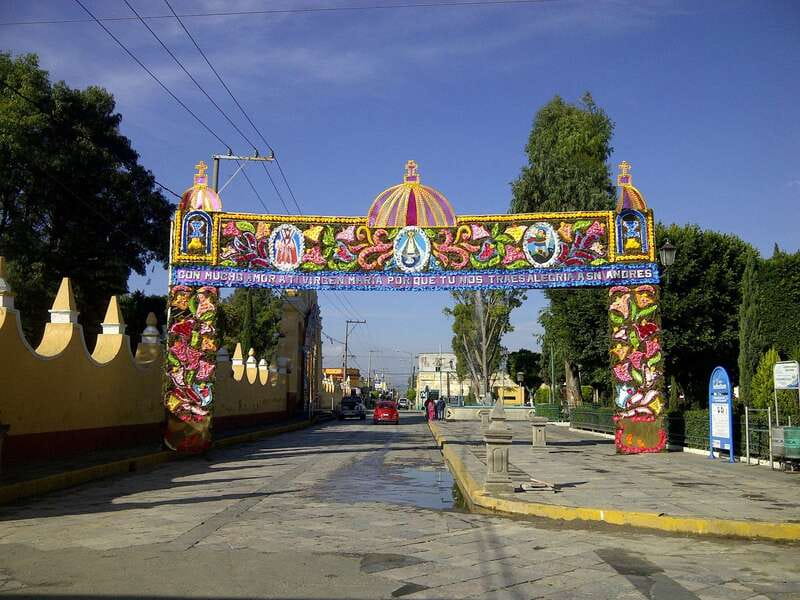
San Andrés and its parish church
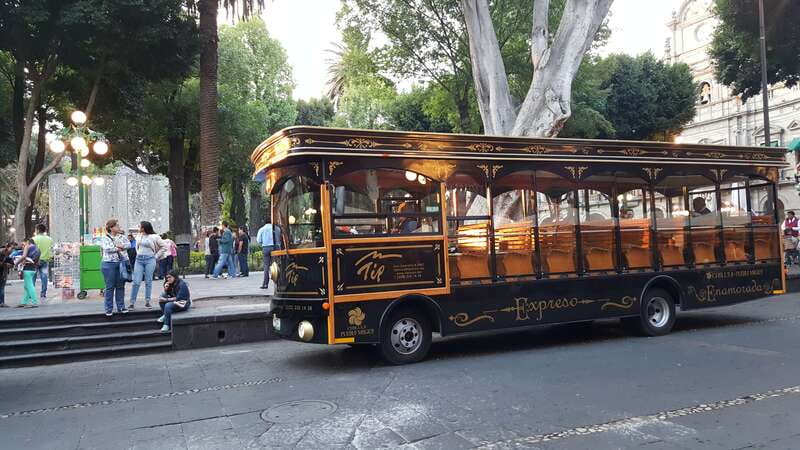
After the pyramid area, the route continues into San Andrés Cholula for a short stop at the local parish. This is a useful reminder that Cholula is not only about one huge archaeological monument.
The two municipalities have their own religious centers, and the parish in San Andrés helps show how local identity is organized around churches and plazas. The stop is brief, so I would not expect a long architectural study. Think of it as a compact introduction before the bus moves on to the two Baroque churches.
The schedule is one reason this tour works best for someone who wants a broad first look. You see several places in six hours, but you do not get unlimited time inside each one. If you prefer to sit quietly in one church for an hour or study every archaeological detail, an independent visit may suit you better.
Same stretch of coast, a very different day:
- Chichen Itza, Cenote, and Valladolid Tour
★ 5.0 · 24,293 reviews - Chichen Itza, Cenote & Valladolid Tour with Tequila and Lunch
★ 4.5 · 15,789 reviews - Teotihuacan, Guadalupe Shrine & Tlatelolco Day Tour with Lunch
★ 5.0 · 11,603 reviews - Cabo Beach Camel Ride, Mexican Buffet and Tequila Tasting
★ 5.0 · 8,815 reviews
Santa María Tonanzintla, decoration without restraint
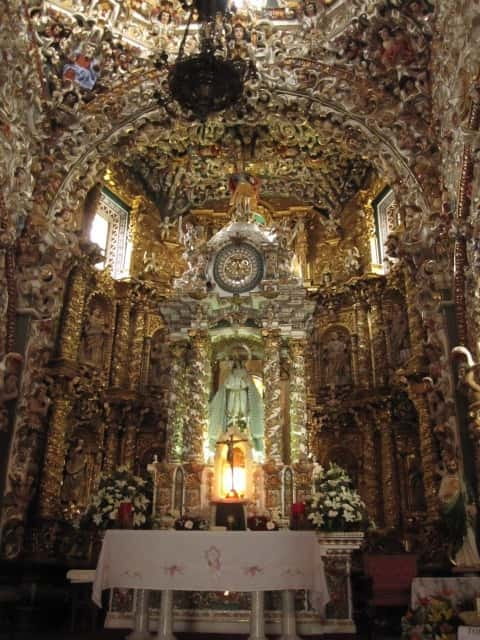
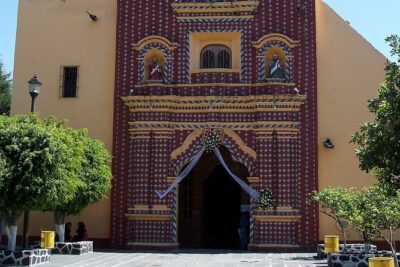
Santa María Tonanzintla is one of the tour’s most memorable stops. It is a Mexican Baroque church where decoration covers nearly every available surface.
Inside, you might find a dense mix of carved forms, painted details, religious figures, and local visual traditions. The effect is very different from the restrained stone-and-plaster look found in many European churches. Here, the decoration is the message. You are meant to look closely and keep finding another figure, pattern, or detail.
This is where a good guide adds real value. A quick photograph cannot explain why Tonanzintla looks so different from a standard colonial church. Earlier departures with Carla received explanations of the significance of the churches, local traditions, and the way religion developed in Puebla and Cholula.
Keep your expectations practical. The available information does not specify how long you spend inside, and church access can depend on local conditions. The tour does, however, include the transfer to Tonanzintla, which saves you the trouble of arranging separate transport to a church outside Puebla’s central sightseeing zone.
San Francisco Acatepec and Mexican Baroque style
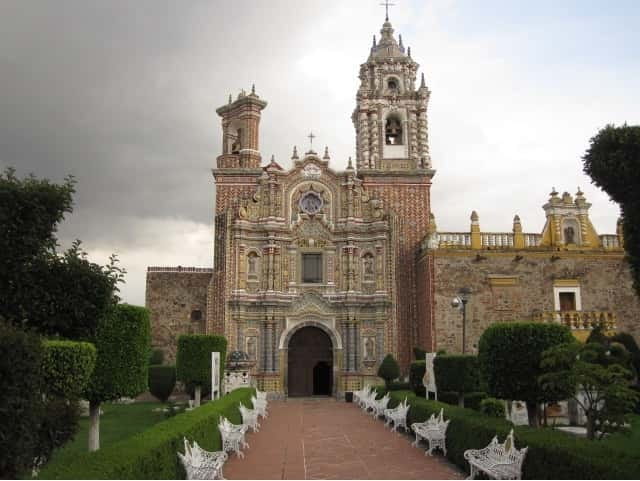
The stop at San Francisco Acatepec continues the Baroque theme. Like Tonanzintla, it is known for an interior and exterior style that leaves little room undecorated.
Seeing both churches in one trip helps you compare them. You are not simply checking off two religious buildings. You are seeing how local builders and artists used color, ornament, and religious imagery to create a distinctly Mexican form of Baroque design.
I would pay attention to the contrast between the churches rather than rushing to label them both as colorful. Their value is in the small details and the different overall feel. The audio guide may help Spanish speakers, while non-Spanish speakers should be prepared to rely more on visual observation unless a bilingual guide is available.
The tour’s Spanish-only structure is the biggest limitation for international visitors. A recent departure was described as professional, punctual, and informative, but the lack of an English option meant using a translation app. That is a manageable problem for some people, but it can reduce the historical context that makes these churches special.
The wizard’s house and the return through local Cholula
The return route passes the wizard’s house and the Copa de Oro cider factory. These are brief passing sights rather than full visits, so treat them as visual landmarks along the route.
They add a little local character to the ride. The tour is not limited to monumental churches and archaeological remains. It also points out places tied to local stories and production, though you should not expect a factory tour or a dedicated stop unless the guide says otherwise.
This part of the route is also a good time to sit back and watch the town pass by. The double-decker bus gives you a different perspective than a walking tour, though its value depends on the weather and your seat. Bring a hat and sun block, especially if you plan to sit upstairs.
Free time in San Pedro Cholula
The last main stop is San Pedro Cholula’s Zocalo. You get free time to explore, which is one of the best features of the schedule.
You can use the time to revisit the Great Pyramid, see the Royal Chapel, return to San Gabriel Convent, walk around Plaza de la Concordia, or visit the local market. You do not have to follow the group from one sight to the next, and that flexibility makes the tour more useful than a tightly controlled sightseeing circuit.
I would save a little appetite for this section. Earlier English-speaking guides have recommended local food, and one departure included a stop for quesadillas. Food and drinks are not included, so any meal or snack is your responsibility, but the free period gives you room to make your own choice.
The Royal Chapel, also called Capilla Real, is especially worth noting for its 49 domes. That detail makes it easy to identify and gives you a clear reason to include it in your free-time plan.
Use your time carefully. The activity lasts six hours, but the exact balance between guided stops, bus transfers, and independent exploration can affect how much you see. If you want to enter the pyramid area, visit the chapel, browse the market, and eat, you may need to choose your priorities rather than attempt everything.
What the $11 price really covers
At $11 per person, this is a low-cost way to reach several Cholula sights from Puebla. Round-trip transportation from the Zocalo, the double-decker bus route, Spanish audio, and transportation insurance are included.
The price is strongest if you value convenience. You avoid arranging separate transport to Cholula, San Andrés, Acatepec, and Tonanzintla. You also get a planned route that links the major archaeological and religious sights in one half-day outing.
The price does not include pyramid admission, food, or drinks. It is also not a fully private guided tour. The driver speaks Spanish, and the regular audio guide is in Spanish, so English speakers should not assume that a live English guide will be present.
Earlier English-language departures received strong help from Carla, who explained history, church details, and places to eat. That sounds excellent, but availability may vary. Contact Tip Tours & DMC before booking if a bilingual guide is important to you.
The overall rating is 4.3 from 74 ratings, which fits the experience: strong value, a good route, and often helpful guiding, balanced by language limits and a fairly busy schedule.
Who should book this Cholula tour?
I would recommend it to you if you are staying in Puebla, want to see Cholula without arranging local transport, and like having several major sights packaged into one outing. It is especially useful for a first visit because it introduces the pyramid, both municipalities, the main convent, the Royal Chapel, and two unusual Baroque churches.
It also suits you if you enjoy looking at architecture but do not want to spend the entire day on foot. The bus handles the transfers, while the free time lets you walk at your own pace in San Pedro.
I would hesitate if you need an English-language tour, have limited mobility, or want a slow archaeological visit. The experience is not suitable for people with mobility impairments, and the current information lists Spanish as the activity language.
Wear comfortable shoes even though the bus does much of the work. Bring sun block and a cap, and remember that smoking is not allowed in the vehicle or indoors.
Should you book it?
Book this tour if you want a budget-friendly overview of Cholula with transport already arranged. The churches of Tonanzintla and Acatepec give the outing more character than a pyramid-only trip, and free time in San Pedro keeps the day from feeling completely scripted.
Before booking, confirm the language arrangement and ask how much time is planned for the pyramid and free exploration. If those details work for you, $11 is a sensible price for a six-hour introduction to one of Puebla State’s most distinctive towns.
FAQ
Where does the tour meet?
Meet at the Tip Tours DMC booth in the Puebla Tourism Office at Portal Hidalgo 14, beside Puebla’s Zocalo on Juan de Palafox y Mendoza Avenue.
How long does the tour last?
The tour lasts six hours and is usually available in the morning and afternoon.
Is English available on the tour?
The listed format includes a Spanish-speaking driver and a Spanish audio guide. Some earlier departures had bilingual assistance from a guide named Carla, but English is not guaranteed in the current format. Confirm before booking if you need English.
Is admission to the Great Pyramid included?
No. Admission to the pyramid is not included in the tour price.
Are food and drinks included?
No. Food and drinks are not included. You have free time in San Pedro Cholula to find your own meal or snack.
Is the tour suitable for people with mobility impairments?
No. The activity is listed as unsuitable for people with mobility impairments. Comfortable shoes are recommended, and you should bring sun block and a hat or cap.
New on the Mexico list
- Day of the Dead Tour in San Andres Míxquic From Mexico City★ 3.7 · 52 reviews
- Swim with Whale Shark from Isla Mujeres and Cancun★ 4.5 · 52 reviews
- Bacalar Lagoon of 7 Colors from Playa del Carmen and Tulum★ 4.5 · 52 reviews
- El Cielo Cozumel Snorkel tour by Catamaran★ 4.0 · 52 reviews
- Tulum: Private Snorkel and Sailing Experience★ 4.8 · 52 reviews
- Biggest Luxury Yacht Boat Best in Cancun up to 28 pax★ 5.0 · 52 reviews
- Reef Snorkel In National Park In Puerto Morelos With Lunch And Transportation★ 4.0 · 52 reviews
- From Playa del Carmen: Whale Shark Tour★ 4.3 · 52 reviews
Puebla City Tours, compared.
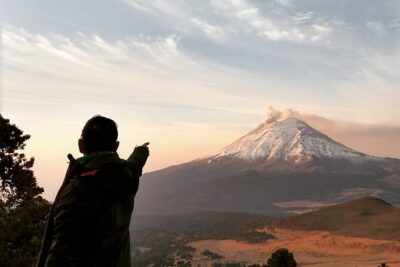
Hiking Excursion to the Iztaccíhuatl Volcano from Puebla
Read our review →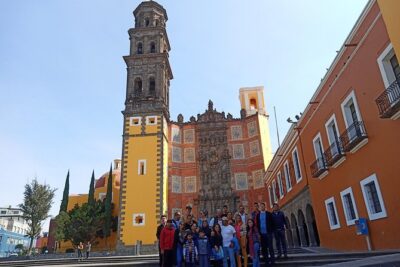
Cholula Magical Twon on a Traditional Tram from Puebla
Read our review →Browse the lists this tour appears in