
Reviewed · PUERTO VALLARTA TOURS
Whale and Dolphin Watching with a Biologist in Puerto Vallarta
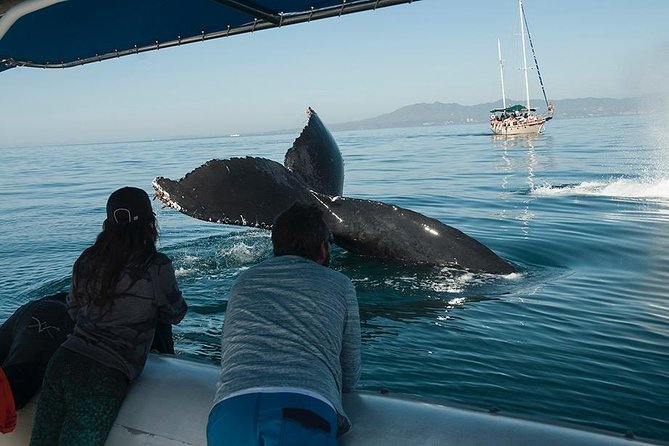
Puerto Vallarta’s winter whale season can turn a simple boat ride into a close look at mothers, calves, and males competing for a mate. This tour adds real substance: a marine biologist guide explains the behavior you are seeing, and a hydrophone may let you hear whales calling below the boat.
I especially like the short shore presentation, with baleen and whale vertebrae to examine, and the small covered boat, which gives you a good view without the feel of a giant cruise. The drawback is that wildlife follows its own clock. Some departures may spend an hour searching before the action begins, and the boat has no bathroom.
Key points to know before booking
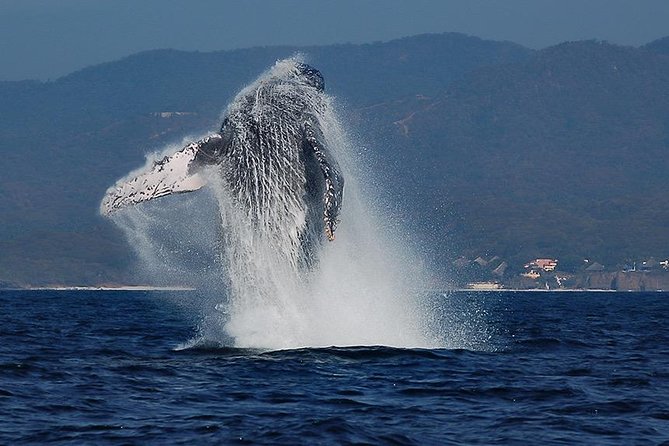
- Humpback whales return in winter: You may see mothers with calves, solo adults, males competing for females, breaches, tail slaps, and fin waves.
- Your guide is a marine specialist: Guides including Jemma, Gemma, and Camilla explain whale communication, parenting, migration, and dolphin behavior.
- A hydrophone adds an unusual layer: You may hear whale songs and calls, not just watch animals surface.
- The boat is small and covered: Groups commonly number around 12 to 16, with a maximum of 20, making it easier to see from both sides.
- The tour supports research: You learn how sightings contribute to whale and dolphin studies and have a chance to take part in citizen science.
- Plan for four hours without a restroom: Bring what you need before boarding, and carry cash if you want to tip the crew.
Why this whale trip feels different
Many whale excursions are mainly about spotting a blow, taking a photograph, and heading back to the marina. This one places the animals in context. You learn what a mother is doing with her calf, why several males may gather around one female, and how researchers identify and track marine life.
That matters because humpback whales are not performing on demand. A breach can be spectacular, but quieter behavior can be just as interesting. A calf practicing communication with its mother, a whale rolling on its back, or a group surfacing in sequence gives you a better sense of the animals’ lives.
The company, Wildlife Connection, works with research programs involving whales and dolphins. Your participation helps fund that work. The provider also says it can find the animals or offer your money back, a strong assurance for anyone concerned about paying for a wildlife trip and seeing only open water.
I would still treat that promise as a reason to understand the terms before booking, not as a guarantee that every outing will produce a full day of breaches. Nature is unpredictable. Weather, animal behavior, and the timing of the trip all matter.
More dolphin trips around Puerto Vallarta:
- Watch and Swim with Dolphins in the Wild
★ 4.5 · 668 reviews - Whale & Dolphin Watching Cruise in Puerto Vallarta All Inclusive
★ 4.0 · 212 reviews - Wild Dolphin Encounter & Snorkeling Adventure
★ 5.0 · 147 reviews
Starting at Opequimar Marina
You meet at Opequimar Centro Marino, Av. Paseo de la Marina Sur 214, in Marina Vallarta. The tour ends at the same place, which keeps the logistics simple if you are staying near the marina or can reach it by local transportation.
The opening presentation is one of the better features. Before you board, the guide explains the species you may encounter and gives you physical reference points: baleen and a whale vertebra show how these animals are built. That preparation makes the first sighting more meaningful. Instead of seeing only a dark back and a puff of air, you have an idea of the animal’s size and anatomy.
The crew helps you put on your life jacket and board safely. Guides named in recent departures include Jemma, Gemma, and Camilla, with captains such as Jorge, Cesar, and George. Names and crew assignments can change, but the pattern is clear: the guide handles the science and interpretation while the captain concentrates on safe positioning.
Four hours on a small covered boat
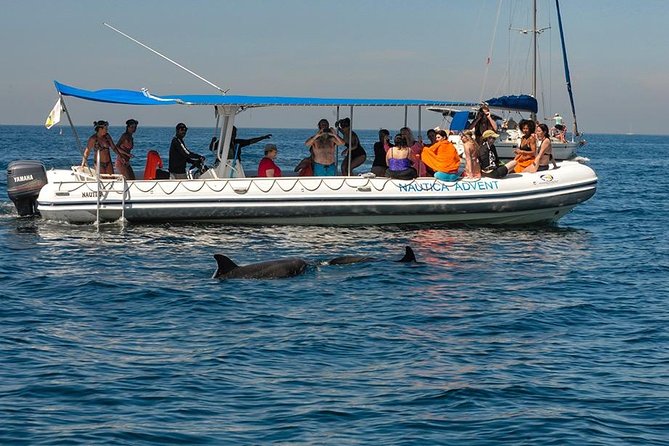
The boat is described as a small, covered vessel, with groups often around 12 to 16 people and a maximum of 20. That is a useful middle ground. You get a real view of the water from close to sea level, but the cover gives some relief from the sun.
A small boat also lets the captain move into a good viewing position. The best captains do not simply chase an animal. They watch its direction and try to place the boat behind or beside it without crowding it. That can help you get the classic tail shot while keeping a respectful distance.
There is a tradeoff. Small boats move more with the water than large vessels, and you are more exposed to wind and spray. One departure had a particularly windy day, yet the covered boat helped. If you are prone to motion sickness, use your usual precautions before leaving the marina.
There is no bathroom on board. Four hours is a long stretch, especially if you are bringing children, so use the facilities before departure. Most people can participate, but the trip is not recommended for anyone more than seven months pregnant. Service animals are allowed.
Finding humpback whales in winter
Humpback whales visit Puerto Vallarta during the winter months to mate and give birth. The bay can hold a mix of adults, mothers, and young calves, so the sightings are not limited to one type of encounter.
Your first goal may be a group of adult whales. The guide watches their surface patterns and explains what each movement could mean. You might see a blow, a rolling back, a pectoral fin lifted above the water, or a tail fluke as a whale heads down for another stretch below the surface.
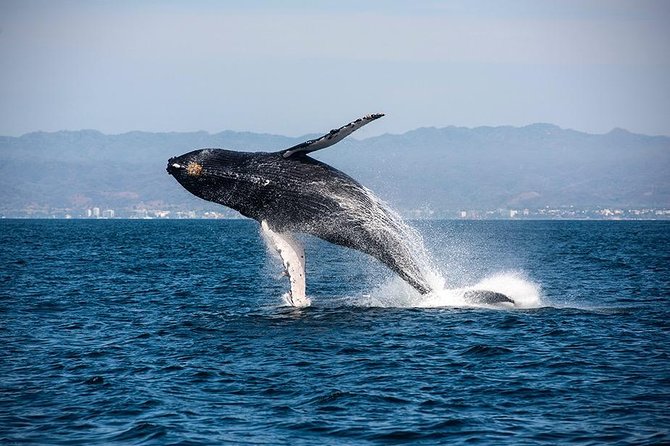
Breaching is never promised, but it is possible. Some outings have included repeated breaches, while others have featured quieter encounters with mothers and babies. One particularly active afternoon included more than 25 breaches, while another produced sightings of 20 to 30 whales. Those numbers show what the season can offer, but they should not be treated as a standard result.
A mother and calf is often the most rewarding sighting. The calf may roll, slap its tail, or breach near the mother while she stays close. The guide can explain how young whales learn to communicate and why the pair may remain together during the early part of the calf’s life.
You may also see male whales gathering around a female. This can look chaotic from the boat, but the guide helps you understand the social behavior rather than reducing it to a simple chase. That interpretation is where the tour earns much of its value.
A few other Puerto Vallarta days to price up
- Puerto Vallarta Best Zipline Canopy + Tequila and Speed Boat Ride
★ 5.0 · 3,786 reviews - Winner 2025 Downtown Vallarta Food Tour with Vallarta Food Tours
★ 5.0 · 3,738 reviews - Extreme Adventure, Wildest Bridge, ATV & Ziplines
★ 5.0 · 3,179 reviews - Mega Yacht ALL INCLUSIVE Yelapa Waterfall & Snorkeling Adventure
★ 5.0 · 2,515 reviews
Listening to whales with a hydrophone
The hydrophone is a special touch. It places a microphone underwater and sends the sounds through the boat’s audio system, allowing you to hear whale calls and songs.
The experience changes the mood of the trip. You are no longer waiting only for a surface event. A whale may be out of sight, but its sound can still reach you. Guides explain that different calls and songs may be heard at close range or from animals farther away.
This is especially useful when the sea is calm but the whales are less active. A loud breach creates an obvious memory, but hearing an animal communicate below the hull gives you another connection to the environment. I would consider the hydrophone one of the clearest signs that this is an educational wildlife outing rather than a simple sightseeing cruise.
Dolphins, turtles, mantas, and possible surprises
The winter outing combines whale watching with dolphin watching. Possible dolphins include bottlenose, spotted, spinner, and rough-toothed dolphins. The guide may point out how they travel, surface, and stay together.
A pod of dolphins can appear suddenly near the boat, sometimes alongside whales. The combination is exciting because the animals move differently: whales surface in slower, powerful cycles, while dolphins can spread and regroup quickly.
The wider search may also produce marine turtles and giant mantas. A few outings have included blue-footed boobies and a sea lion, though these are extras rather than promised parts of the program. Orcas or false orcas are also listed as possible sightings, but they are uncommon possibilities, not something to book this trip expecting to see.
That distinction is important. The tour includes a broad range of potential wildlife, but humpback whales are the main event in winter. Dolphins, turtles, mantas, seabirds, and other animals make the day better when they appear.
How the research element works
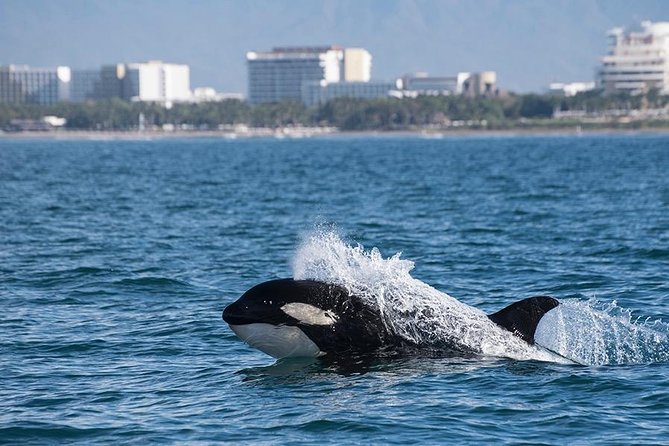
The research component gives you a reason to pay attention between sightings. Your guide may share information about local whale and dolphin programs and explain how observations help researchers understand the animals.
The available details do not spell out every data-collection step, so you should not expect a formal laboratory session on the boat. Think of it as citizen science guided by a marine specialist. You receive an explanation of the work and have an opportunity to contribute through your participation.
The guides bring strong credentials. The team includes biologists with master’s degrees in marine ecology, a science journalist, and a professional wildlife photographer whose work has appeared with National Geographic and Animal Planet. That background helps explain why the commentary goes beyond basic species identification.
For me, the research angle is valuable because it encourages respectful watching. You are not only asking how close the boat can get. You are learning to notice behavior, timing, sounds, and relationships.
The crew makes a real difference
A captain can make or break a wildlife trip. Jorge, Cesar, and George are singled out in different departures for safe handling and good positioning, while Jemma, Gemma, and Camilla receive praise for their warmth, energy, and science explanations.
The strongest crew arrangement has a clear division of labor. The captain watches the boat and the water. The biologist watches the animals and talks you through what is happening. That teamwork helps the group stay focused without turning the outing into a frantic race from one sighting to the next.
The human details also matter. Camilla has prepared sandwiches, helped mark a birthday with a small treat, and let a guest use the best viewing position at the front of the boat. Food is not the reason to book, but a simple sandwich and soft drink can be welcome during a four-hour trip.
Bring cash if you plan to tip. It is not listed as part of the price, and the crew’s work is central to the experience.
Is $105 a fair price?
At $105 per person, this is not the cheapest boat ride in Puerto Vallarta. You are paying for a four-hour outing, a small group, a covered boat, an experienced captain, a marine biologist, the shore presentation, and access to the research program.
The price makes more sense if you care about the quality of interpretation and not just the number of animals you might see. A large party boat may give you a place on the water for less, but it may not offer the same close discussion of whale behavior or the chance to hear songs through a hydrophone.
The small group is another part of the value. With 12 to 16 people, you can usually look from either side of the boat. A full group of 20 will feel more crowded than a group of five, but it is still a manageable size for wildlife watching.
I would book this for a special day, a family outing, or a first whale-watching experience when you want the guide to explain what you are seeing. If your only goal is the lowest possible fare, compare other boats first.
Morning or afternoon departure?
The supplied details do not establish that one departure is always better. Whale behavior changes throughout the day, and one afternoon outing produced excellent sightings after a morning trip had seen none.
That does not mean afternoon trips are automatically superior. It means you should resist claims that whales follow a fixed schedule. The animals decide when and where to surface.
Choose the departure that fits your plans and gives you enough time to reach the marina without rushing. Leave room for the full four-hour outing, since the boat may return after the final search and harbor transit.
Who will enjoy this tour most?
I would recommend it to anyone who wants wildlife watching with explanation rather than a quick photo stop. It suits couples, families with teenagers, and first-time whale watchers. The combination of whales, dolphins, a hydrophone, and a marine biologist gives the experience enough variety for a full half-day.
It is also a good fit for photographers. The boat can be positioned for fluke shots, and the open viewing areas help you follow an animal from both sides. Still, wildlife photography requires patience. Keep your camera ready, but do not spend the whole trip looking through a screen.
Families should know that the boat has no bathroom and that conditions can be windy. Most people can take part, but anyone with special mobility or pregnancy concerns should check the practical demands before booking.
What to bring and remember
Wear clothing suited to wind and sun, and bring protection for both. A covered boat helps, but it does not turn the outing into an indoor experience.
Bring a camera, but listen to the guide first. The most memorable moments may include a mother teaching a calf, a distant whale song, or dolphins changing direction beside the boat.
Use the restroom before boarding. You may also want a small amount of cash for tips. Confirmation is sent within 48 hours of booking, subject to availability, so avoid leaving this until the last minute, especially since the tour is booked about 26 days ahead on average.
Free cancellation is available until 24 hours before the start time. Inside that window, you normally receive no refund and changes are not accepted. The trip requires suitable weather and a minimum number of participants. If the operator cancels for either reason, you can choose another date or experience, or receive a full refund.
Should you book Whale and Dolphin Watching with a Biologist?
Book it if you want the animals explained as well as photographed. The strongest reasons are the marine biologist guides, the hydrophone, the small covered boat, and the chance to support research while watching whales in their natural setting.
Do not book it expecting guaranteed breaches, a restroom, or a completely calm ride. The wildlife is unpredictable, and the four-hour search can feel slow before the action begins.
For a winter visit to Puerto Vallarta, I think the $105 price is justified for readers who value careful guiding and a closer look at animal behavior. Choose your date carefully, arrive ready for four hours on the water, and give the whales time to set the pace.
FAQ
Where does the tour start?
The meeting point is Opequimar Centro Marino, Av. Paseo de la Marina Sur 214, Marina Vallarta, Puerto Vallarta, Jalisco, Mexico.
Where does the tour end?
The tour returns to the same meeting point at Opequimar Centro Marino.
How long does the experience last?
The outing lasts approximately four hours.
How much does the tour cost?
The listed price is $105 per person.
What animals might I see?
You may see humpback whales, bottlenose dolphins, spotted dolphins, spinner dolphins, rough-toothed dolphins, marine turtles, and giant mantas. Orcas or false orcas are possible but not guaranteed.
When can I see humpback whales?
The tour description places humpback whale watching during the winter months, when the whales come to Puerto Vallarta to mate and give birth.
Is the tour offered in English?
Yes. The experience is offered in English.
How many people can join the boat?
The maximum group size is 20 people. Several departures have had groups of roughly 12 to 16 people.
Is there a bathroom on the boat?
No. Use the restroom before boarding.
Can I cancel for a refund?
Yes, if you cancel at least 24 hours before the experience start time. Cancellations within 24 hours are not refunded. If poor weather or an insufficient minimum group causes the operator to cancel, you will be offered another date or experience, or a full refund.
New on the Puerto Vallarta list
- Puerto Vallarta Pirate Premium Sailing Cruise★ 4.5 · 53 reviews
- Ocean Mania & water park experience in Puerto Vallarta★ 4.0 · 53 reviews
- Sayulita & San Pancho★ 4.5 · 54 reviews
- Puerto Vallarta: Canopy Tour with Zipline and Speedboat Ride★ 4.6 · 55 reviews
- ATV Tour in Puerto Vallarta, waterfall and tequila tasting.★ 4.0 · 57 reviews
- Whale Watching in Puerto Vallarta★ 4.5 · 57 reviews
- Private Whale watching Puerto Vallarta★ 5.0 · 59 reviews
- Half Day Private Sailing Cruise Puerto Vallarta with Snorkeling★ 5.0 · 59 reviews
Puerto Vallarta Tours, compared.
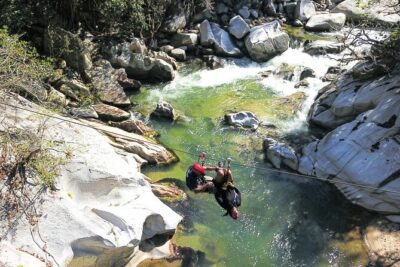
Puerto Vallarta Best Zipline Canopy + Tequila and Speed Boat Ride
Read our review →
Winner 2025 Downtown Vallarta Food Tour with Vallarta Food Tours
Read our review →
Extreme Adventure, Wildest Bridge, ATV & Ziplines
Read our review →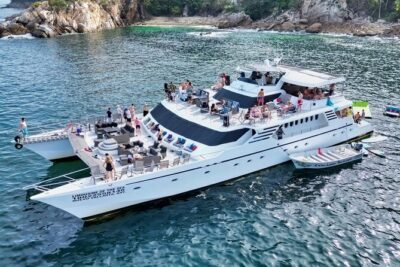
Mega Yacht ALL INCLUSIVE Yelapa Waterfall & Snorkeling Adventure
Read our review →
Food & Mixology Tour:Tequila,Tacos, Mezcal and Agave Cocktails
Read our review →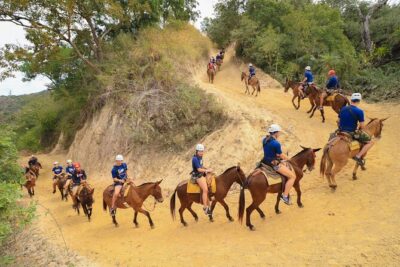
Outdoor Ziplining, Waterfalls & Speed boat in Puerto Vallarta
Read our review →
Rhythms of the night, Sunset Cruise, Candlelit Dinner & Alma Show
Read our review →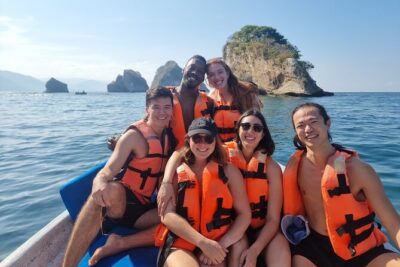
Boat and Snorkel Tour to 5 Islands of Los Arcos
Read our review →Browse the lists this tour appears in