
Reviewed · ZIHUATANEJO TOURS
Xihuacan Culture and Archaeology Tour
Xihuacan is the kind of archaeological stop that rewards curiosity more than checklist sightseeing. You visit a small excavated section of a once-important pre-Hispanic trading city, then use the museum, village, and surrounding farmland to picture how large the settlement may have been.
I like the local guides, who explain both the ancient site and present-day life in the region. I also like the traditional lunch, served away from Ixtapa’s resort zone, with handmade tortillas, beans, guacamole, and a choice of seafood, chicken, or fish. The main drawback is the heat and limited shade, so bring a hat, water, and comfortable shoes.
Key points at a glance
- The museum comes first: About 800 objects, including shell work, ceramic pieces, obsidian vessels, copper axes, necklaces, and carved stone.
- The archaeological area is compact but meaningful: You see the ball court, Edificio B pyramid, and views across farmland and coconut plantations.
- Guides make the difference: Pablo, Francisco, Antonio, Paco, Juan, and Enrique have all led this experience, with strong English and local knowledge.
- The lunch is part of the cultural experience: Expect handmade tortillas, beans, salsa, guacamole, and a choice of seafood, fish, or chicken.
- Small groups keep it personal: The air-conditioned van holds no more than 14 people, and the tour may feel nearly private.
- Plan for a half day: Allow about four hours, including roughly 45 minutes to the site, three hours at the cultural center, lunch, and the return drive.
Why Xihuacan is worth leaving the beach
Ixtapa and Zihuatanejo make beach time easy. Xihuacan gives you a useful reminder that this part of Mexico was important long before the resorts, cruise ships, and hotel pools arrived.
The site is sometimes spelled Xihuacan or Xihuacan Culture and Archaeology Tour in booking material. It is near the rural community of Soledad de Maciel, about a 45-minute drive from your hotel. The excavated area is not on the scale of Teotihuacan or Chichen Itza. That is worth knowing before you book.
What you get instead is a quieter visit where the guide can help you make sense of a smaller visible area and the much larger settlement that lies beyond it. Cornfields and coconut plantations now fill much of the view. From the pyramid, you can picture those fields as part of a city connected to trade routes across western Mexico.
I especially like that the experience does not treat the ruins as an isolated pile of stones. The museum, village, church, local stories, and meal all help connect the ancient center to the people who live nearby today.
A few other Mexico days to price up
- Private Ixtapa and Zihuatanejo City Tour
★ 5.0 · 137 reviews - Ixtapa Island Tour
★ 4.5 · 134 reviews - Baby Sea Turtle Releasing Sightseeing Tour with Luis de la Maza
★ 5.0 · 111 reviews
The 45-minute ride from Ixtapa or Zihuatanejo
Pickup begins at about 9:00 a.m. at hotels in Ixtapa or Zihuatanejo. The vehicle is an air-conditioned 14-passenger van, an important comfort in Guerrero’s warm climate. The drive takes roughly 45 minutes each way, though the return includes the lunch stop and takes longer.
The small-group format is one of the strongest parts of this outing. The van can carry up to 14 people, but several departures have operated with only a handful of participants, and some with just one couple. That gives you more time to ask questions and makes it easier for the guide to adjust the pace.
Guides named in the feedback include Pablo, Francisco, Antonio, Paco, Juan, and Enrique. Their strengths vary, but the repeated pattern is clear: you can expect English commentary, local stories, and explanations that go beyond dates and building names. Francisco, in particular, is praised for explaining Spanish-language museum information in English. Pablo is frequently described as friendly and well spoken, while Antonio is noted for taking time with questions and interpretation.
Bring a few pesos. One stop may include a small coffee hut, and tips at lunch or for the guide and driver are not included in the tour price. One visitor felt that repeated tipping requests added about 15 percent to the cost for two people. Tipping is a personal choice, but it is wise to budget for it so the final price does not surprise you.
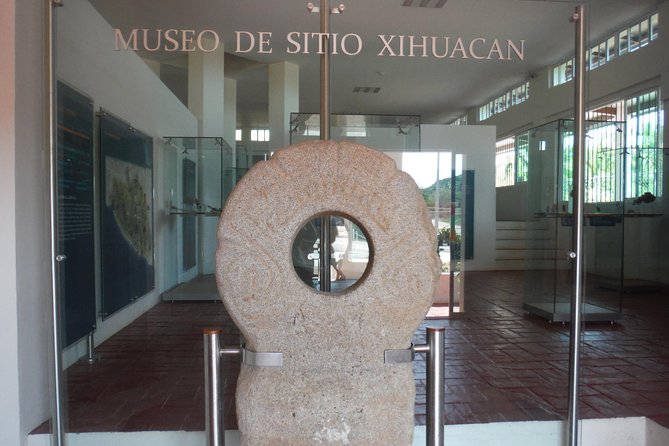
The Xihuacan Site Museum and its 800 objects
The museum is the best place to begin because it gives you the vocabulary needed for the outdoor visit. It houses about 800 objects, including:
- Work made from ocean shells
- Ceramic vessels and other pottery
- Obsidian vases
- Bell necklaces
- Copper axes
- Stone artifacts
- Granite carvings
The collection helps show the skill and reach of the culture that occupied the area. Shell work points to contact with the nearby coast, while obsidian and copper suggest trade and specialized craft production. Your guide explains what the objects are and how they fit into the broader story of the region.
Do not rush this stop. The museum information is in Spanish, so an English-speaking guide is particularly useful here. Francisco has been singled out for carefully translating and explaining the displays, and other guides, including Pablo and Antonio, have also received praise for taking their time.
The museum is not merely a warm-up before the ruins. For many people, it becomes the clearest part of the visit because you can see the objects at close range. Once you reach the ceremonial center, you have a better sense of what daily life, trade, ritual, and workmanship may have looked like.
The ball court and the meaning of the game
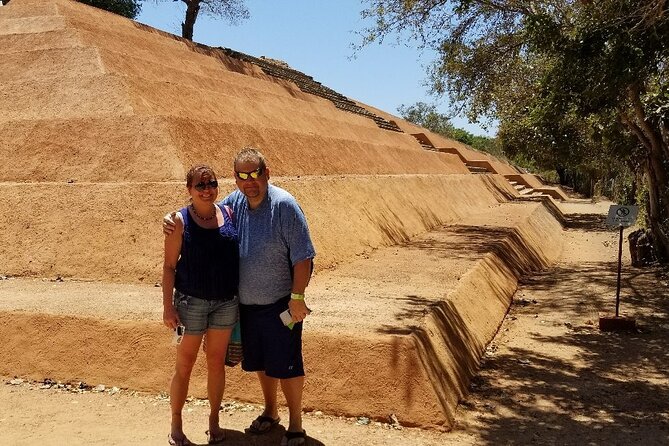
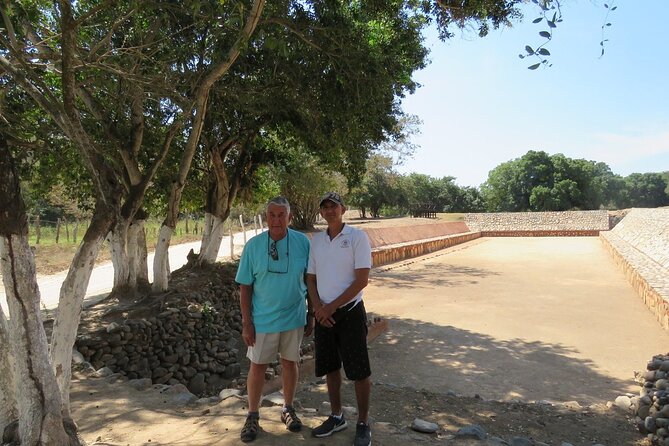
The next stop is the ball court, where the pre-Hispanic ball game was played. The game was tied to religion and ritual, and in some settings it was associated with human sacrifice.
That subject can be uncomfortable, but it is part of understanding how ceremonial centers worked. The court was not simply a sports field. It was a religious and political space, and the guide helps explain why ball courts appear in many pre-Hispanic cities.
This is also a good place to ask questions. A small site can be hard to read without context, especially when walls and playing surfaces are partly restored or weathered. Your guide’s explanation gives the court a role in the city rather than leaving you to guess what the stones once meant.
Expect outdoor walking, sun, and uneven ground. The experience is not described as difficult, and most people can take part, but a hat is genuinely useful. Comfortable shoes are a better choice than beach sandals.
Same stretch of coast, a very different day:
- Chichen Itza, Cenote, and Valladolid Tour
★ 5.0 · 24,293 reviews - Chichen Itza, Cenote & Valladolid Tour with Tequila and Lunch
★ 4.5 · 15,789 reviews - Teotihuacan, Guadalupe Shrine & Tlatelolco Day Tour with Lunch
★ 5.0 · 11,603 reviews - Cabo Beach Camel Ride, Mexican Buffet and Tequila Tasting
★ 5.0 · 8,815 reviews
Edificio B and the view across the old city
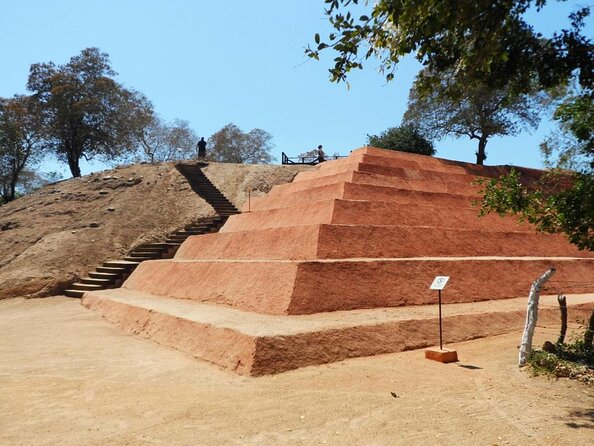
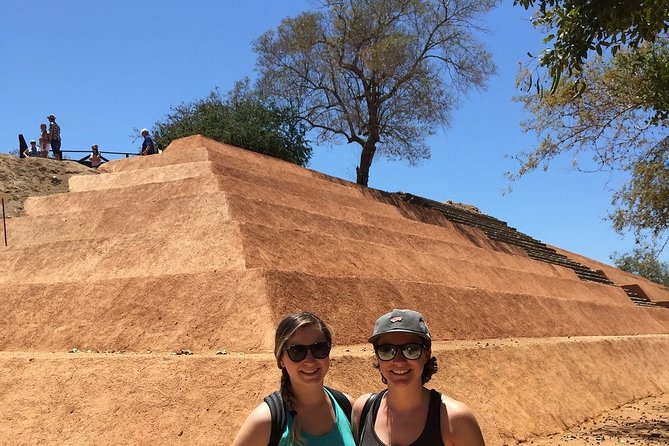
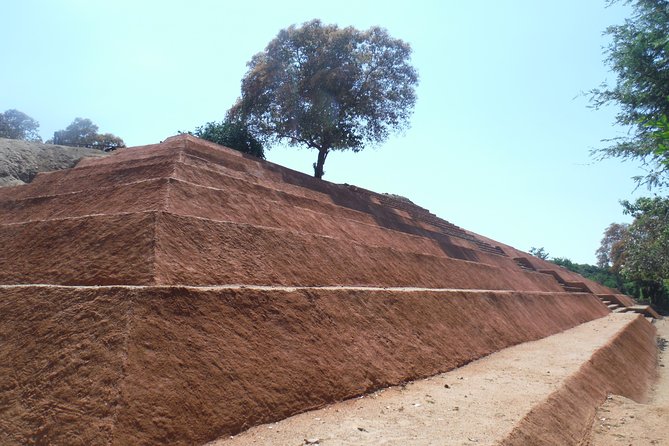
Edificio B is the pyramid structure included on the visit. It was built with bricks inside and modeled clay on the outside, a construction detail that gives you a more realistic idea of how ancient buildings may have looked when finished.
Today, the structure is not a towering monument. Its value comes from the view and from the guide’s explanation of what is excavated and what remains covered. From the pyramid area, you can look across farmland and coconut plantations and imagine a much larger trading settlement spreading beyond the cleared ruins.
Several visitors have found the site larger in concept than expected. The visible portion is small, but jungle and unexcavated ground hide much of the former city. That distinction matters. If you want dramatic, fully restored architecture, this may feel modest. If you enjoy piecing together an ancient place from partial remains, it works well.
The stop also gives you a chance to understand why archaeological work takes time. What you see is only the part that has been exposed and prepared for visitors. The guide can point out the relationship between the ceremonial center and the surrounding area, helping you see the site as an old city rather than a single pyramid.
Soledad de Maciel and local life beside the ruins
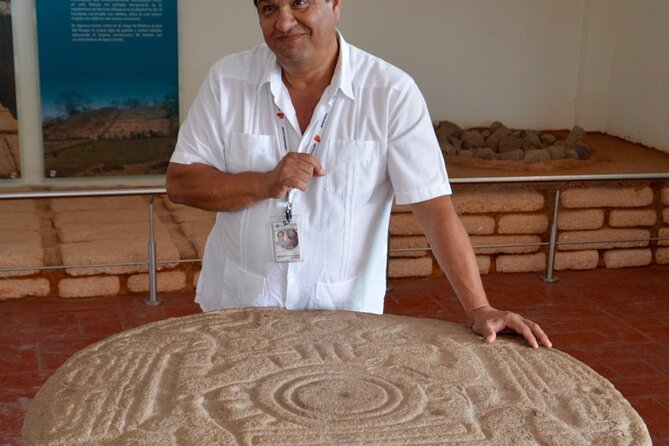
The tour continues to Soledad de Maciel, a rural community beside the archaeological center. The village was built over what had once been a neighborhood for high-status residents during the pre-Columbian period.
That detail makes the stop especially interesting. Ancient places are not always empty parks separated from modern life. Here, present-day homes and community spaces occupy ground that was once part of the old settlement. You may also visit the local church and see additional artifacts, depending on the day’s exact flow.
I like this part because it broadens the visit beyond archaeology. Your guide may discuss the local economy, Indigenous languages, and the way people in the area live with the remains of the past. Enrique, for example, has been praised for connecting the archaeological site with current local life.
The village visit is not a polished tourist attraction, and that is part of its appeal. Conditions may be simple, and the pace may depend on local access. Come ready for a genuine community stop rather than a staged cultural show.
A traditional lunch with handmade tortillas
Lunch is included and usually comes at a traditional Mexican food and seafood restaurant away from the resort town of Ixtapa. The meal is one of the best reasons to choose this tour instead of a quick ruins transfer.
Your main choice is generally one of the following:
- Shrimp in garlic sauce or breaded
- Fish fillet in garlic sauce, breaded, or grilled
- Chicken fajitas, grilled chicken, or breaded chicken
Each meal comes with guacamole, chips, salsa, handmade tortillas, and beans. You also receive a beer, soft drink, or coconut milk.
The setting is described as a simple, family-run or countryside restaurant. In some cases, the tortillas are made on a griddle right beside the table. That small detail turns lunch into part of the day’s cultural experience, not just a convenient break.
Food quality can vary from one departure to another, as it does anywhere, and one person found lunch only average. Still, the overall pattern is strong: seafood, tortillas, and local cooking are repeatedly singled out as highlights. If you want a meal that feels more connected to the area than a hotel buffet, this is a real advantage.
Bring pesos for drinks beyond what is included and for tips. The meal includes one beer, soft drink, or coconut milk, but extra purchases are not specified.
Timing, comfort, and the real length of the day
The stated duration is about four hours, but the schedule deserves a closer look. The drive to the archaeological site takes approximately 45 minutes. You spend about three hours exploring the museum and ceremonial center, then drive about 35 minutes to the beach or lunch area. The ride from lunch back to your hotel takes around 40 minutes.
That means the day can feel longer than a basic four-hour museum visit, especially if pickup and local traffic add time. The start is listed as 9:00 a.m., and departures run daily except Monday.
The air-conditioned van matters. You are outside for part of the archaeological visit, and the heat can be strong. The van gives you a cool place to recover between stops. It also lets you see the countryside without arranging a rental car or navigating rural roads yourself.
The tour is offered in English, with a mobile ticket and hotel pickup and drop-off in Ixtapa or Zihuatanejo. A minimum of two adults is required per booking. Children must be accompanied by an adult, child pricing applies only when sharing with two paying adults, and the activity is not recommended for children aged six and under.
Most participants can take part, and service animals are allowed. Still, the outdoor sections mean you should be comfortable walking in sun and on archaeological ground.
Is the $95.61 price good value?
At $95.61 per person, the price is not just paying for entry to a ruin. It covers hotel transportation, an English-speaking driver-guide, the museum and archaeological visit, and lunch.
For two people, the value is strongest if you would otherwise need to hire transport to reach Xihuacan. You also avoid the work of finding the site, arranging a local guide, and choosing a restaurant. The air-conditioned van is another practical benefit in the heat.
The price is less compelling if your only goal is to see a large, dramatic ruin for a short time. Xihuacan’s excavated portion is modest, and the tour spends meaningful time in the museum and village. You are paying for interpretation and local connection as much as for monumental architecture.
Remember to allow for tips and any extra drinks or purchases. One person estimated that tipping increased the total cost by roughly 15 percent for two people. That does not make the tour poor value, but it is useful to include in your budget.
The 4.8 rating from 116 reviews and 97 percent recommendation rate fit the experience’s main strengths: guides, transport, and lunch. The most praised guides are Pablo, Francisco, and Antonio, though guide assignments can change.
Who should book this half-day cultural outing?
I would choose this tour if you want a break from the beach and prefer a personal guide to a self-guided ruin. It is especially good for adults interested in archaeology, Mexican history, Indigenous cultures, and local food.
Families can enjoy it too. Two children aged 14 and 16 were initially reluctant to leave the pool but ended up considering the outing a highlight. Younger children may find three hours of museum and archaeological explanation tiring, and the tour is not recommended for children six and under.
You should also book it if you value small groups. The van holds 14, but the experience can become nearly private when few people reserve. That means more room for questions and a better chance to hear stories about Zihuatanejo, food, language, and the region.
I would skip it if you want a major pyramid complex with extensive restoration, lots of shops, or a full beach stop. The tour does not visit a lagoon, and the beach or lunch portion is a stop connected to the return journey, not a separate beach excursion.
Practical details before you reserve
The tour runs daily except Monday and starts at 9:00 a.m. Pickup is offered from hotels in Ixtapa or Zihuatanejo, and confirmation is provided when you book.
A minimum of two adults per booking applies. Children need an accompanying adult, and service animals are permitted. Most people can participate, but wear a hat, use sun protection, and choose shoes suited to outdoor walking.
Free cancellation is available if you cancel at least 24 hours before the start time. Changes or cancellations made less than 24 hours ahead are not refunded or accepted. If the operator cancels because the minimum number of participants is not reached, you can choose another date or experience, or receive a full refund.
Should you book the Xihuacan tour?
Book it if you want local context, a strong English-speaking guide, and a real Mexican lunch more than a grand ruin with polished monuments. The museum gives the ancient culture substance, the ball court and Edificio B provide the archaeological focus, and Soledad de Maciel shows how the old city connects to life today.
The main caution is simple: Xihuacan is a partly excavated site, not a giant landmark. Bring a hat, expect some tipping, and allow flexibility for the countryside drive and lunch. For curious visitors staying in Ixtapa or Zihuatanejo, this is a worthwhile way to spend a half day away from the resort strip.
FAQ
How long does the Xihuacan tour take?
The experience lasts approximately four hours. The drive to the archaeological site takes about 45 minutes, the main visit lasts around three hours, and the return includes a lunch stop.
What time does the tour start?
Pickup begins at 9:00 a.m.
Which days is the tour available?
The tour runs daily except Monday.
Is hotel pickup included?
Yes. Hotel pickup and drop-off are included for hotels in Ixtapa or Zihuatanejo.
What is included in the price?
The price includes transportation with a driver-guide and lunch. Lunch includes a choice of seafood, fish, or chicken, plus guacamole, chips, salsa, handmade tortillas, beans, and one beer, soft drink, or coconut milk.
What will I see at Xihuacan?
You will visit the Xihuacan Site Museum, the ball court, Edificio B pyramid, and the rural community of Soledad de Maciel. The museum contains about 800 objects.
How many people can join the tour?
The maximum group size is 14 people, using an air-conditioned passenger van.
Can children join the tour?
Children must be accompanied by an adult. Child pricing applies only when sharing with two paying adults, and the activity is not recommended for children aged six and under.
New on the Mexico list
- Day of the Dead Tour in San Andres Míxquic From Mexico City★ 3.7 · 52 reviews
- Swim with Whale Shark from Isla Mujeres and Cancun★ 4.5 · 52 reviews
- Bacalar Lagoon of 7 Colors from Playa del Carmen and Tulum★ 4.5 · 52 reviews
- Biggest Luxury Yacht Boat Best in Cancun up to 28 pax★ 5.0 · 52 reviews
- El Cielo Cozumel Snorkel tour by Catamaran★ 4.0 · 52 reviews
- Tulum: Private Snorkel and Sailing Experience★ 4.8 · 52 reviews
- Reef Snorkel In National Park In Puerto Morelos With Lunch And Transportation★ 4.0 · 52 reviews
- From Playa del Carmen: Whale Shark Tour★ 4.3 · 52 reviews
Zihuatanejo Tours, compared.

Baby Sea Turtle Releasing Sightseeing Tour with Luis de la Maza
Read our review →

Zihuatanejo Food -Tasting and Walking Tour (Not for vegetarian)
Read our review →
Browse the lists this tour appears in