
Reviewed · CANCUN TOURS
Two Tanks Scuba Diving for Beginners in Cancun
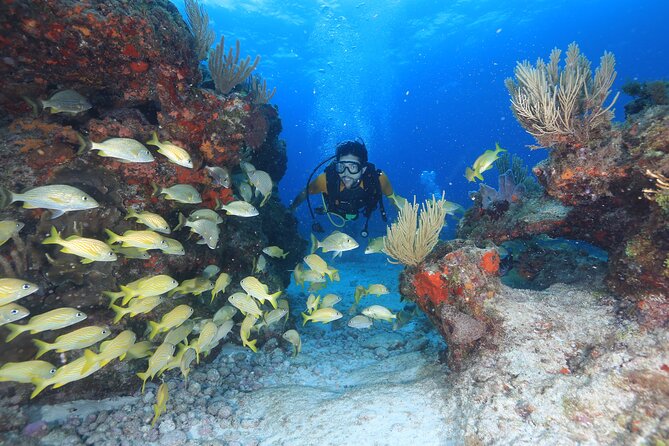
Cancun’s best underwater introduction pairs MUSA Underwater Museum with the marine life of Manchones Reef. You learn the basic skills in a pool first, then head out by boat for two guided tank sessions without needing a certification.
I like the small maximum group of eight, which gives instructors room to calm nervous beginners and point out turtles, rays, lobsters, eels, and reef fish. I also like the clear half-day schedule, with an 8 a.m. check-in and a return around 1 p.m. The main catch is that you must be able to swim, meet strict health requirements, and stay out of the water for 18 to 24 hours before flying.
Key points to know before booking
- Two very different underwater sites: Visit the sculptural MUSA museum first, then explore the natural Manchones Reef.
- Pool practice comes first: You learn equipment use and basic skills with an instructor before entering open water.
- Personal guidance matters: Lorena, Marin, Carolina, and the wider A’HA team are praised for patience, calm instruction, and close supervision.
- Small boat and small group: The boat carries no more than eight participants, though the ride can feel rough in poor sea conditions.
- Photos and videos cost extra: You may bring your own camera, but optional professional images are available.
- Plan around your flight: You need an 18 to 24-hour rest period after scuba activity before boarding an airplane.
What makes the Cancun underwater route special
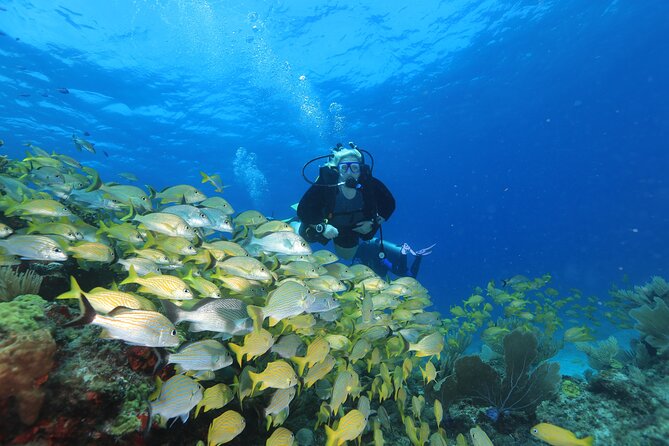
This is not simply a first lesson in a swimming pool followed by a quick look at coral. The route gives you two contrasting settings in one morning.
MUSA, the Museo Subacuático de Arte, places human-made sculptures below the surface. The figures and structures gather marine growth over time, giving you an unusual meeting point between art and the sea. You will not view the museum like a normal gallery. You move slowly above or beside the sculptures, following your instructor’s hand signals and watching fish pass through the scene.
Manchones Reef shifts the focus to nature. Here, your guide looks for reef creatures and points them out with underwater signals. Depending on the conditions, you might see schools of tropical fish, stingrays, lobsters, eels, puffer fish, turtles, brittle stars, and other small sea life.
That change from sculpture to reef is the strongest part of the morning. MUSA gives you something easy to remember and photograph. Manchones gives you the living environment that makes Cancun’s Caribbean waters worth exploring.
More Scuba Diving in Cancun
- Scuba Diving Under Water Museum and Reef for beginners
★ 5.0 · 189 reviews - Cancun: Scuba Diving for Beginners, 2 Dives
★ 5.0 · 184 reviews - Scuba Diving (1st time) in Cancun Beginner’s WELCOMED!
★ 5.0 · 102 reviews
The 8 a.m. start at Hotel Sotavento
You meet at Hotel Sotavento Cancun on Boulevard Kukulcan in the Hotel Zone. Check-in begins at 8 a.m., so I would leave extra time to reach the site, especially if you are coming from another hotel. Hotel pickup is not included, and you are responsible for making your own way there.
The check-in process includes a health questionnaire. This is not a form to rush through. Scuba activity places unusual demands on your ears, lungs, and circulation, so answer honestly and ask questions before the lesson begins.
You should bring your identification, swimsuit, towel, and anything else you need for personal care. Sunscreen is not allowed because of coral protection rules. Apply it before arriving only if you can do so within the operator’s environmental requirements, and ask the staff if you are unsure about what products are permitted.
The center is near public transportation, but transportation from your hotel is not part of the $169 price. That extra planning is easy to miss when comparing this outing with hotel-based activities.
Pool training turns nerves into useful skills
The basic theory lesson and pool practice are the heart of this program. Before you go into open water, an experienced instructor explains the equipment and the essential skills needed to manage yourself below the surface.
You use a BCD, regulator, mask, fins, and wetsuit. The pool gives you a controlled place to get used to breathing through the regulator, moving with fins, and handling the basic procedures taught by your instructor.
This step is especially useful if you feel nervous. Several participants describe arriving worried about the ocean, sharks, breathing, or simply the unfamiliar equipment. Instructors such as Lorena and Marin are praised for using patience and humor without treating safety casually.
One participant had trouble timing breathing and began tiring in the pool. The instructor noticed the problem and adjusted the technique before the open-water portion. That is precisely why the pool session matters. It is not filler before the real activity. It gives you a chance to say that something feels wrong while you are still in a manageable setting.
The training is also useful for certified people who have not used scuba equipment for years. A refresher participant described the practice as the right amount of instruction before returning to the water. You should still approach this as a beginner program, not as a substitute for a full certification course.
Boarding the boat for the 9:30 a.m. departure
The boat leaves at about 9:30 a.m. and returns to the same dock around 1 p.m. The boat is described as small, which fits the program’s personal feel but also means you may notice the motion more than you would on a large vessel.
Motion sickness is the most practical concern during this part of the morning. The operator suggests taking an anti-nausea pill one or two hours before boarding. Follow medical advice when choosing any medication, and do not wait until the boat is already moving if you know you are prone to seasickness.
Conditions can change. One account describes a particularly rocky ride after stormy weather, with the crew helping people stay seated and the instructor assisting with fins and equipment. The same account found that getting into the water made the movement easier to handle, but that will not be true for everyone.
Keep your belongings secure. The boat may not be the right place for loose phones, wallets, or dry clothing. A waterproof sack is a sensible choice, and you can ask where to store your things before the boat leaves.
More dive trips around Cancun:
- Discover Scuba Diving in Cozumel Paradise Reef
★ 5.0 · 686 reviews - Scuba Diving in Cenote Dos Ojos from Playa del Carmen
★ 5.0 · 453 reviews - Scuba Diving in Cenote Kukulkan from Playa del Carmen
★ 5.0 · 370 reviews - 2-Tank Scuba Dive in Cabo San Lucas Reserve for Certified Divers
★ 5.0 · 263 reviews
First tank session: MUSA Underwater Museum
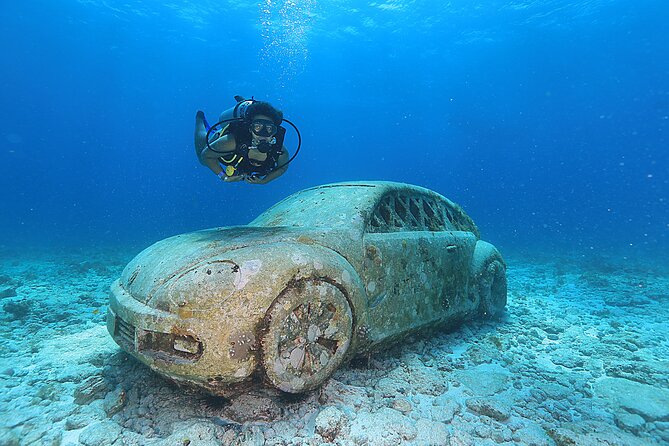
The first underwater stop is MUSA. The museum’s sculptures are the main attraction, but the setting is not static. Fish move around the figures, and the structures gradually become part of the underwater environment.
For a first scuba outing, MUSA has a useful advantage: it gives you clear visual points to follow. Rather than staring into open water wondering where to look, you have sculptures, formations, and your instructor’s signals to guide your attention.
Your instructor remains close and helps you adjust to the open-water setting. Beginners describe being checked on throughout both sessions, especially during moments of panic. This close supervision is one reason the program works better for first-timers than a crowded boat with several groups moving in different directions.
MUSA is also the place where an underwater camera can be worthwhile. You may bring your own GoPro or similar device, but operating a camera while learning to breathe, control your position, and follow signals can be distracting. The optional photo and video service costs extra. Some participants found the professional images useful because the instructor could take pictures while they concentrated on the experience.
Do not expect an extended museum visit with every sculpture explained in detail. Your time underwater depends on conditions, air supply, and group needs. Think of MUSA as a guided underwater gallery, not a formal art tour.
Second tank session: Manchones Reef
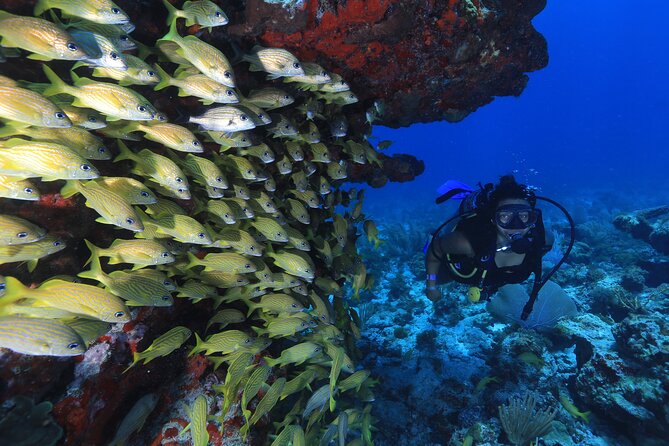
The second stop at Manchones Reef is where the natural side of the program takes over. The guide searches around coral and rock for animals and uses hand signals to show you where to look.
This is not a guaranteed wildlife checklist. The sea is not a zoo, and visibility, weather, and timing affect what you see. Still, the range of creatures reported on this route is impressive: nurse sharks, octopuses, stingrays, moray eels, puffer fish, turtles, lobsters, brittle stars, and many reef fish have all been spotted.
One guide used a flashlight to look under rocks for small creatures, a simple touch that can make the reef feel more personal. A good underwater guide does not just lead you from one place to another. The guide helps you notice the animal tucked into coral or the movement you might otherwise miss.
Manchones is often the more rewarding stop for people who have already seen MUSA. The reef supplies more natural variety, while the museum offers the memorable cultural angle. If you have visited the sculptures before, tell your guide. The team may be able to spend more time in less crowded areas, depending on the day’s conditions and group plan.
How the guides handle first-time fear
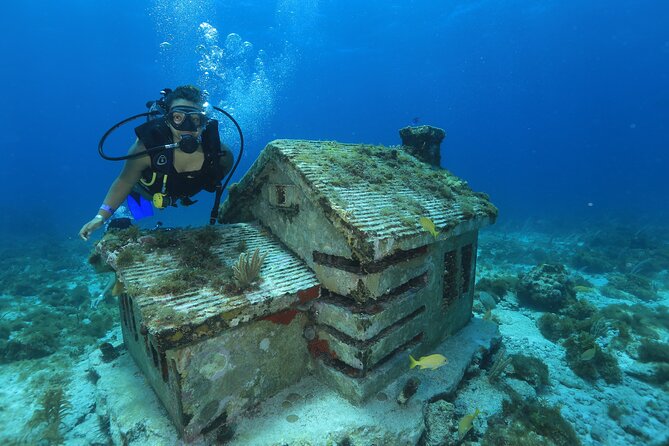
The instructor is the most important part of a beginner scuba program, and A’HA receives particularly strong praise for the teaching team. Lorena, Marin, and Carolina are repeatedly singled out for clear explanations, calm support, and a sense of humor that helps settle nerves.
That does not mean you will never feel anxious. One first-time participant panicked several times in the ocean but was checked on and coached through it. Another arrived afraid of sharks and found the pool training helped make the open-water session possible.
You should speak up early if the mask, regulator, breathing rhythm, or fins feel wrong. The staff cannot fix a problem you keep quiet about. You also need to follow directions and remain capable of performing the required skills. If you cannot complete them safely, the operator says you cannot continue, and there is no refund for that situation.
The small group helps here. The maximum is eight people, and one account describes three guides with six participants. In some cases, you may have an instructor assigned just to you or your small party, but that depends on the group arrangement on your date.
Equipment, photos, and what the $169 price covers
The $169 fee includes the theory lesson, pool practice, two tank sessions, full scuba equipment, and wetsuit use. You do not need to rent the BCD, regulator, mask, or fins separately.
The equipment is described as well kept, and staff help with fitting and setup. That matters for beginners because an ill-fitting mask or unfamiliar regulator can create stress before you even reach the water.
The price does not include hotel transportation, photos, or videos. The optional media package is worth considering if you want clear images of yourself underwater. Your own camera can work, but you may find it hard to use while managing new equipment and following your instructor.
For value, compare this with the cost of booking separate pool instruction, boat transport, equipment hire, and two guided ocean sessions. At $169, it is not a cheap casual water activity, but it combines several services in one morning and limits the group size. The value is strongest if you want a serious first taste of scuba rather than a quick surface-level swim.
Who should book, and who should skip it
This program suits you if you can swim, have moderate physical fitness, and want to try scuba without first completing a certification course. It also works for a certified person who needs a refresher after a long break.
The minimum age is 10, and the maximum age is 65. The health restrictions are strict. People with asthma, heart or brain problems, high blood pressure, lung lesions, an organ transplant, diabetes, epilepsy, or surgery within the past year cannot take part.
You also need to plan around air travel. After scuba activity, allow 18 to 24 hours before flying. Do not schedule this for the morning before your flight home.
Families can book together if everyone meets the requirements, though children must be at least 10. Solo participants are also accommodated, with the group structure helping the morning feel less awkward than a large commercial boat.
Timing, weather, and cancellation details
The scheduled day runs from an 8 a.m. check-in to a 9:30 a.m. boat departure, with a return around 1 p.m. Hotel transport is not included, and the activity ends at the same meeting point.
The trip depends on suitable weather and a minimum number of participants. If poor weather or low enrollment cancels the outing, you can choose another date or receive a full refund.
You may cancel for a full refund up to 24 hours before the start time. Cancellations and changes made less than 24 hours before the activity are not accepted for a refund, so check the local cut-off time before finalizing your plans.
Should you book this Cancun scuba program?
Book it if you want a carefully taught first scuba session with two distinct underwater settings, especially if MUSA and Manchones Reef are both on your Cancun wish list. The strongest reasons are the patient instruction, small group size, pool preparation, and the chance to see real reef life rather than only a staged attraction.
Skip it if you cannot swim, have one of the listed medical conditions, dislike small boats, or need to fly within 18 to 24 hours. Also remember that hotel transportation and media packages cost extra.
For an eligible beginner, I would place this among Cancun’s better choices for a first underwater outing. Arrive early, bring a waterproof bag, take motion sickness precautions if needed, speak openly about nerves, and give yourself plenty of time before your return flight.
FAQ
Do I need scuba certification to take this activity?
No. The program teaches basic scuba theory and skills in the pool before you enter open water, so certification is not required.
How many underwater sessions are included?
You receive two tank sessions. The first is at MUSA Underwater Museum, and the second is at Manchones Reef.
What time does the activity begin and end?
Check-in begins at 8 a.m. The boat leaves at about 9:30 a.m., and you should return around 1 p.m.
Where do I meet the group?
The meeting point is Hotel Sotavento Cancun, Km. 4, Boulevard Kukulcan, in Cancun’s Hotel Zone.
Is transportation from my hotel included?
No. You must arrange your own transportation to the meeting point. The location is near public transportation.
What equipment is included?
The price includes a BCD, regulator, mask, fins, and wetsuit, along with the basic theory and pool lessons.
Can I take a flight after the activity?
You should wait 18 to 24 hours after scuba activity before flying.
What happens if bad weather cancels the trip?
You will be offered a different date or a full refund if the activity is canceled because of poor weather.
New on the Cancun list
- Biggest Luxury Yacht Boat Best in Cancun up to 28 pax★ 5.0 · 52 reviews
- Reef Snorkel In National Park In Puerto Morelos With Lunch And Transportation★ 4.0 · 52 reviews
- Cancun ATV Tour with Zipline, Cenote & Transportation★ 4.5 · 52 reviews
- Cancun: ATV, Ziplines and Cenote Adventure in the Jungle★ 4.7 · 53 reviews
- Clearboat: Glass-bottom boat ride to the Caribean Sea★ 4.0 · 53 reviews
- Discover the FABULOUS PINK WATERS at the Caribean (Las Coloradas+Río Lagartos)★ 3.5 · 53 reviews
- ATV Single & Zip Line from Cancun★ 4.5 · 54 reviews
- Trimaran La Lupita,Sail Away to Isla Mujeres from Cancun★ 4.0 · 54 reviews
Cancun Tours, compared.

Chichen Itza, Cenote & Valladolid Tour with Tequila and Lunch
Read our review →
Chichen Itza, Cenote & Valladolid Tour with Lunch
Read our review →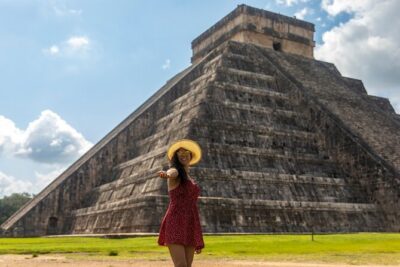
Early morning Chichen Itza Tour: Cenote and Tequila Tasting
Read our review →
Cancun ATV Jungle Adventure, Ziplines, Cenote and Tequila Tasting
Read our review →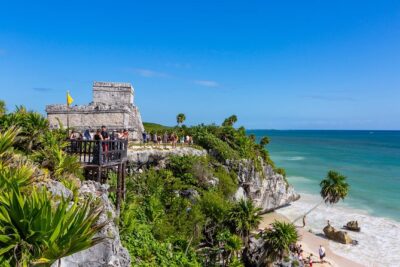
Viator Exclusive: Tulum Ruins, Reef Snorkeling, Cenote and Caves
Read our review →
Chichen Itza Early Access All Inclusive: Hotel Pick up & All Fees
Read our review →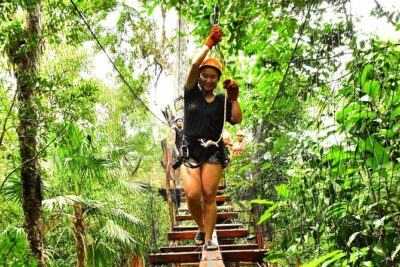
ATV Adventure, Interactive Bridges, Ziplines, Cenote and Lunch
Read our review →Browse the lists this tour appears in