
Reviewed · WALKING TOURS
Walking Tour: Temples and Convents (Western Zone)
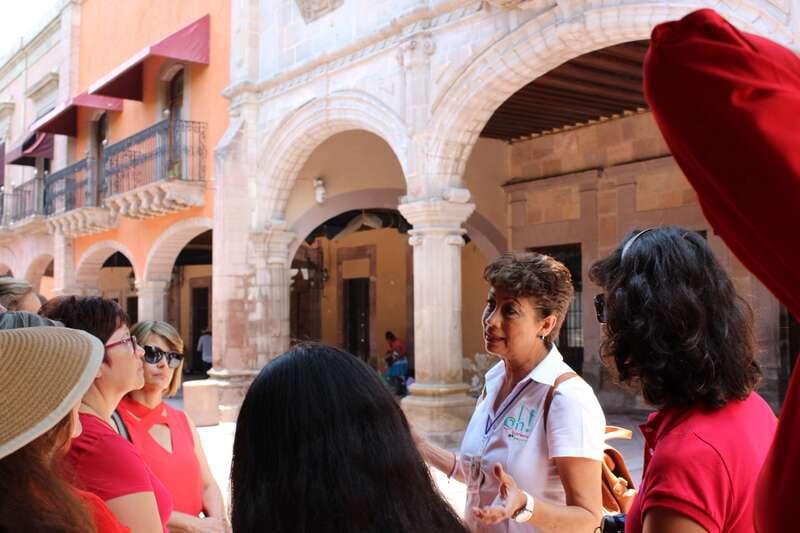
Querétaro’s Western Zone tells the city’s story through church façades, convent courtyards, and baroque detail. In two hours, you move between major religious monuments, learning how faith, art, and colonial life shaped the historic center. I like the strong focus on architecture and the way guides such as Jesús, Jorge, Carlos, and Julio bring dates and buildings to life with stories rather than a dry list of facts.
I also like the small-group feel and adaptable pace. Guides have adjusted explanations for interests in art, history, and architecture, and some tours have effectively become private outings when only one or two people booked. The main consideration is time: two hours passes quickly, and the tour may leave you wishing for a longer look inside certain sites.
Key points at a glance
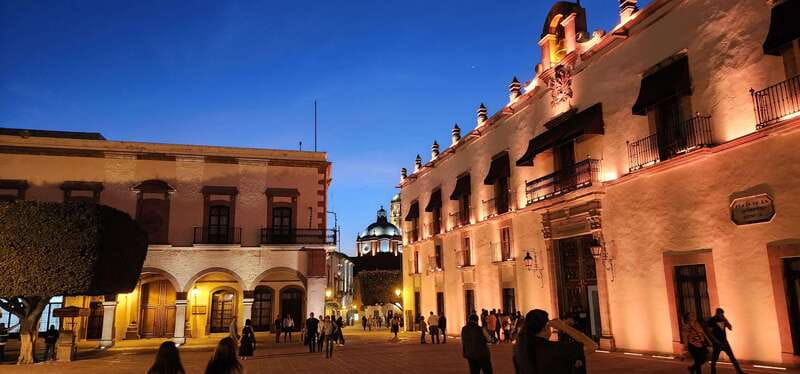
- Baroque landmarks: See Santa Rosa de Viterbo, one of Querétaro’s most striking religious buildings, along with San Agustín and Santa Clara.
- A clear Western Zone theme: The route centers on convents, temples, religious orders, art, and colonial society.
- Bilingual guiding: Tours are offered in Spanish or English, with guides including Jesús, Jorge, Carlos, Julio, and Sara.
- Story-led sightseeing: Expect legends, anecdotes, historical context, and time for questions instead of a hurried monument checklist.
- Good first-day choice: The walk helps you understand the center and plan museums or cultural stops for the rest of your stay.
- Practical value: At $23 per person, the two-hour introduction is a sensible way to get oriented, especially if you want context before exploring alone.
Why the Western Zone makes a good introduction
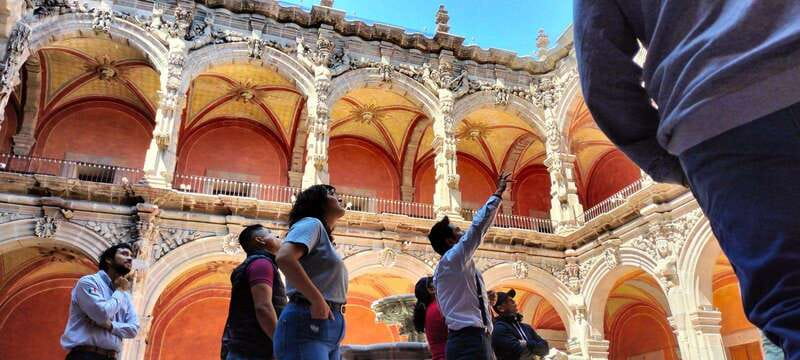
Many city walks give you a broad sample of streets and buildings. This one takes a more focused route. Its subject is Querétaro’s religious and artistic past, so you are not simply collecting church photographs. You are learning why religious orders mattered, how convents influenced daily life, and how baroque design expressed status and belief during the colonial period.
The Western Zone includes some of the city’s best-known temples and convents. The route begins with the Ex Convent of San Francisco, linked to the first religious order to arrive in Querétaro, then moves through buildings associated with Capuchinas, San Agustín, Santa Clara, and Santa Rosa de Viterbo.
I find that theme useful because Querétaro’s historic center can feel like a sequence of handsome streets until someone explains the connections. A guide can point out how one building belongs to an earlier phase of colonial development, while another reflects later baroque taste. That context turns decorative stonework and church towers into evidence of changing power, wealth, and religious practice.
The tour also fits travelers who do not want a full museum schedule. You get a concentrated look at important monuments, then can return to the places that caught your eye. At two hours, it provides structure without taking up an entire morning or afternoon.
More walking tours around Mexico:
- Historic Downtown Walking Tour
★ 5.0 · 1,289 reviews - Playa del Carmen Walking Food Tour
★ 5.0 · 1,274 reviews - Mexico City: Historic Downtown Walking Tour
★ 4.8 · 1,039 reviews
San Francisco and the first religious foundations
The Ex Convent of San Francisco is an important opening stop because it connects the city’s religious story to the arrival of the first order that established itself in Querétaro. That gives the route a useful starting point: before admiring ornate decoration, you understand the role of religious communities in the city’s early colonial development.
Expect the guide to explain more than the building’s appearance. The convent was part of the process of evangelization and helped shape the city’s cultural life. This is where a good guide can explain how religious institutions influenced education, worship, art, and the organization of the growing settlement.
The information supplied for this route does not guarantee access to every interior, so you should think of the tour primarily as a guided walk around the historic monuments and their setting. Church schedules and access can vary. Even when you only see an exterior, a guide’s explanation can help you notice proportion, façade decoration, towers, and the relationship between the building and surrounding streets.
This is also the point where your guide may begin separating legend from documented history. Jesús has been especially effective at explaining people, events, and local traditions in a way that keeps the story moving. Jorge is known for giving historical perspective in clear English, while Carlos has a gift for answering detailed questions without losing sight of the larger story.
Santa Rosa de Viterbo and the baroque high point
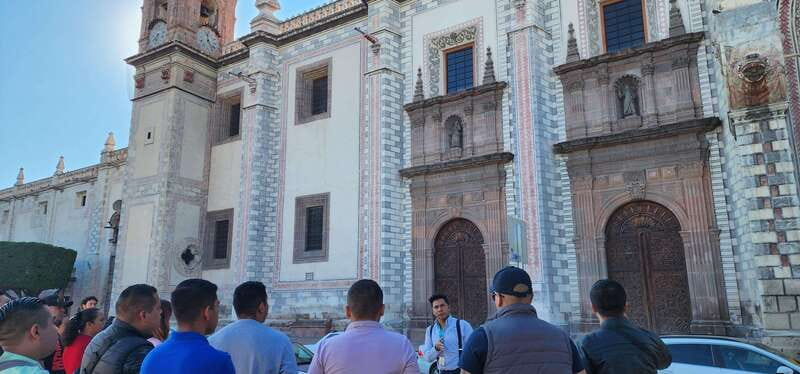
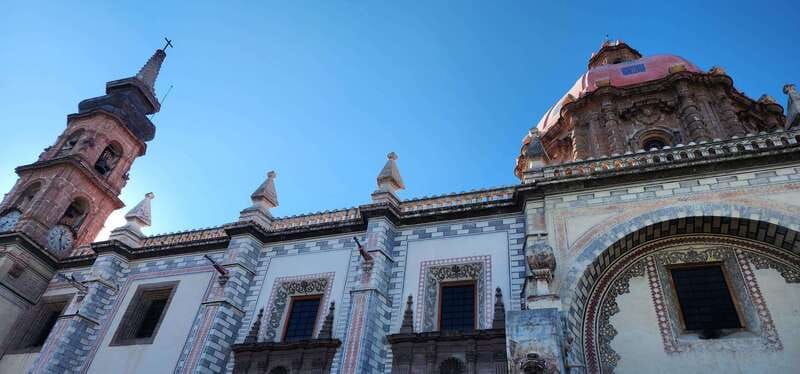
The Temple of Santa Rosa de Viterbo is the architectural star of this route. Its baroque grandeur gives you the clearest sense of why this walking tour appeals to people who enjoy art and historic buildings.
Baroque architecture is not shy. It uses movement, ornament, contrast, and carefully staged decoration to guide the eye. At Santa Rosa de Viterbo, your guide can help you read the façade as more than a pretty surface. Look for the way decorative elements are arranged, how the building rises above the street, and how the overall design creates a sense of ceremony.
The value of having a guide here is interpretation. Without context, you may notice elaborate stonework and leave it at that. With an explanation of colonial religious art and the temple’s place in Querétaro’s development, the details begin to make sense.
This is one stop where you may want extra time for photographs. The tour lasts two hours, and the route includes several major monuments, so the guide must keep the group moving. If you are an architecture enthusiast, ask questions early and tell the guide that you would like time to study or photograph particular details.
The route is not presented as an art-history lecture, which is a strength for most people. You get enough background to understand what you are seeing, but the experience remains a walk through a real city rather than a classroom. Guides have been praised for adapting the depth of discussion to individual interests, especially when groups are small.
Capuchinas, San Agustín, and Santa Clara
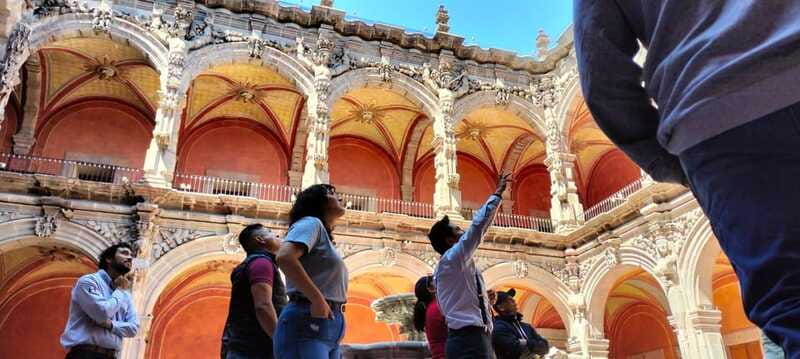
The stops at Capuchinas, San Agustín, and Santa Clara broaden the picture. Instead of treating Santa Rosa de Viterbo as an isolated masterpiece, the walk places it among other religious foundations that helped shape Querétaro’s colonial center.
Each temple and convent adds another layer to the story. The guide can explain the order connected with each site, the building’s religious purpose, and its artistic character. You will also hear about the way convents influenced the city’s cultural development, not only its worship.
Capuchinas gives the route another convent-centered perspective. San Agustín adds architectural interest, while Santa Clara helps show the range of religious institutions present in the colonial city. The supplied information does not provide a stop-by-stop schedule or promise specific interior visits, so the exact time spent at each site may depend on the guide, the group, and access on the day.
That flexibility is useful. A fixed script can rush past the one building that interests you most. Several guides, including Jesús and Julio, have adapted their explanations and pace to the people in front of them. If you ask about architecture, colonial society, Mexican history, or local traditions, you are likely to get a fuller answer than on a standard drive-by sightseeing trip.
One small caution: several reviews of the wider walking program describe broad city coverage, and some guests took the Eastern Zone route instead. Make sure your booking is specifically for the Western Zone if your priority is temples and convents. The Eastern route has a different emphasis, including the city’s foundation, the aqueduct, Plaza Fundadores, and independence-era sites.
A few other Mexico days to price up
- Querétaro: City Tour in a Classic Ford T Vehicle
★ 4.7 · 229 reviews - Santiago de Querétaro: Pueblos Mágicos Cheese and Wine Route
★ 4.8 · 96 reviews - Tacos Tequila y Más – The Centro of Centro (Vegetarian Friendly)
★ 5.0 · 56 reviews
What the guides add to the buildings
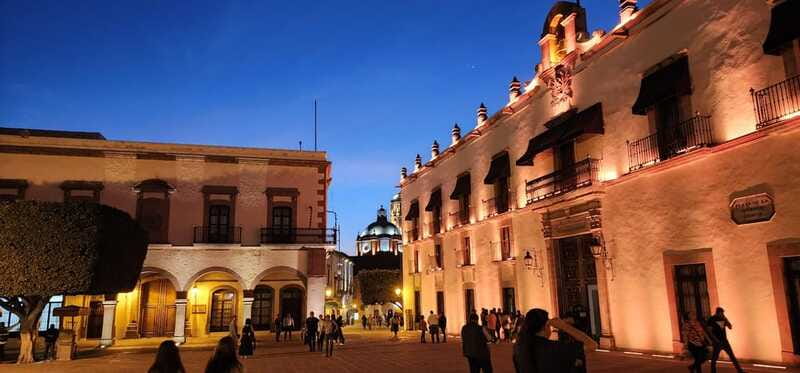
The strongest part of this experience is the human guide. The monuments matter, but the quality of the explanation determines whether the walk feels like a meaningful introduction or just a parade of façades.
Jesús has led many of the highly praised outings and is described as an exceptional storyteller with broad command of Mexican history, art, and culture. He has also adjusted routes for repeat visitors who had already seen certain sites. On one small tour, he used the visitor’s interests in history, architecture, and art to shape the conversation.
Jorge is another name worth noting. His English has been described as excellent, and he has a reputation for answering questions fully while keeping the experience personable. Carlos has also received praise for interesting facts, theories, anecdotes, and a patient approach when people stop for photographs.
Julio is described as friendly, informative, and attentive to questions. Sara has handled hot weather thoughtfully, keeping her small group in shade when possible, suggesting drink breaks, and lending an umbrella. Those details matter because a walking tour succeeds or fails partly on comfort, not just content.
The tour is offered in Spanish and English. Some guides may have other language skills, but only Spanish and English are listed as standard options. If you want to practice Spanish, you can likely make that part of the experience by telling your guide at the start. One bilingual guest found the walk became a useful Spanish lesson through casual conversation.
Pace, weather, and the two-hour limit
Two hours is long enough to cover the principal theme without making the day feel heavy. It is also short enough that you should not expect a detailed interior tour of every temple or a slow architectural survey of each façade.
The pace has generally suited people who want to see a lot while still having time to ask questions. Some guides have covered an impressive number of stops, but that usually means the walk keeps moving. Wear comfortable shoes and be ready to spend the full two hours on foot.
Weather affects the experience. Querétaro can be hot, and one guide made a point of using shade and checking on the group during a warm outing. If you book a sunny time, carry water and sun protection. Food and drinks are not included, although you can purchase refreshments during the walk if needed.
Late afternoon can be pleasant when conditions cooperate. One guest found a 4 p.m. start in March comfortable. Still, the available starting times vary, so check the schedule when booking rather than assuming a particular hour.
Wheelchair access is listed for the activity. Because this is a historic-center walking route involving old religious buildings and city streets, you may still want to confirm the practical details of the specific meeting point and any interior access before you go.
Is $23 a fair price?
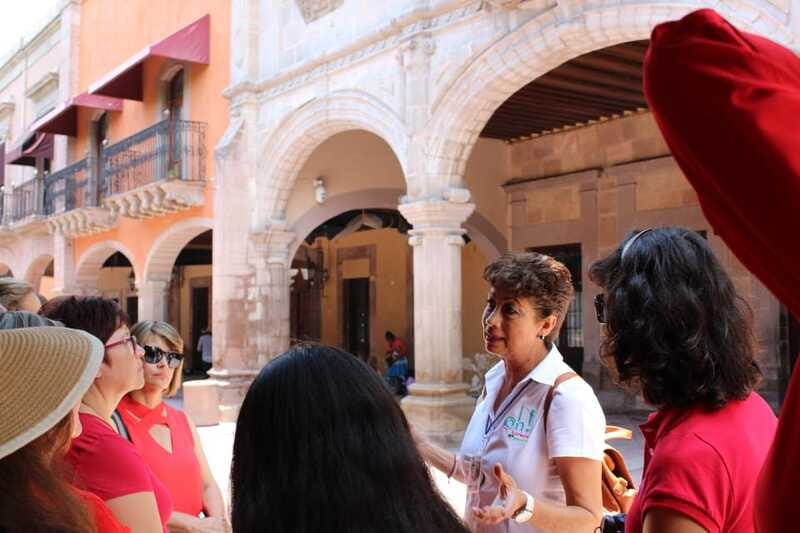
At $23 per person, this is a reasonable price for a two-hour guided introduction to Querétaro’s central religious monuments. The fee covers the guide, not food or drinks, but the main value is the interpretation. You are paying to understand what you see, ask questions, and get a framework for exploring the city afterward.
The price looks especially good if you are new to Querétaro or have limited time. A well-paced walk can prevent you from spending hours wandering without knowing which buildings deserve a closer look. It can also help you choose museums, churches, and cultural venues for later in your visit.
The value depends on your expectations. If you want long interior visits, detailed art analysis at every stop, or a leisurely three-hour stroll, this may feel too brief. One guest specifically wished the walk lasted at least three hours because there was so much to discuss.
For most people, I would treat it as an orientation tour rather than the final word on Querétaro’s religious art. Book it early, note which buildings interest you most, and return on your own if opening hours permit. A visitor who took the tour on the first day found it useful for planning later wandering and checking which museums were open on particular days.
How the Western route compares with the Eastern route
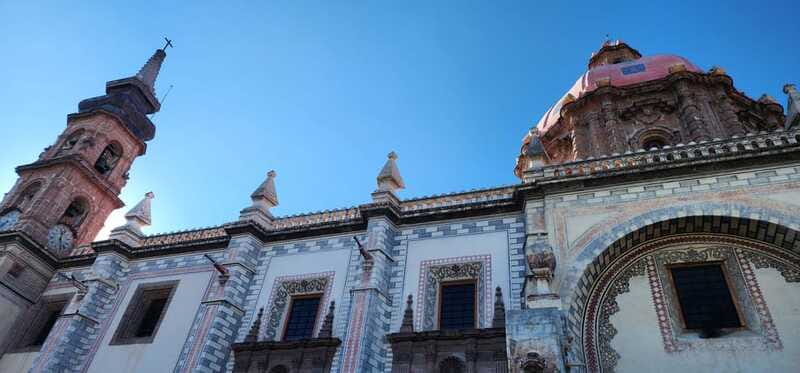
The experience description presents two related walks, but they are not the same itinerary. The Western Zone focuses on temples, convents, baroque architecture, and religious culture. The Eastern Zone centers on Querétaro’s foundation and viceroyalty period, with places such as Plaza Fundadores, the aqueduct, and Casa de la Corregidora.
That distinction is important when choosing. If your main interests are church decoration, convent history, and colonial art, select the Western Zone. If you want the city’s founding, independence history, and major civic landmarks, the Eastern route may be the better match.
You do not need to take both, but they complement one another. The Western route explains the spiritual and artistic side of colonial Querétaro. The Eastern route explains the city’s political and urban development. Together, they give a broader sense of how Querétaro grew and why its historic center matters.
Who should book this walk?
I would recommend the Western Zone tour to first-time visitors, architecture fans, history students, and anyone who prefers learning through conversation. It is also a good fit for solo travelers, since a small group can lead to a more personal exchange with the guide.
You will get the most from it if you ask questions. Ask about the orders, the building dates, baroque design, local legends, and what is worth visiting later. Guides have shown a willingness to adapt, so do not be shy about saying what interests you.
Families and mixed-interest groups may also like the format because the walk combines buildings, stories, and movement. People who dislike long lectures should find the changing streets and monuments easier to follow than a seated presentation.
I would be more cautious if mobility, heat, or a desire for extensive indoor access is your main concern. The tour is listed as wheelchair accessible, but the route includes historic structures and active city streets. And because the walk covers several sites in two hours, it favors breadth and explanation over lingering at one monument.
Final call: book it for context, not just sightseeing
Book this tour if you want Querétaro’s temples and convents to make sense, not merely appear in your camera roll. The $23 cost is fair, the bilingual format is useful, and guides such as Jesús, Jorge, Carlos, and Julio have shown the warmth, flexibility, and historical command that can make a short walk memorable.
Choose the Western Zone specifically for religious architecture and colonial art. Book it near the start of your stay so you can use the guide’s suggestions when planning later visits. If you want more time at each monument, build in your own return visits, because two hours is enough for a strong introduction but not enough for every detail.
The score of 4.8 from 112 ratings reflects a very dependable experience, with the clearest strengths being the guides, the storytelling, and the amount of history covered in a short time. Minor cautions include occasional delays, the possibility of a guide speaking while unwell, and the brisk schedule. For most visitors, those are manageable tradeoffs for an informative walk through one of Querétaro’s most rewarding historic areas.
FAQ
How long does the Temples and Convents walking tour last?
The tour lasts two hours.
How much does the tour cost?
The listed price is $23 per person.
Which part of Querétaro does this tour cover?
This version covers the Western Zone, with a focus on temples, convents, religious history, and colonial art.
Which monuments are included in the Western Zone route?
The route highlights the Ex Convent of San Francisco, the Temple of Santa Rosa de Viterbo, Capuchinas, San Agustín, and Santa Clara.
Is the tour available in English?
Yes. Live guiding is available in English and Spanish.
Who leads the tour?
Guides associated with the experience include Jesús, Jorge, Carlos, Julio, and Sara. The assigned guide can vary by departure.
Is food or drink included?
No. Food and drinks are not included in the tour price.
Is the tour wheelchair accessible?
Yes, the activity is listed as wheelchair accessible.
Can I cancel for a full refund?
Yes. You can cancel up to 24 hours in advance for a full refund.
New on the Mexico list
- Day of the Dead Tour in San Andres Míxquic From Mexico City★ 3.7 · 52 reviews
- Swim with Whale Shark from Isla Mujeres and Cancun★ 4.5 · 52 reviews
- Bacalar Lagoon of 7 Colors from Playa del Carmen and Tulum★ 4.5 · 52 reviews
- Biggest Luxury Yacht Boat Best in Cancun up to 28 pax★ 5.0 · 52 reviews
- El Cielo Cozumel Snorkel tour by Catamaran★ 4.0 · 52 reviews
- Tulum: Private Snorkel and Sailing Experience★ 4.8 · 52 reviews
- Reef Snorkel In National Park In Puerto Morelos With Lunch And Transportation★ 4.0 · 52 reviews
- From Playa del Carmen: Whale Shark Tour★ 4.3 · 52 reviews
Walking Tours, compared.

![Frida Kahlo VIP [Museum Tickets Included] Walk, Markets & Churros](https://pics.mexicanexplorer.com/wp-content/uploads/frida-kahlo-vip-museum-tickets-included-walk-markets-churros-400x267.jpg)
Frida Kahlo VIP [Museum Tickets Included] Walk, Markets & Churros
Read our review →

Puerto Vallarta’s Best Canopy Zipline + Jorullo Bridge walk!
Read our review →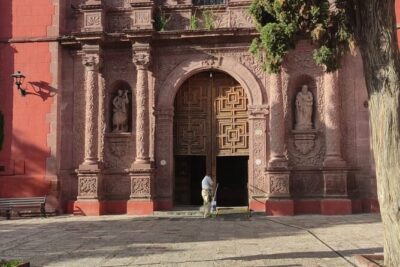
Historical and Cultural Walking Tour of San Miguel de Allende
Read our review →
Tacos and Tequila Walking Tour with Taste of Miguel
Read our review →Browse the lists this tour appears in