
Reviewed · OAXACA CITY TOURS
Oaxaca de Juarez: Art Printing Workshop with a Local Artist
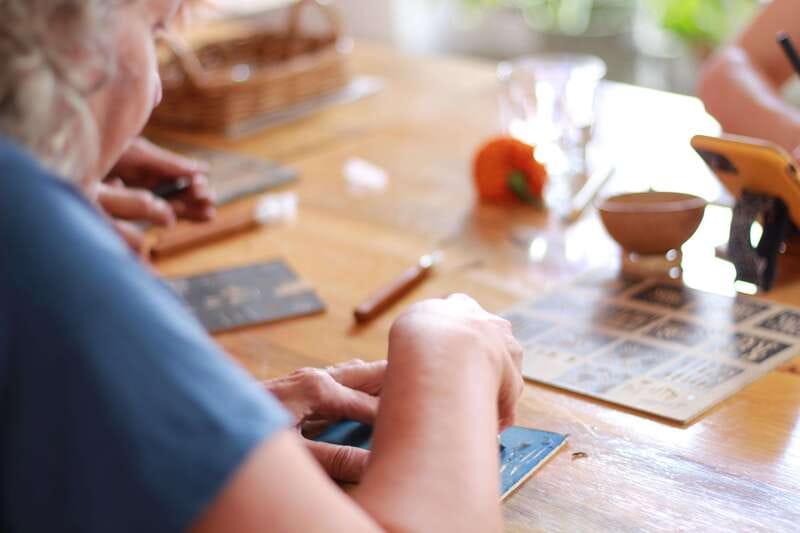
Oaxaca’s street art makes more sense after you learn how some of it is made. In this three-hour workshop, you sketch a design, carve a woodblock, apply ink, and press your own image onto paper while a local artist explains the social role of Oaxacan printmaking. Fernando, Alexa, and Fabiola are among the artists who have guided this class.
I like the small group size, limited to six people, and the fact that you leave with a real handmade souvenir rather than another shop purchase. I also like the generous setup: tools, materials, an apron, drinks, instruction, and the woodblock are included. The main catch is practical: your prints may need a full day to dry, so you may need to return later for pickup.
Key points to know before you book
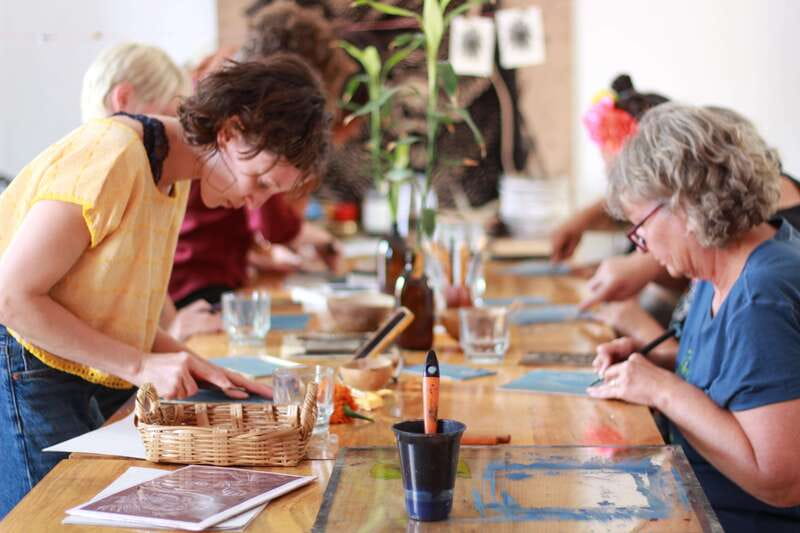
- You make the image yourself: Sketch, carve, ink, and print a personal design instead of watching a demonstration from the sidelines.
- The class connects art with Oaxaca: You learn how printmaking has been used for social movements, food sovereignty, and public expression.
- Six people is the limit: The small group gives the instructor time to help beginners and offer more advanced challenges.
- Three hours is a working estimate: Most people finish the carving and printing process within the scheduled session, but some may need extra time.
- Plan for drying time: Your finished prints can require at least 24 hours before collection.
- The $34 price covers the essentials: Materials, equipment, instruction, refreshments, an apron, and your woodblock are included.
Why this Oaxaca workshop is different from a standard craft class
This is not simply a quick souvenir-making session. It introduces you to one of Oaxaca’s most visible art forms, then puts the tools in your hands.
As you walk through Oaxaca de Juárez, you see prints and poster-style images on walls, in galleries, and on large sheets of thin paper. The workshop gives you a way to read those images with more understanding. You learn that local art can carry political ideas, community messages, and concerns about food and agriculture. That context gives your own small print more meaning.
The class takes place inside the Teolab complex, at the Foodlab gallery. It is described as an innovation and training center for young people and for people working toward a more humane society. The setting matters. You are not making a generic craft in a hotel meeting room. You are working in a space connected to a local artistic and social project, surrounded by work made by artists in the collective.
The experience is offered in English and Spanish. That makes it a good fit if you want to ask questions about technique or Oaxaca’s print culture without relying only on gestures. With no more than six participants, the instructor can look at your carving and suggest corrections before you make a mistake that is hard to undo.
A few other Oaxaca De Juarez days to price up
- Oaxaca: Oaxacan Mole Workshop with a Traditional Cook
★ 4.7 · 158 reviews - Oaxaca: Vegetarian Cooking Class
★ 4.8 · 139 reviews - Oaxaca: Traditional Oaxacan Cooking Class with Market Visit
★ 4.9 · 80 reviews
Starting with Oaxaca’s print culture
The class begins with an explanation of printmaking in Oaxaca and its links to public art. You learn about the reasons artists use printed images to communicate ideas, not just to decorate walls.
This introduction is useful because it gives you a visual key for the rest of your stay. Afterward, you may notice the carved lines, repeated images, and large paper prints around the city in a different way. One participant especially appreciated learning about the political background of Oaxacan printmaking before beginning the practical work.
The workshop also presents art as a shared activity. Your finished piece becomes part of the collective experience at the gallery, joining the work and ideas of the people who have taken part. That does not mean you surrender your print. You can take home your own work, and the class frames it as a contribution to a wider artistic community.
Expect the introduction to be part lesson and part orientation. If you are mainly interested in making something, it should not take over the whole session. If you want a longer art-history talk, this is more of a practical workshop than a formal lecture.
Sketching a design you can actually carve
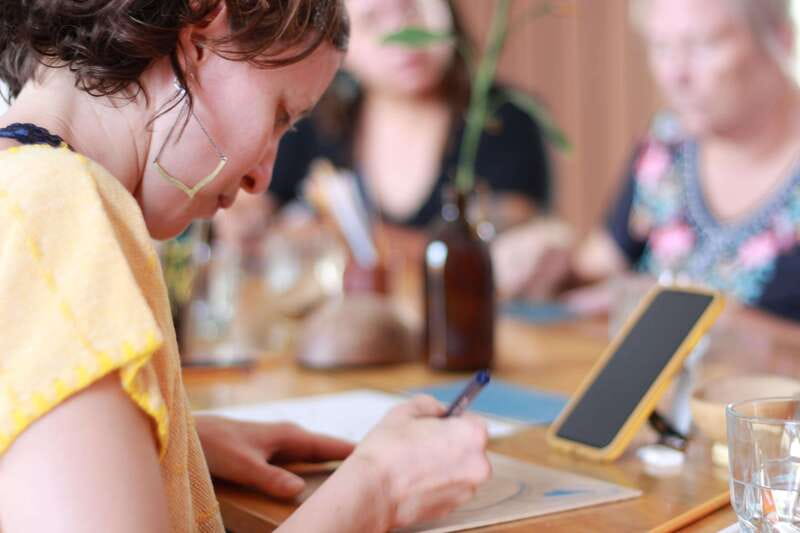
The first hands-on stage is choosing or drawing an image for your woodblock. You can arrive with a sketch in mind, which is a smart idea if you already know what you want to make.
You do not need advanced drawing ability. The instructors work with first-time printmakers and show you ways to simplify an image so it will work as a print. A bold design with clear shapes is usually easier to carve than a complicated scene filled with tiny details. The artist can help you adjust the idea before you begin cutting.
Remember that block printing reverses the image. Any lettering or directional design needs special care. The provided information does not promise a particular design template, so ask the instructor what options are available when you arrive. You may bring your own idea, but additional materials for personal projects beyond the class are not included.
This is also where the class feels most personal. Instead of selecting a ready-made pattern, you create an image tied to your own visit, interests, or sense of humor. That makes the final paper more meaningful than a mass-produced Oaxaca magnet.
Carving the block with patient guidance
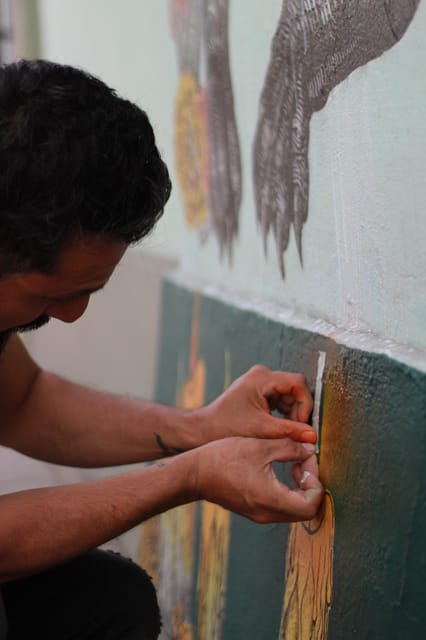
Once your design is ready, you transfer it to the woodblock and begin carving. The instructor demonstrates the tools and explains how much material to remove.
The key lesson is to cut deeply enough that recessed areas do not collect ink. If you leave the cuts too shallow, ink can fill them and muddy the image. This is one of the most useful technical tips to remember, especially if you are new to printmaking.
The tools require attention, but the pace is not presented as a race. Instructors including Alexa and Fabiola have been praised for giving patient, clear help, while Fernando has been singled out for strong guidance and teaching. You can expect demonstrations in person, followed by time to work on your own block.
Beginners should not feel embarrassed about needing help. The workshop specifically allows people with no artistic experience to take part. At the same time, someone who already works with printmaking can ask for more demanding techniques or projects. One experienced printmaker valued the chance to focus quietly on a project while surrounded by work from the collective.
The woodblock itself is included, and you can take it with you. That is a nice extra because it lets you remember the process, not just the paper result.
Same stretch of coast, a very different day:
- Oaxaca de Juarez: Monte Alban Half-Day Tour
★ 4.7 · 492 reviews - Oaxaca: Tule, Mitla & Hierve el Agua, & Mezcal Tour
★ 4.7 · 456 reviews - Oaxaca: Monte Alban Guided Archaeological Tour
★ 4.2 · 419 reviews - Check out Hierve el Agua, Mitla, the Tule Tree, Rugs, and a Mezcal Distillery Tour
★ 4.9 · 222 reviews
Inking and printing your Oaxaca souvenir
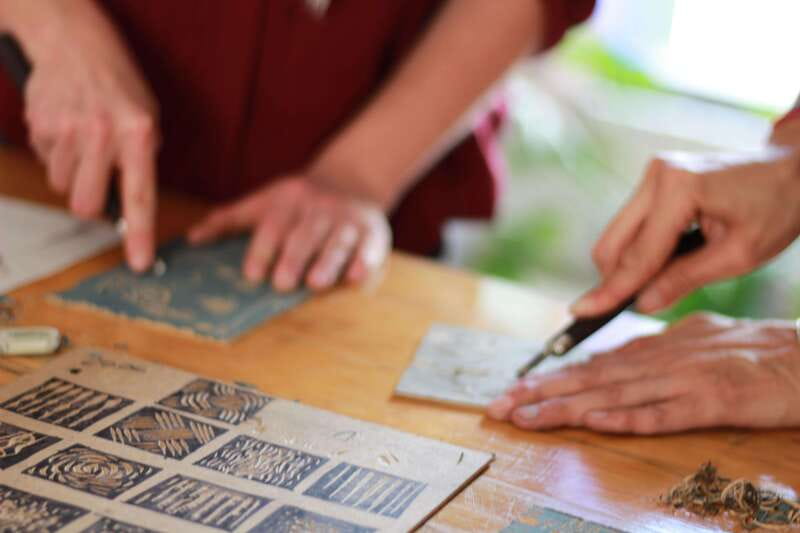
After carving, you apply ink to the raised surface of the block. This is the moment when your design changes from a piece of wood into a visible image.
The instructor guides you through the amount of ink and the printing process. The equipment and quality materials are provided, so you do not need to bring a carving kit or buy supplies before the class. An apron is included, which is helpful since ink and creative confidence do not always stay neatly on the work surface.
You then press the block onto paper and reveal the result. Printing has a small element of suspense: a design that looked promising in the block can appear different once inked. The instructor can help you make adjustments and print again. The experience is hands-on from start to finish, rather than a demonstration where you receive a pre-made object at the end.
The exact number of prints may vary by session, but the class information promises a personalized print to take home. One recent participant received three prints, along with the carved block. That is a useful possibility to confirm with the instructor, especially if you want one copy for yourself and others as gifts.
The paper may be thin, including tissue-style paper often seen in Oaxacan printmaking. That paper can be delicate and needs careful handling. Do not plan to stuff the finished work into a crowded day bag.
The drying problem you need to plan around
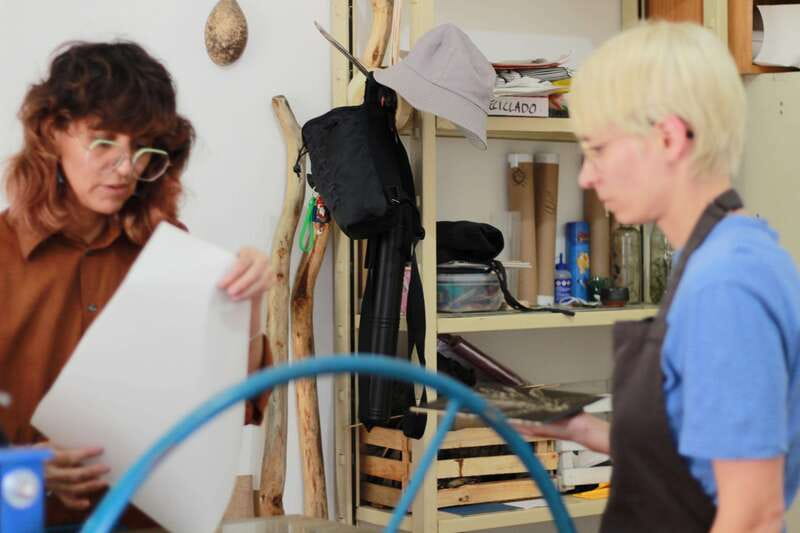
The largest practical issue is not the carving. It is the drying time.
Several participants needed to return at least 24 hours later to collect their prints. If you attend on a Saturday, Sunday closure can turn a three-hour activity into a two-day commitment. Ask about the collection plan before booking, especially if Oaxaca is only one stop on a tight itinerary.
Transportation and shipping are not included. The meeting point is the indoor gallery within the Teolab complex, and you arrange your own way there and back. You also handle any shipping if you cannot carry the artwork home.
This matters more than it might sound. A damp print can crease, smear, or stick to other surfaces. Keep room in a folder or protective sleeve, and allow time for pickup rather than scheduling a bus, flight, or day trip immediately afterward. The supplied details do not state that protective packaging is included, so ask the gallery what they recommend.
What the $34 fee really buys
At $34 per person, this is a strong value if you want instruction and a finished object. You are paying for three hours with a local artist, personal advice, the studio space, printing equipment, quality materials, an apron, the woodblock, and water, tea, or coffee.
A cheaper craft activity might give you fewer materials or a quick, guided project with little cultural context. Here, the value comes from the combination of learning and making. You get a better understanding of an art form you see across Oaxaca, then practice it under supervision.
The price is less attractive if you want only a polished souvenir and have no interest in the process. Your final print will be handmade, and that means it may contain small irregularities. Those marks are part of the point, but anyone expecting a factory-perfect image should choose a shop instead.
The small group improves the value. Six people is a workable maximum for a class involving sharp carving tools, ink, and individual designs. You are not left waiting behind a large crowd when you need help.
Who will enjoy the three-hour session most
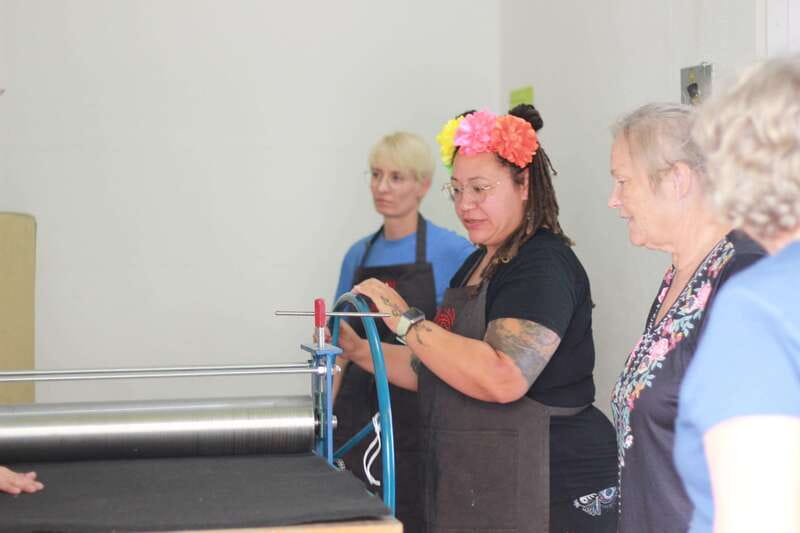
I would recommend this workshop to several types of people:
- First-time artists: The process is broken into clear stages, and the instructors offer demonstrations and individual advice.
- People who collect handmade souvenirs: You create a personal print instead of buying something made for the general tourist market.
- Visitors curious about Oaxaca’s public art: The class connects the technique with the images you see around town.
- Families and friends seeking a shared activity: A small group can work together while still producing separate pieces.
- Experienced printmakers: You can ask for more challenging techniques and spend focused time working in a printmaking space.
It may not suit you if your schedule leaves no room for a later pickup. It is also not the right choice if you dislike careful, repetitive work. Carving takes patience, and three hours can pass quickly when you are refining a design.
The workshop is wheelchair accessible, and alcohol and drugs are not allowed. These details make the setting clear, but the main question remains whether you have enough time to handle the drying period.
Practical tips for a better print
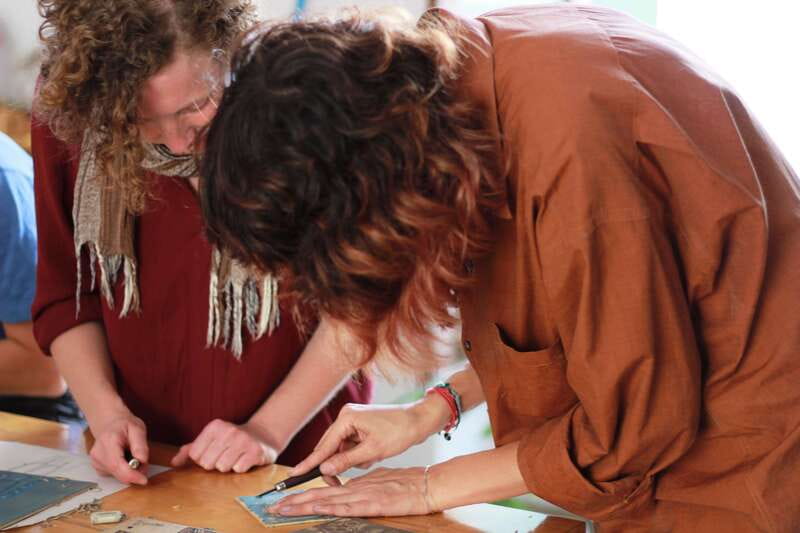
Come with a simple idea. A sketch is helpful, and one participant specifically recommended planning a design ahead of time. You can still create something during the class, but the carving stage will feel easier if you are not starting from nothing.
Ask for an explanation of the complete process before you begin. Knowing how sketching, carving, inking, and drying fit together helps you make better decisions early on.
Cut the recessed sections deep enough. Shallow grooves can collect ink and blur the design. Let the instructor check the block before you print.
Wear something that can handle a little mess, even though an apron is supplied. Keep your final prints flat and protected, and leave enough time for pickup the next day.
If you want multiple copies, ask how many prints are included before you start. The class description promises a print, while one session produced three prints for a participant. The number may depend on the project and the workshop arrangement.
Finally, do not treat the class as an isolated craft lesson. Look around the gallery, ask about the artists’ work, and connect the technique to the public art you have seen in Oaxaca. That context is one of the best reasons to choose this experience.
Should you book the Etnofood printmaking workshop?
Book it if you want a useful, creative afternoon with a local artist and a souvenir you made yourself. The $34 fee covers the important supplies, the small group keeps the instruction personal, and the class gives you a better understanding of Oaxaca’s print culture.
Book with care if your departure is soon. The prints may need a full day to dry, and transportation or shipping is your responsibility. If you can return for pickup and enjoy hands-on work, this is one of the better ways to connect with Oaxaca’s art scene without simply looking at it from the sidewalk.
FAQ
How long does the Oaxaca art printing workshop last?
The workshop lasts three hours. Starting times vary, so you need to check availability when booking.
Where does the workshop take place?
It takes place at the indoor gallery within the Teolab complex. This gallery is connected with the Foodlab innovation and training center.
What languages are available?
Instruction is available in English and Spanish.
Is the workshop suitable for beginners?
Yes. Beginners are welcome, and the instructors demonstrate the process and provide personalized guidance. People with more experience can ask for additional challenges or projects.
What is included in the price?
The $34 price includes access to a local artist, printing materials, studio space and equipment, personalized advice, an apron, a woodblock, and water, tea, or coffee. You also have the chance to take home a personalized print.
Do I receive my artwork at the end of the class?
Your prints may need at least 24 hours to dry before collection. You may need to return to the gallery, and shipping is not included.
Can I cancel or pay later?
You can cancel up to 24 hours in advance for a full refund. A reserve-now, pay-later option is available, so you do not need to pay at the time of booking.
New on the Oaxaca De Juarez list
- The Mezcal Journey★ 4.9 · 78 reviews
- Oaxaca: Full Day Guided Tour on the Hierve el Agua Route★ 4.7 · 79 reviews
- Oaxaca: Traditional Oaxacan Cooking Class with Market Visit★ 4.9 · 80 reviews
- Oaxaca: Monte Alban and the Art of Oaxaca★ 4.2 · 99 reviews
- Oaxaca: Vegetarian Cooking Class★ 4.8 · 139 reviews
- Oaxaca: Oaxacan Mole Workshop with a Traditional Cook★ 4.7 · 158 reviews
- From Oaxaca: Hierve el Agua and Teotitlán del Valle★ 4.3 · 162 reviews
- Oaxaca: Food and Markets Tour★ 4.9 · 170 reviews
Oaxaca City Tours, compared.
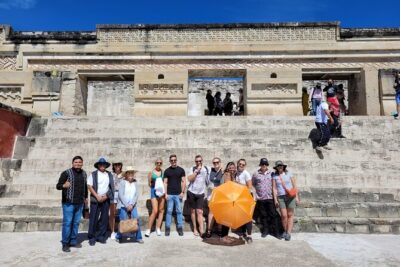
Hierve el Agua, Tule Tree, Mitla and Mezcal Distillery Tour
Read our review →
AUTHENTIC OAXACA CULTURAL FOOD TOUR, eat like a local.
Read our review →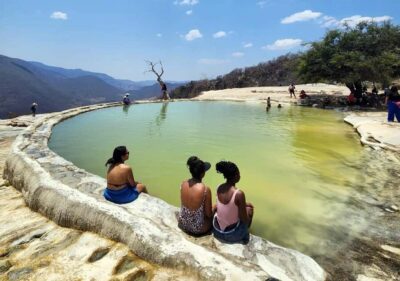

Browse the lists this tour appears in