
Reviewed · OAXACA CITY TOURS
Oaxaca: Oaxacan Mole Workshop with a Traditional Cook
Oaxacan mole is not just a sauce you spoon over dinner. It is a lesson in chiles, cacao, herbs, fruit, roasting, grinding, and patience. This 3.5-hour market-to-table class begins with a walk to a local market, then turns the ingredients into mole and a full Oaxacan meal at the FILOTEO Foodlab on Xicotencatl Street.
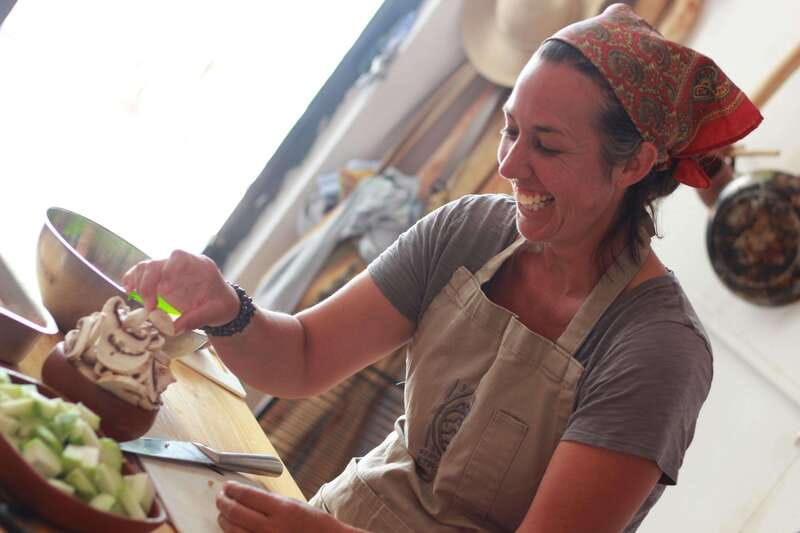
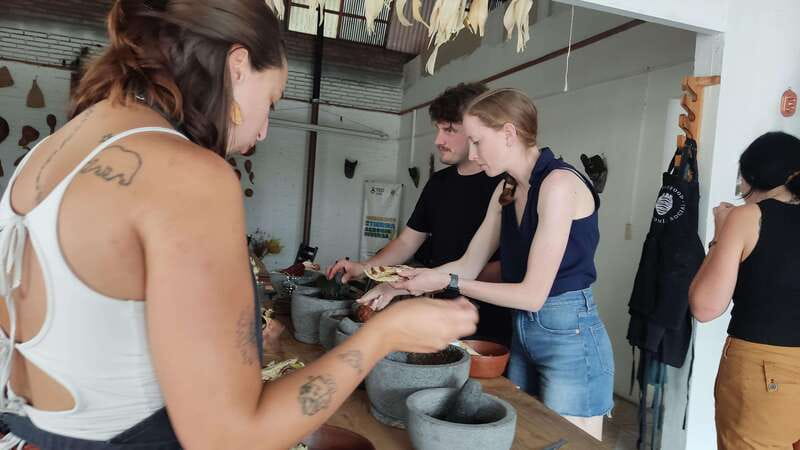
I like two things right away: you shop for the ingredients instead of finding them lined up in a classroom, and you do the work yourself. Guides such as Victor Ramirez, Quetzalli, Wendy, and Pablo have led sessions with warmth, humor, and clear instruction. You can also make tortillas, quesadillas, guacamole or guacachile, pico de gallo, and several salsas.
The main consideration is that the class may cover more than mole. Some sessions have focused on green mole, tortillas, and quesadillas rather than the slow, complex preparation of a dark mole. The walk to the market and the hands-on work also call for a moderate level of fitness.
Key points to know before booking
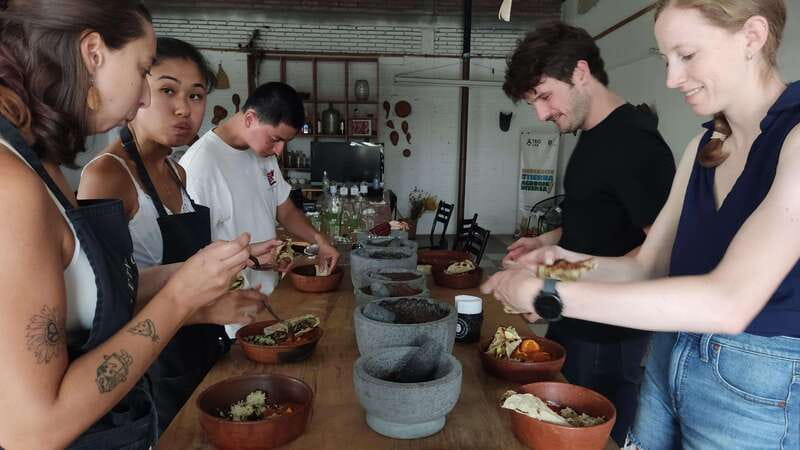
- Market first, kitchen second: Walk from the downtown meeting point to a small local market and select the produce, chiles, cacao, cheese, and other ingredients used in class.
- Mole is part of a larger meal: Expect hands-on work with tortillas, quesadillas, salsas, vegetables, and sometimes rice or dessert, not only one sauce.
- Guides bring the culture to the cutting board: Victor Ramirez and Quetzalli have explained Zapotec traditions, local products, family cooking, and the meaning behind ingredients.
- A modern Foodlab keeps the class comfortable: The kitchen has the tools and utensils you need, though some traditional steps use a blender, stove, or prepared masa.
- Small groups can feel personal: The advertised limit is four participants, but session size may vary, so check the date if a quieter class matters to you.
- The $64 price is strong value for a meal and lesson: You get ingredients, instruction, market shopping, mezcal for adults, fruit water, and a cooked feast in roughly half a day.
Starting near the Zócalo on Xicotencatl Street
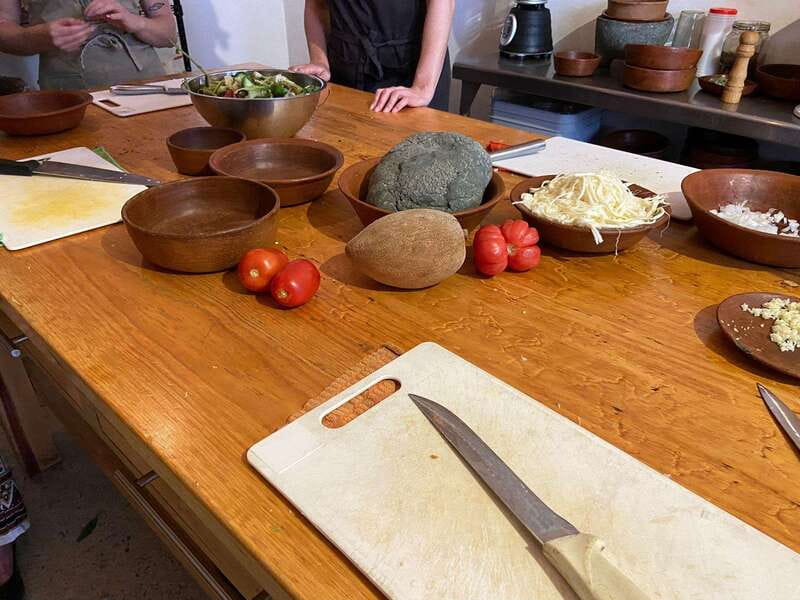
The class meets at Xicotencatl Street 609, about five blocks from Oaxaca’s City Zócalo. Look for the Foodlab with FILOTEO on the outside and a large dog pictured on the facade. Transportation is not included, so plan to make your own way there.
That central location makes this easy to fit into a day of exploring downtown Oaxaca. Still, do not treat the meeting point as a hotel pickup. Give yourself enough time to walk through the center and arrive ready for the market outing.
The experience is offered in English and Spanish. Victor Ramirez has been singled out for speaking clear English, while other guides have encouraged participants to practise Spanish. The teaching style seems friendly rather than formal, which suits beginners who want to ask questions without feeling tested.
The advertised group limit is four participants. That is a major advantage if your date runs at the stated size, since a tiny group gives you more access to the cooking surface and more chances to handle each step. Some sessions have had larger groups, including nine people, and those classes still divided up tasks and kept everyone busy. If personal attention is important, ask about the expected group size before booking.
A few other Oaxaca De Juarez days to price up
- Oaxaca: Vegetarian Cooking Class
★ 4.8 · 139 reviews - Oaxaca: Traditional Oaxacan Cooking Class with Market Visit
★ 4.9 · 80 reviews - Oaxaca de Juarez: Art Printing Workshop with a Local Artist
★ 5.0 · 72 reviews
Walking through a local Oaxacan market
The first part is a walk to a local market where you help choose what will go into the meal. This is more useful than a quick photo stop. You learn how the ingredients look before they are cleaned, chopped, toasted, blended, or cooked.
The market visit has included explanations of local fruits and vegetables, chiles, cacao, quesillo, herbs, and regional products. You might also taste some items along the way. That gives you a better feel for Oaxacan cooking, where flavor comes from the combination of ingredients and methods rather than from a single hot pepper.
I especially like the shopping stage because it connects the final dish to local producers and small businesses. Guides have used the market to explain Zapotec traditions and family food customs, including stories linked to the names and uses of ingredients. This turns a standard cooking lesson into a short cultural walk.
You should wear comfortable shoes. The walk is not described as strenuous, but the activity is not suitable for people with a low level of fitness or serious back problems. The market also adds time before the cooking begins, so anyone expecting three and a half hours entirely at the stove should adjust that expectation.
Turning market ingredients into mole
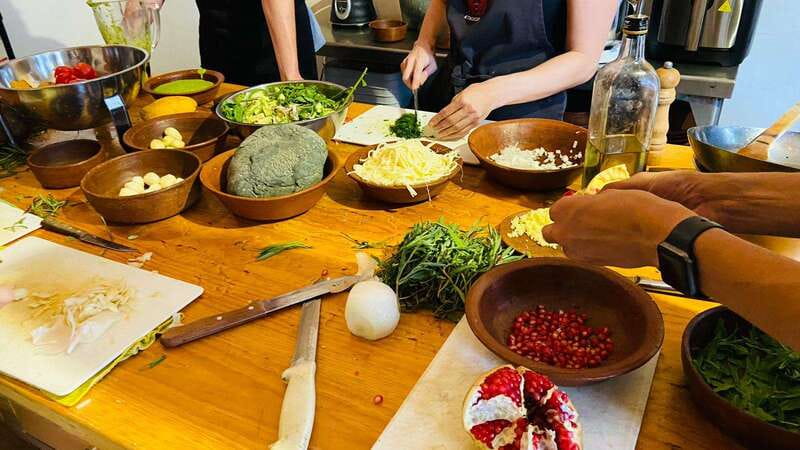
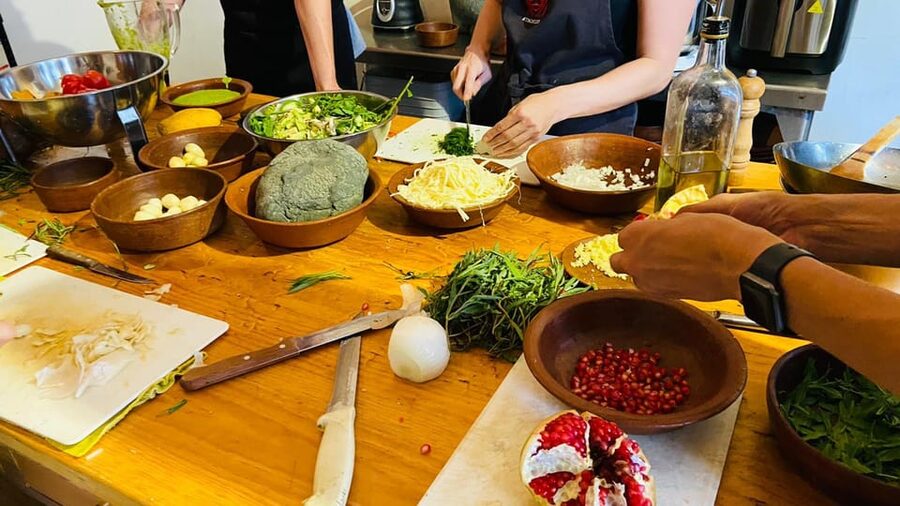
Back at the Foodlab, you begin preparing the food. The class supplies fresh ingredients, utensils, and cooking tools, and an experienced chef stays with you throughout the process. You chop, fry, mix, blend, shape, and cook rather than simply watch a demonstration.
Mole is the main subject, but the precise recipe can vary. The menu may include black mole or green mole, with the class adding local touches and a seasonal ingredient such as an herb or unusual fruit. This flexibility reflects actual Oaxacan cooking, where produce changes with the season.
The darker moles are known for a long list of ingredients and several stages of preparation. One participant hoping for a full lesson in dark mole found that a green version involved mostly preparing herbs and vegetables before blending. That is worth knowing if your main goal is to master a complex black mole from start to finish.
At the same time, a green mole session can be useful. You see how fresh herbs, chiles, vegetables, and regional produce combine into a finished sauce, and you learn how to judge texture and flavor as you go. The chef can answer questions and give real-time corrections, which is more practical than leaving with a recipe and no sense of what the sauce should look or smell like.
The class also covers other Oaxacan sauces made with chiles and regional products. That broader approach is one reason the experience works well for curious eaters. You leave with a better sense of how sauces fit into everyday cooking, not just one special dish.
Making tortillas, quesadillas, and salsas by hand
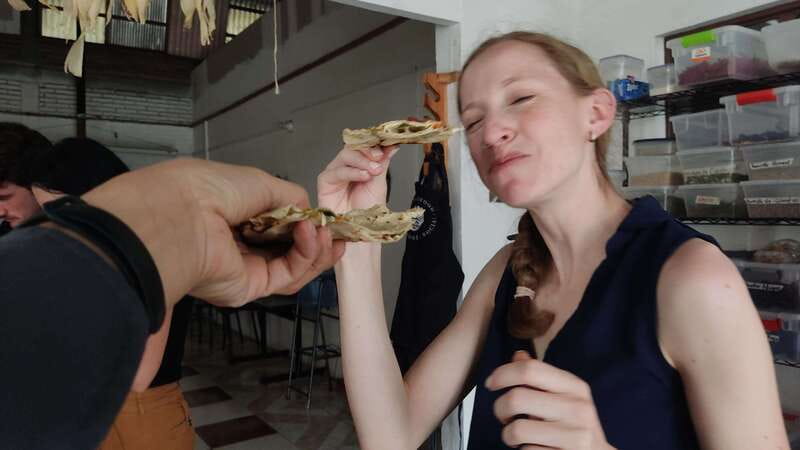
Several parts of the meal are especially hands-on. You may press tortillas from prepared masa, cook them, and use them for quesadillas. You may also prepare pico de gallo, guacamole or guacachile, additional salsas, vegetables, and a rice dish.
Making tortillas is simple in theory, but it gives you a direct connection to the meal. You shape the masa, learn how thin it should be, and watch for the signs that it is ready. The class does not require advanced cooking skills. Beginners have been able to take part because the guides break tasks into manageable steps.
You should volunteer when a task is offered. With a small group, everyone can have a job, but a larger class may have several people sharing the same stage of preparation. Getting involved early helps you learn more and keeps the session lively.
There is one important limit to the traditional label. The class uses a modern kitchen, a blender, and a stove, and the masa is prepared rather than ground from whole maize. If you want a strictly old-style process using a stone grinder or a wood fire, this is not that experience. If you want a practical way to learn Oaxacan flavors without spending hours on every foundational step, the modern setup makes sense.
Same stretch of coast, a very different day:
- Oaxaca de Juarez: Monte Alban Half-Day Tour
★ 4.7 · 492 reviews - Oaxaca: Tule, Mitla & Hierve el Agua, & Mezcal Tour
★ 4.7 · 456 reviews - Oaxaca: Monte Alban Guided Archaeological Tour
★ 4.2 · 419 reviews - Check out Hierve el Agua, Mitla, the Tule Tree, Rugs, and a Mezcal Distillery Tour
★ 4.9 · 222 reviews
Sitting down to eat what you made
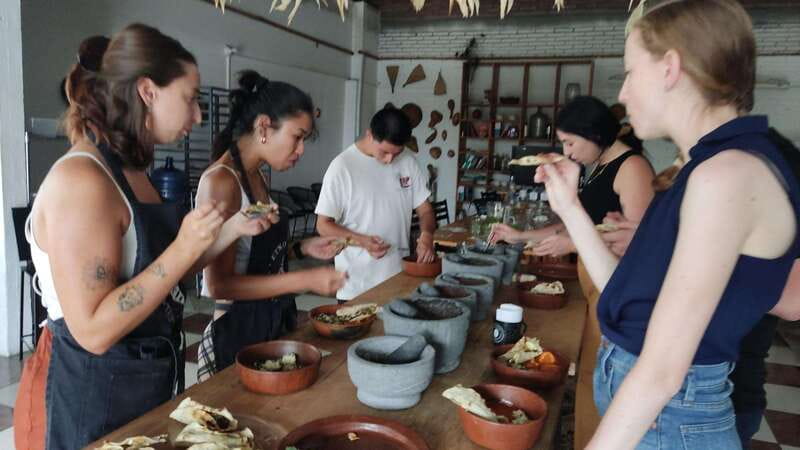
The best payoff comes at the end, when the group sits down to eat the food prepared together. A typical meal can include mole, tortillas, quesadillas, salsa, vegetables, rice, and a dessert. The exact mix depends on the session, but the class promises more than a single tasting spoonful.
The meal feels satisfying because you have handled the ingredients from the market onward. You know which chile went where, how the sauce changed during cooking, and how much work went into those warm tortillas. That makes the food more memorable than a restaurant dish ordered from a menu.
A seasonal fruit-flavored water is included. Adults aged 18 and over also receive mezcal to accompany the mole. Additional food or drinks are not included, and a tip for the chef or staff is optional.
The portions can be generous. One small group found that they made enough food for six to eight people, even though only three participants were present. That is good news if you arrive hungry, though it can make the preparation feel longer than expected. If you prefer a short class with a tightly controlled menu, this workshop may feel leisurely.
The guides make the difference
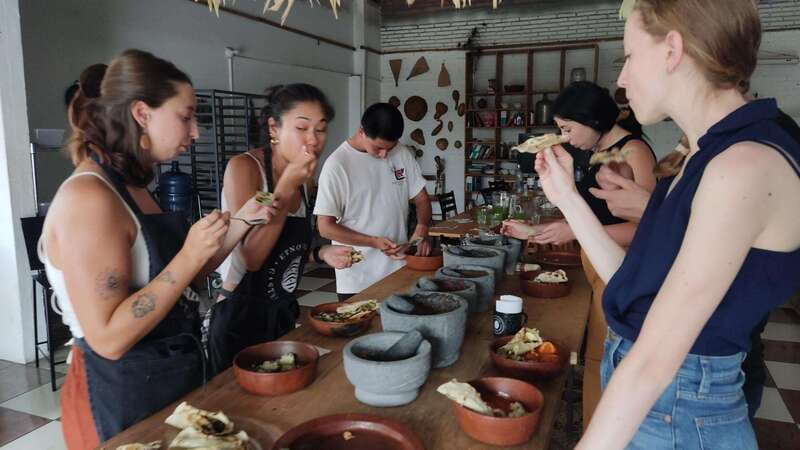
The strongest part of the experience is the teaching. Victor Ramirez has been described as funny, warm, passionate about local food, and eager to answer questions. He has connected the cooking to Zapotec culture, his grandmother’s traditions, and the value of sharing.
Quetzalli and Wendy have also led classes, assigning jobs, checking on questions, and keeping the group moving. Pablo has been praised for his energy. Names and staffing can change, so do not book solely because you expect one particular guide, but the teaching approach appears to be a central part of the activity.
I like that the guides explain the reasons behind the ingredients instead of treating the market as a shopping list. You learn about local products, how to choose them, and how they relate to Oaxacan food culture. That context gives the meal a sense of place without turning the class into a lecture.
The atmosphere is warm and social. Groups often include people from different countries, and cooking gives everyone an easy way to work together. If you are travelling alone, this is a useful way to meet people without the forced feeling of a formal group outing.
Dietary needs have been accommodated in at least one class, but the supplied information does not promise this for every booking. Tell the provider about restrictions before you go and confirm what can be changed.
Is $64 good value for 3.5 hours?
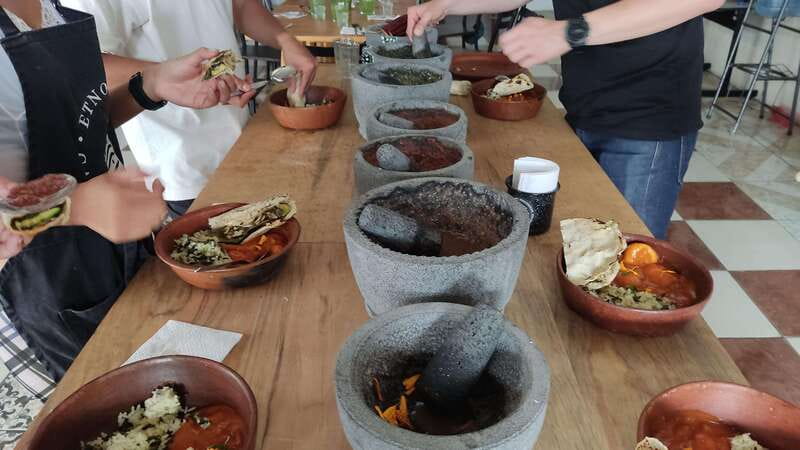
At $64 per person, the cost is reasonable for a three-and-a-half-hour activity that includes a market visit, fresh ingredients, instruction, a full meal, fruit water, and mezcal for adults. You are paying for both food and access to a local cooking teacher, plus the time spent explaining ingredients and culture.
The value is best if you want participation. This is not simply a meal with a chef performing in front of you. You chop, cook, make tortillas, ask questions, and sit down with the group to eat what you prepared.
The price is less compelling if you only want to sample mole or if you already know Mexican cooking well. The class can also feel long when the group prepares a large quantity of food, and the use of modern tools may disappoint anyone seeking a fully traditional process.
Free cancellation is available up to 24 hours before the activity for a full refund, and you can reserve now and pay later. Those terms are useful when you are still arranging an Oaxaca itinerary, but the practical details of the meeting point and group size still deserve attention.
Who should book this Oaxaca cooking class?
I would choose this for anyone who wants a cultural activity with a meal at the end. It suits beginners, solo visitors, couples, and food-loving families with children aged 10 or older. The English and Spanish options make it accessible to many visitors, while the small-group format can make the class feel personal.
It is also a good choice if you want to learn about ingredients you may not find at home. The recipes may be difficult to reproduce exactly if local chiles, herbs, fruits, or cheeses are unavailable, but you will still learn useful techniques and flavor combinations.
I would hesitate if you have back problems, limited mobility, or low fitness, since the market walk and several hours of standing and cooking may be tiring. Children under 10 cannot take part, and alcohol or drugs are not allowed.
Should you book it?
Book this Etnofood workshop if you want to understand Oaxaca through its food, not simply eat it. The market walk, hands-on tortillas, chile-based sauces, mole, and shared meal make good use of the three and a half hours.
Before booking, confirm the likely group size and ask which style of mole is planned. If you want a black mole lesson with every traditional grinding and roasting step, the answer matters. If you want a friendly, practical class that covers a full Oaxacan meal and connects it to Zapotec culture, $64 is a fair price.
FAQ
Where does the Oaxacan mole workshop meet?
It meets at Xicotencatl Street 609 in Oaxaca’s Downtown District, about five blocks from the City Zócalo. The venue is a Foodlab with FILOTEO on the sign and a large dog on the facade.
How long does the activity last?
The workshop lasts approximately 3.5 hours, including the market walk, ingredient shopping, cooking, and meal.
What languages are available?
The activity is offered in English and Spanish.
How many people can join?
The activity is advertised as a small group limited to four participants. Some sessions may have a different group size, so confirm the expected number for your date if this matters to you.
Is transportation included?
No. Transportation to and from the class venue is not included.
What food will I make?
The class focuses on Oaxacan mole and may also include tortillas, quesadillas, salsas, guacamole or guacachile, pico de gallo, vegetables, rice, and a typical dessert. The exact menu can vary.
Is mezcal included?
Yes. Mezcal is included to accompany the mole for participants aged 18 and above.
Is anything else included to drink?
Seasonal fruit-flavored water is included. Other food or drinks are not included unless specified in the activity details.
What should I bring?
Wear comfortable shoes because the experience includes a walk to the market.
Who should not book this activity?
The workshop is not suitable for children under 10, people with back problems, or people with a low level of fitness. Alcohol and drugs are not allowed.
Can I cancel my reservation?
You can cancel up to 24 hours in advance for a full refund. The activity also offers a reserve-now, pay-later option.
New on the Oaxaca De Juarez list
- Oaxaca de Juarez: Art Printing Workshop with a Local Artist★ 5.0 · 72 reviews
- The Mezcal Journey★ 4.9 · 78 reviews
- Oaxaca: Full Day Guided Tour on the Hierve el Agua Route★ 4.7 · 79 reviews
- Oaxaca: Traditional Oaxacan Cooking Class with Market Visit★ 4.9 · 80 reviews
- Oaxaca: Monte Alban and the Art of Oaxaca★ 4.2 · 99 reviews
- Oaxaca: Vegetarian Cooking Class★ 4.8 · 139 reviews
- From Oaxaca: Hierve el Agua and Teotitlán del Valle★ 4.3 · 162 reviews
- Oaxaca: Food and Markets Tour★ 4.9 · 170 reviews
Oaxaca City Tours, compared.

Hierve el Agua, Tule Tree, Mitla and Mezcal Distillery Tour
Read our review →
AUTHENTIC OAXACA CULTURAL FOOD TOUR, eat like a local.
Read our review →
Browse the lists this tour appears in