
Reviewed · CABO SAN LUCAS TOURS
SMALL GROUP Whale Watch | Cabo San Lucas | Biologist | FREE Pics
Cabo’s best whale watching is not just about spotting a tail in the distance. This marine biologist-led trip explains what the whales are doing, why mothers and calves matter, and how to watch without crowding them. When conditions cooperate, a hydrophone lets you hear humpback songs beneath the boat.
I like the 12-person limit, which gives you a real chance to ask questions and see around the boat. I also like the free photo service, since you can keep your attention on the water instead of wrestling with a camera. The main caution is the sea itself: rough conditions can make the ride uncomfortable, and whale sightings are guaranteed only from December 15 through April 15.
Key points at a glance
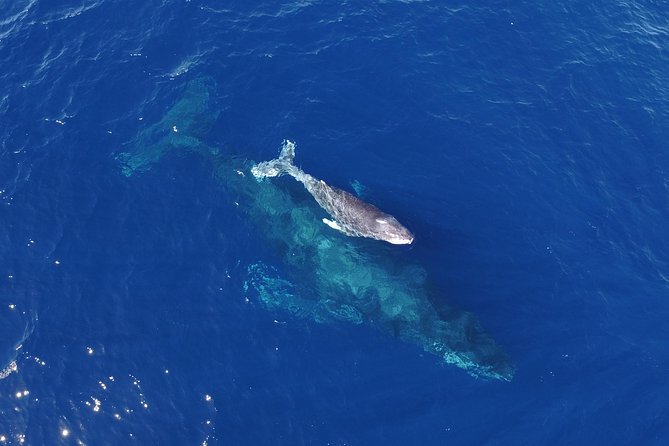
- Marine biology in the field: Guides such as Oscar, Victoria, Vittoria, Josephine, and Payo bring solid knowledge of whales, marine life, climate effects, and local geology.
- A maximum of 12 people: The small group makes conversation easier and gives everyone a better view than a crowded vessel.
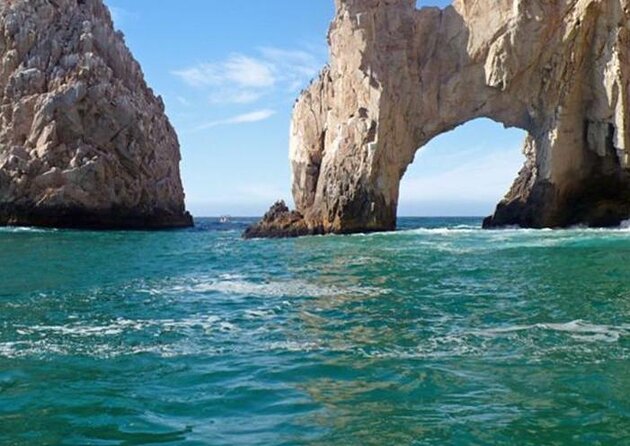
- Whales plus Cabo landmarks: You pass The Arch, Lovers Beach, and Pelican Rock before heading into open water.
- More than humpbacks: Possible sightings include gray and sperm whales, dolphins, sea lions, and sea turtles.
- Free photographs: The crew takes pictures during the outing and sends them afterward, often within a day or a few days.
- A useful whale guarantee: During the stated whale season, you receive a free second tour if no whales are seen.
Why a biologist changes a Cabo whale tour
Many whale trips can get you near the animals. This one tries to help you understand the encounter.
A marine biologist does more than point and shout when a whale surfaces. Guides explain humpback behavior, the difference between a normal blow and a more dramatic display, and why the boat must observe rather than chase or touch. The better guides also connect the whales to bigger issues, including climate change, migration patterns, and conservation work.
That makes a difference when the whales are quiet. A slow day on the water can still teach you how humpbacks communicate, how calves stay near their mothers, and why a whale may disappear for several minutes before surfacing again. If the animals put on a show, the science gives the excitement some shape.
The crew also records whale locations and migration information to support research. That does not turn your outing into a formal scientific expedition, but it adds purpose to the trip. You are not simply seeking the closest possible photograph. You are taking part in a form of wildlife watching that puts distance and animal welfare first.
Guides named in the trip feedback include Oscar, Victoria, Vittoria, Josephine, Dominica, and Payo. The strongest praise centers on their ability to explain things clearly without making the trip feel like a classroom. Payo, for example, is described as a veterinarian specializing in marine biology. Oscar is singled out for discussing both sea life and local geology, while Victoria is praised for her enthusiasm about humpbacks.
Guide assignments can change, so do not book around one specific person. The important point is the format: you have a trained naturalist on board, not just a boat operator trying to find a whale.
More Whale Watching in Cabo San Lucas
- Whale Watching Cabo-Women crew-Sightings Guaranteed & Free Photos
★ 5.0 · 1,743 reviews - Humpback Whales in Cabo San Lucas
★ 5.0 · 1,005 reviews - ZODIAC Whale Watch Tour | Cabo San Lucas | Biologist | FREE Pics
★ 5.0 · 365 reviews
Setting out from Cabo’s marina
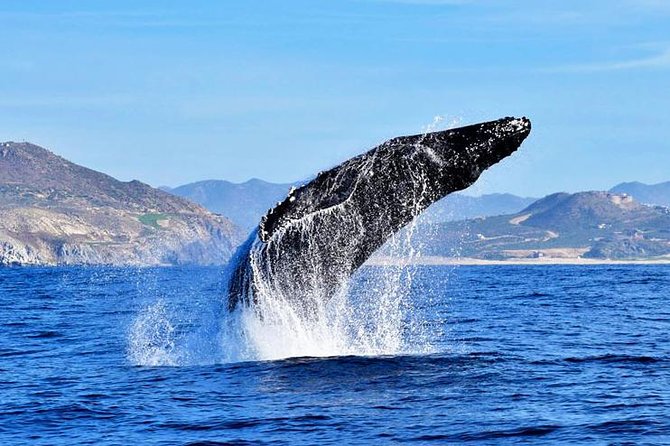
You meet the boat at Whale Watch Cabo, Plaza Bonita, Blvd. Paseo de la Marina 17, in central Cabo San Lucas. The tour lasts about two and a half hours and returns to the same place.
Transportation to the marina is not included, so plan your route before departure. The meeting point is near public transportation, which helps if you are staying in central Cabo, but you should still allow time to arrive without rushing. One outing reportedly started a little late, while other experiences were described as well organized and on time. That is a fair reminder that marine trips depend on boat operations, weather, and harbor conditions.
The boat carries no more than 12 people. That limit is one of the strongest reasons to pay $109 per person rather than choosing the cheapest large-boat option you can find. You get more room to ask questions, a better chance of seeing past other heads, and a more direct connection with the guide and captain.
A restroom is available on board. Life jackets come in all sizes, including for very young children. One family brought an eight-month-old baby and received a properly sized life jacket, though every parent should still decide carefully if a moving boat and open water suit their child.
Bring your own water. The operator no longer supplies single-use plastic bottles because of its effort to reduce waste. A reusable bottle is the practical choice.
The Arch, Lovers Beach, and Pelican Rock
The first visual reward comes before the whale search begins.
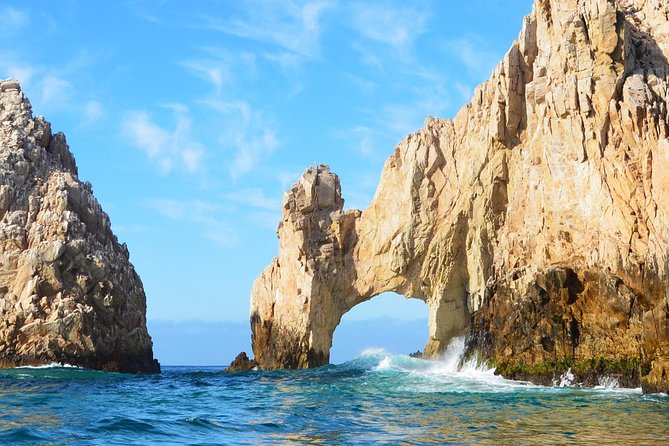
The boat makes a short stop at El Arco, Cabo San Lucas’s famous stone arch. You get about five minutes for photographs from the water. The angle is excellent for seeing how the rock formation rises between the Pacific Ocean and the Sea of Cortez, though five minutes passes quickly. Have your camera ready before the boat stops.
The route then passes Lovers Beach. From the water, you see the beach from a quieter angle than you would from shore. The name is familiar, but the location is more than a photo stop. It sits near the meeting point of two very different bodies of water, a fact that helps explain why Cabo’s marine conditions can change so quickly.
Pelican Rock lies inside the protected marine area of the Bay of Cabo San Lucas. The boat passes this small rock formation while leaving the bay. These landmarks add context to the trip, but they are not the main event. If you want a long sightseeing cruise around Cabo’s shore, this is not the right tour. The stops are brief because the boat needs to spend most of its time searching for whales.
Searching the Pacific and Sea of Cortez
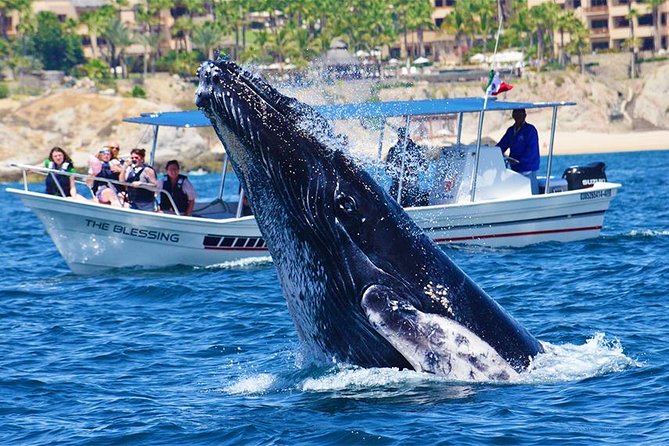
After the bay, the captain heads toward either the Sea of Cortez or the Pacific Ocean. The direction depends on conditions and where the animals are being found.
The main target is the humpback whale. Cabo is also a place where you might see gray whales, sperm whales, dolphins, sea lions, and sea turtles. The exact mix is never promised, and the ocean decides how much action you get. That uncertainty is part of wildlife watching, even on a strong season day.
The crew says it will go farther from the crowds when needed. This approach has two benefits. First, you may find a less crowded viewing area. Second, keeping a respectful distance reduces pressure on the whales. The aim is not to force a close approach. A whale swimming near the boat is memorable, but the captain must allow the animal to choose the encounter.
That balance matters. Some experiences include whales passing very near the boat, while others include groups of whales working farther away. You should bring binoculars if you have them, but do not expect every sighting to happen beside the rail.
The best conditions can produce extraordinary behavior. The recorded experiences include breaching humpbacks, tail slaps, whales surfacing in pairs, mothers with calves, and animals swimming alongside the boat. One outing had breaching activity for about an hour. Another included a full breach, when a whale clears much of its body from the water.
Those moments cannot be scheduled. The crew can search well and read the water, but it cannot order a whale to breach. That is why I would choose this outing for its combination of biology and responsible searching, not only for a promise of a spectacular photograph.
More whale watching trips around Cabo San Lucas:
- Los Cabos Whale Watching (Transportation and Pictures Included)
★ 5.0 · 290 reviews - Cabo San Lucas Whale Watching Lunch Cruise
★ 5.0 · 197 reviews - Open Ocean Safari and Whale Watching
★ 5.0 · 178 reviews - Small-Group Whale Watching Zodiac Boat Cruise in Cabo San Lucas
★ 4.5 · 143 reviews
Listening to whales with a hydrophone
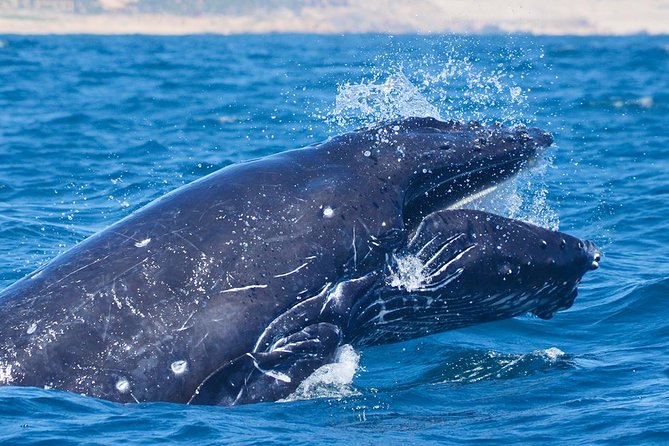
The hydrophone is one of the tour’s most distinctive features.
When conditions allow, the crew lowers a submerged recorder so you can hear humpback whales singing. You may not see the animal at the exact moment you hear it, but the sound changes your sense of the ocean. A whale can be out of sight and still be communicating below you.
This is especially useful on a slower viewing day. Instead of judging the trip only by how close the whales come, you get another way to connect with them. The sound also helps explain why noise, speed, and careless boat handling can affect marine animals.
The hydrophone does not work under every condition, and the tour does not promise that you will hear singing. Still, it is a meaningful addition. Most whale excursions focus almost entirely on photographs. Here, the experience includes listening and learning.
Free photos and the real value of $109
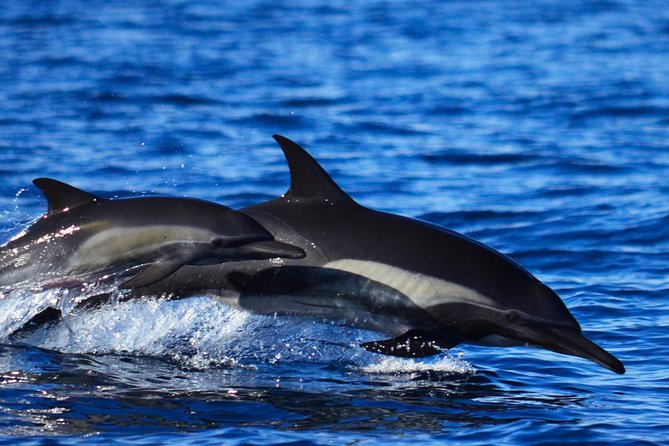
At $109 per person, this is not Cabo’s budget boat ride. The question is what you receive for the extra cost.
The answer is a small group, a marine biologist, a captain focused on locating whales responsibly, free photographs, and a two-and-a-half-hour outing. The photographs matter more than they may sound at first. Whale watching demands quick reactions. You can spend the whole trip trying to keep a phone dry and pointed in the right direction, then miss the animal that surfaces behind you.
The guide takes pictures during the outing and sends them afterward. The timing varies, with some people receiving images the next day and others within a few days. The photos have been described as high quality and as capturing major moments, including breaches and close passes.
Free photos do not mean every image will be perfect. Wildlife moves quickly, spray can block the view, and the boat may rock. But the service takes pressure off you and gives you a better chance of returning home with something useful.
The small boat format also has value. A maximum of 12 people means the guide can answer questions without shouting across a crowd. The captain can position the boat so more people have a view, and you can shift sides more easily when the action changes.
For me, the price is justified if you care about learning, conservation, and a calmer group setting. If your only goal is the lowest possible fare or a quick ride past The Arch, you can spend less elsewhere.
What the ride feels like on a rough day
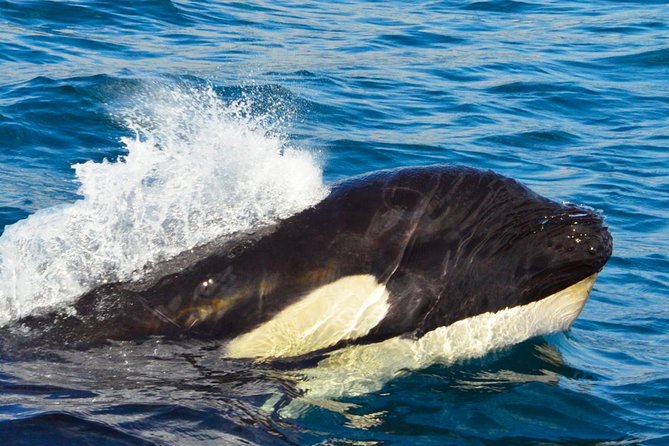
A whale trip is an outdoor activity, not a theater show. The ocean may be smooth, or it may be rough enough to make the ride tiring.
One particularly enthusiastic account describes very rough water but unforgettable breaches. Another offers the practical warning that seasickness can affect some people. The operator may have extra medication available, but it is smarter to prepare before boarding rather than wait until you feel ill.
If you are prone to motion sickness, speak with a medical professional about suitable medication and take it early according to its instructions. Eat lightly, drink water, and keep your eyes on the horizon when possible. This is useful advice for anyone, not just people who have been seasick before.
Weather can also cancel the trip. In that case, you are offered another date or a full refund. The same applies if the minimum number of bookings is not reached. Normal cancellation is free up to 24 hours before the start time. Within 24 hours, no refund is offered, and changes are not accepted.
Best timing and the whale guarantee
The whale sightings guarantee applies from December 15 through April 15. If you do not see whales during that period, you receive a free second tour.
That is a useful safety net, but read it carefully. It does not guarantee breaching, close passes, mothers with calves, or a certain number of whales. It also does not apply outside the stated dates. Wildlife conditions remain variable, even during peak season.
The guarantee is most useful if you have enough time in Cabo to return. If you are visiting on a cruise ship or have only one open morning, a free second trip may not help if you miss the first outing. Cruise passengers should build in extra time because a late ship arrival can cause you to miss the departure. In one case, the operator refunded a missed booking and helped arrange another tour, but you should not count on that as a formal policy.
If you have flexibility, book early in the season and leave room for a repeat trip. The experience is often booked about 24 days ahead, so last-minute availability may be limited during busy whale months.
Who should book this experience
I would choose this tour for families with older children, couples, friends, and solo visitors who enjoy wildlife and want more than a quick sightseeing ride.
It is also a good match for anyone interested in conservation. The guide explains why observation matters and why the boat avoids disturbing the whales. Parents can use the outing as a practical lesson in animal behavior, though very young children may find the boat ride long or rough.
Photographers should appreciate the free images and the small group, but serious photographers should keep expectations reasonable. The crew tries to find good positions, yet whales do not follow a shot list. You will still need patience and quick timing.
This is less suitable if you dislike open water, suffer badly from motion sickness, or need a fully predictable schedule. The tour can be delayed by conditions, and the main attraction is never guaranteed outside the whale guarantee dates.
Should you book the Whale Watch Cabo trip?
I would book it if you want a serious wildlife outing with a personal feel, rather than a standard harbor cruise. The marine biologist, hydrophone, research-minded approach, and small group give the experience more substance than a simple search for a whale’s tail.
The strongest case for booking is the combination of education and access. Guides such as Oscar and Victoria are praised for making complicated subjects clear and fun, while captains work to find good views without crowding the animals. Free photos sweeten the $109 price.
Book with realistic expectations. You may see a spectacular breach, a mother and calf, dolphins, sea lions, and even several kinds of whales. You may also spend time scanning open water between sightings. That is the nature of the ocean, not a flaw in the trip.
For the best odds, go between December 15 and April 15, bring reusable water, prepare for motion sickness, and leave enough time for a second outing if your schedule allows. If those terms suit you, this is one of Cabo’s better choices for seeing whales with care and understanding.
FAQ
Where does the whale watching tour meet?
The meeting point is Whale Watch Cabo at Plaza Bonita, Blvd. Paseo de la Marina 17, Centro, Marina, Cabo San Lucas, B.C.S., Mexico.
How long does the experience last?
The outing lasts approximately two hours and 30 minutes and ends back at the meeting point.
How many people can join the tour?
The tour has a maximum of 12 participants.
Which animals might I see?
The main target is the humpback whale. Possible sightings also include gray whales, sperm whales, dolphins, sea lions, and sea turtles.
Is the whale sighting guaranteed?
From December 15 through April 15, you receive a free second tour if no whales are seen. The guarantee does not promise a breach, close encounter, or a particular number of whales.
Are photographs included?
Yes. The guide takes photographs during the outing and provides them free afterward. Delivery may be the next day or within a few days.
Is water provided on board?
Bottled water is not provided. You should bring your own reusable bottle, since the operator no longer supplies single-use plastic bottles.
What happens if bad weather cancels the tour?
If poor weather causes a cancellation, you are offered a different date or a full refund. If the minimum number of participants is not reached, you are also offered another date, another experience, or a full refund.
New on the Cabo San Lucas list
- Two Capes City Tour★ 5.0 · 53 reviews
- Glass-bottom boat tour to the Arch + beach time★ 4.5 · 53 reviews
- Premier Airport Shuttle Service for Seamless Transport in Cabo★ 4.5 · 53 reviews
- Cabo San Lucas Yacht Rental all inclusive★ 5.0 · 55 reviews
- Private Tour Baja Jeep 4×4 Adventure at Los Cabos★ 5.0 · 55 reviews
- Private Luxury Pontoon Boat, Snorkel, Arch, Sunset & byond★ 5.0 · 56 reviews
- Cabo Original Real Baja 1000 Tour (UTV)★ 5.0 · 56 reviews
- From Los Cabos: City Tour La Paz, Balandra and Todos Santos★ 4.5 · 57 reviews
Cabo San Lucas Tours, compared.

Outdoor Ziplining and UTV Adventure from Los Cabos
Read our review →
Cabo Migrino Beach and Desert ATV Tour plus Tequila Tasting
Read our review →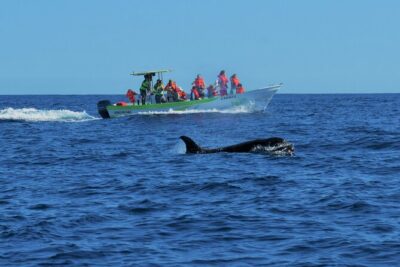
Whale Watching Cabo-Women crew-Sightings Guaranteed & Free Photos
Read our review →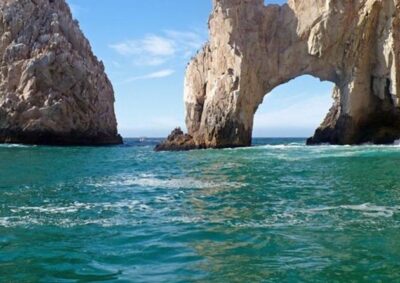
Cabo San Lucas Sunset Cruise with Open Bar and Snacks
Read our review →
Cabo San Lucas Downtown Food and Tacos Tasting Experience
Read our review →
Cabo White Sand Horseback Riding Tour and Tequila Tasting
Read our review →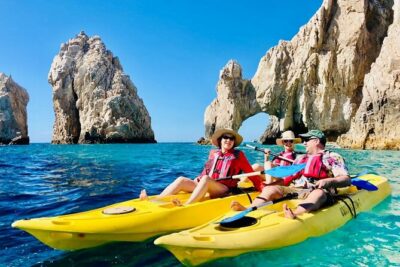
Los Cabos Arch and Playa del Amor Tour by Glass Bottom Kayak
Read our review →
Browse the lists this tour appears in