
Reviewed · OAXACA CITY TOURS
Street Art Bike Ride
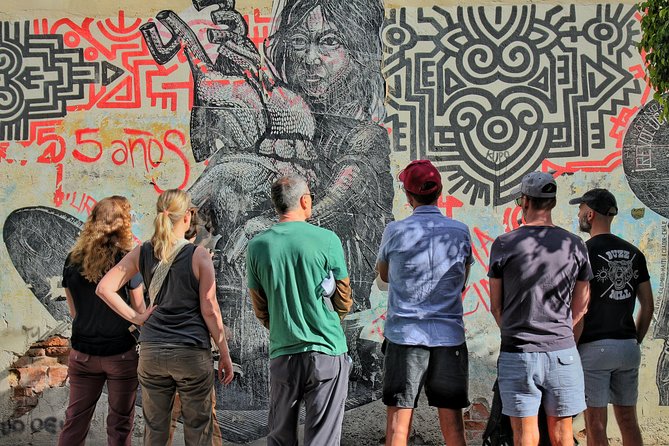
Oaxaca’s street art is not confined to one gallery or a single famous wall. It appears across ordinary neighborhoods in murals, stencils, and pasted posters, turning the city into an open-air art walk. This four-hour ride with Coyote Aventuras gives you a practical way to see more of it while hearing about the artists, local traditions, and social issues behind the images.
I like the access to neighborhoods you might skip on foot, and I like the chance to visit art workshops rather than simply stop for photographs. Guides including Diego, Jessie, Jessy, Bao, and Cristian have brought strong personal knowledge of Oaxaca’s art and culture to the ride. The main caution is the surface: cobblestones, traffic, and small hills can make the cycling harder than the gentle schedule suggests.
Key points to know before you book
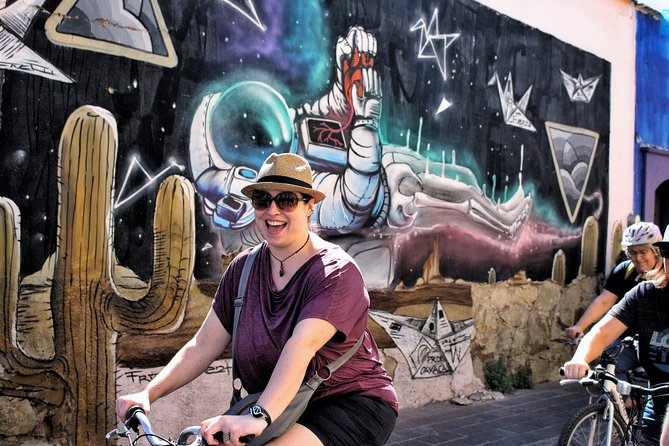
- Three neighborhoods in four hours: You cover more ground than on a walking tour, with time for murals, workshops, and local streets.
- Art with social context: Guides discuss Oaxacan culture, political and social issues, traditions, and the reasons behind the artwork.
- Easy pace, imperfect streets: Most of the riding is described as manageable, but cobblestones, hills, and car traffic are part of the experience.
- Small groups: The maximum group size is 10, which allows time for questions and more personal attention.
- Useful inclusions: A bicycle, helmet, bottled water, and snacks are provided.
- Best early in your stay: The ride helps you spot places and neighborhoods to revisit later on foot.
Why Oaxaca works so well for a street-art ride
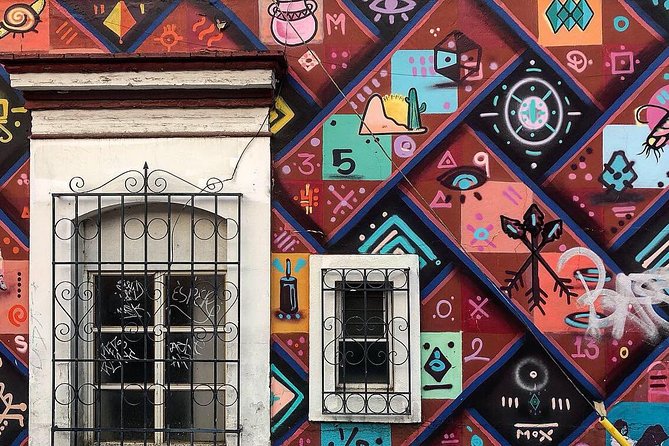
Oaxaca City has an unusually strong relationship with public art. Its colorful streets, local festivals, embroidered clothing, historic traditions, and active cultural life provide plenty of material for artists. Here, a painted wall can be decorative, political, historical, or all three at once.
That mix is what makes this ride more useful than a simple hunt for photogenic walls. You are not only looking for bright colors. You are learning how art connects with daily life, local identity, and difficult public questions.
The city also rewards movement. A walking route can show you a few central streets, but a bicycle lets you reach three neighborhoods during one morning. You get a broader sense of how Oaxaca changes from one area to the next without spending the whole day on your feet.
I would book this near the beginning of your visit. The ride can help you mark places to return to later, including workshops, murals, and parts of the city you may not find by following the usual central streets.
More bike days around Oaxaca City:
- Electric Bike Beach Adventure with Tequila Tasting and Lunch
★ 5.0 · 1,162 reviews - Frida Kahlo VIP [Museum Tickets Included] Bike, Markets & Churros
★ 5.0 · 1,072 reviews - Mexico bike tour
★ 5.0 · 407 reviews
Starting at Bicibella Oaxaca at 9:00 a.m.
The meeting point is Bicibella Oaxaca at C. Macedonio Alcalá 802, in the Centro area along Ruta Independencia. The tour begins at 9:00 a.m. with a short meeting and planning period before the ride gets underway around 9:10.
That early start makes sense. Oaxaca’s morning light is good for photographs, and four hours on a bicycle is easier before the hottest part of the day. You should arrive ready to ride, with sunscreen applied and comfortable clothing. One guide specifically reminded riders to bring sunscreen, a practical tip for a morning spent outdoors.
The operator provides bicycles and helmets. Group size is limited to 10, so this is not a large convoy moving through the city. A small group also makes it easier to stop near artwork without creating a crowd and gives you a better chance to ask about a mural or artist.
The ride is offered in English. Guides have included Diego, Jessie, Jessy, Bao, and Cristian, and the quality of the morning depends partly on the individual guide’s interests and style. The strongest experiences have included clear explanations of art, history, culture, and social questions, while one less successful outing was criticized for offering too little historical explanation.
Riding through three neighborhoods
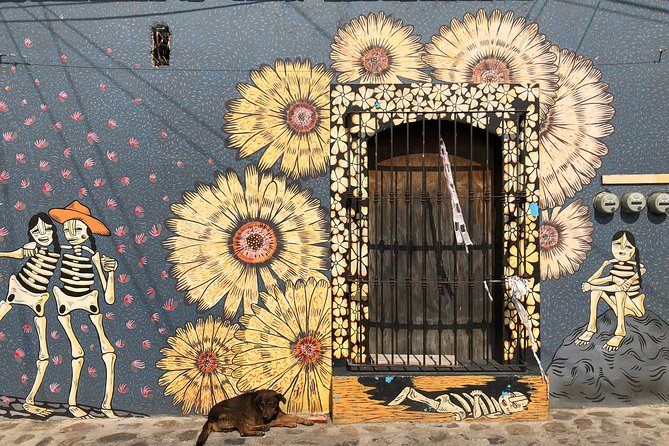
From the starting point, the route moves through three Oaxaca neighborhoods. The exact order and artwork can change, since street art changes too. Murals may be repainted, covered, or added after your visit, so this is not a fixed museum collection with numbered rooms.
Expect regular stops rather than nonstop cycling. You will pause for photographs and discussion, then continue to the next area. The ride is built around seeing the city at street level, where artwork shares space with homes, shops, workshops, traffic, and daily routines.
This is the part I find most appealing for an active visitor. You are not just being taken from one famous sight to another. You are moving through the city in a way that keeps the surrounding streets in view.
The ride is generally described as easy and not physically demanding in the aerobic sense. Still, easy does not mean perfectly smooth. Oaxaca’s cobblestone streets can be rough on your body, and there are some small hills. You may also ride in car traffic, although the experience has been described as feeling safe when guided.
If you have back, knee, or balance concerns, take the road surface seriously. One participant found the worn bicycles and cobblestones very uncomfortable. That experience was the exception among the supplied feedback, but it points to a real issue: the challenge comes less from distance than from the streets and bicycle condition.
Reading the murals, stencils, and posters
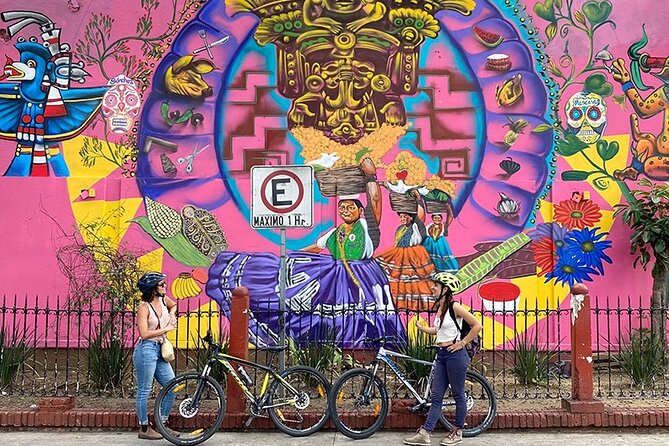
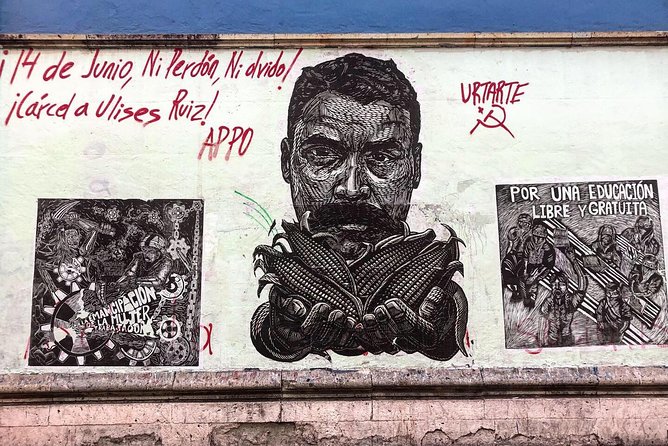
The artwork comes in several forms. Large murals make the biggest visual impression, but stencils and posters matter too. Some pieces may be polished and colorful, while others are direct, rough, or designed to make a political point quickly.
A good guide helps you understand why an image is there and what it says about the place around it. Jessie, for example, has been praised for explaining artists, techniques, traditions, local geography, and the reasons behind specific murals. Diego has been particularly associated with discussions of Oaxaca’s culture of struggle, sharing, and care.
Those themes give the ride weight. You may hear about political and social issues rather than receiving a cheerful list of colors and photo stops. One guide’s idealistic approach included subjects such as herbal remedies, plant and animal spirits, vegetarianism, and resistance to genetically modified corn. That will appeal to some people more than others.
This is an important booking point. The guides are not interchangeable audio recordings. They bring their own interests and interpretations. If you want a strictly neutral art-history lecture, the ride may feel personal or political. If you enjoy hearing how art fits into arguments about land, food, identity, and community, that personal approach can be one of the morning’s best features.
Oaxaca’s art scene is also not as extensive as those in Guadalajara or Mexico City. You should not book this expecting an all-day survey of giant murals on every block. The appeal lies in the combination of art, neighborhood riding, conversation, and local access.
More street art walks around Oaxaca City:
- Street Art Tour With An Artist in Oaxaca
★ 5.0 · 54 reviews - Mexico City; ART NACO : Murals & Street Art Bike Tour
★ 5.0 · 284 reviews - Mexico City: Art Naco, murals & street art bike tour
★ 4.7 · 166 reviews
Visiting art workshops along the way
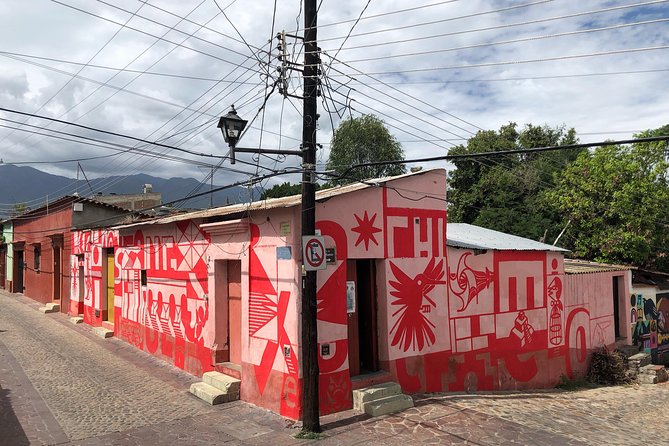
The workshop stops add something you cannot get from photographing walls on your own. The route includes interesting art workshops, and several outings have included visits to studios or conversations with artists. One particularly memorable experience involved meeting a muralist while he was painting and visiting another artist’s studio to hear about techniques.
The availability of a specific artist or workshop can vary. Do not treat this as a guaranteed private studio appointment or a formal class. Think of it as a chance to see how public art and working artists connect within the city.
These stops also break up the ride. You can rest, ask questions, and look closely at materials and methods before getting back on the bicycle. For families, this variety can help keep the four-hour outing engaging. For anyone interested in making art, the workshop visits may be more valuable than another quick mural stop.
The best guides explain not only what you are seeing but also who made it and why. That turns a wall into a story rather than a backdrop.
Snacks, water, and time for conversation
Snacks and bottled water are included. The tour also allows time to talk about local history, culture, and traditions, possibly with a drink or snack during the route. The supplied details do not specify the exact snack or drink, so bring any special food or extra water you know you will need.
These pauses matter. Four hours of cycling, stopping, listening, and taking photographs can feel long without a break. A snack also gives you a relaxed moment to ask about places you pass or subjects raised by the guide.
I like that the ride leaves room for conversation instead of treating the group as a timetable to be moved from wall to wall. Some of the most worthwhile material may come from a question about a neighborhood, an artist, or a local tradition.
At the same time, the conversational style means the morning is not tightly scripted. If your guide spends more time on social issues, plant knowledge, or community politics, you may see fewer individual works. One low-rated experience felt that only two murals were especially interesting over four hours. That is a reminder to book for the overall cultural experience, not a guaranteed number of spectacular walls.
How much value do you get for $83.64?

At $83.64 per person, this is not the cheapest way to look at Oaxaca’s streets. You are paying for about four hours, bicycle and helmet use, an English-speaking guide, snacks, bottled water, a small group, and access to a route that would take more effort to plan alone.
The value is strongest if you want interpretation and company. You could walk around and find public art without paying an admission fee, but you would miss the guide’s explanations and may not reach the same three neighborhoods in one morning. You would also need to find the workshops and decide which pieces are worth stopping for.
For a first visit, I think the price is easier to justify. The ride doubles as an introduction to Oaxaca’s streets and a list of places to revisit. If you already know the city well, or if you mainly want a fast overview of its central sights, the value is weaker because this is not a general city tour.
The group limit of 10 helps. A larger group would make street stops and workshop visits less flexible. Here, you are paying partly for a more manageable experience, not just for transportation.
Who will enjoy this ride most?
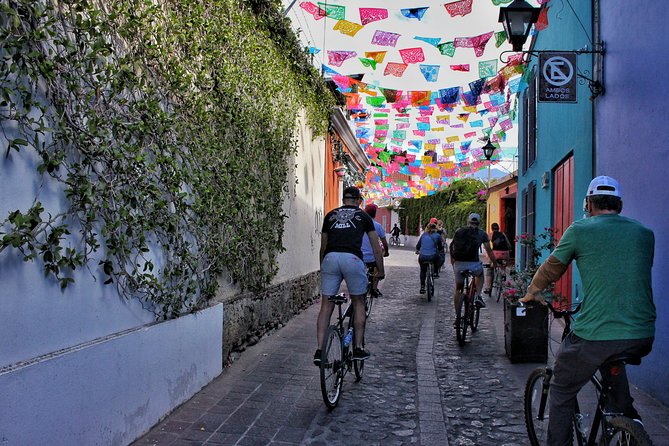
This experience suits active visitors who enjoy cycling and want a different view of Oaxaca. You should have a moderate level of physical fitness and be comfortable riding over uneven streets. The pace is not presented as strenuous, but cobblestones, small hills, and traffic require attention.
It is a good fit for:
- First-time visitors who want to get their bearings quickly
- Families with older children or teenagers who enjoy bikes and art
- Couples looking for a shared morning activity
- Solo visitors who want an English-speaking guide and a small group
- People interested in murals, workshops, social questions, and local culture
- Photographers who want colorful streets and personal places to mark for later
It may not suit you if you dislike cycling in traffic, find rough streets painful, or want a formal art tour with a fixed list of major works. It also may not be the right pick if your main goal is a broad overview of Oaxaca’s historic center.
The ride is friendly to curious beginners, but it is not a replacement for a careful bicycle skills lesson. You need to manage your own balance and comfort on city streets.
Timing, cancellation, and simple planning tips
The activity begins and ends at Bicibella Oaxaca. It lasts about four hours, with the main riding period scheduled from roughly 9:10 until 1:00. You should not need to arrange a separate return transfer because the activity finishes at its starting point.
The meeting area is near public transportation. Confirmation is provided when you book, and the experience requires a minimum number of participants. If that minimum is not met and the operator cancels, you can receive a full refund or be offered another date or experience.
You can cancel for a full refund up to 24 hours before the start time. Cancellations or changes made within 24 hours are not accepted for a refund. The cut-off follows Oaxaca local time.
My practical checklist would be simple:
- Apply sunscreen before leaving.
- Wear clothing that allows easy movement.
- Expect cobblestones and small hills.
- Bring any extra water or food you require.
- Leave room in your morning for conversation and workshop stops.
- Consider booking early in your Oaxaca stay so you can return to favorite areas later.
Should you book the Street Art Bike Ride?
Book it if you want to see Oaxaca beyond the main center, enjoy a relaxed bicycle outing, and care about the people and ideas behind public art. Guides such as Diego, Jessie, Jessy, Bao, and Cristian have made the experience especially strong by connecting murals with local culture, social change, traditions, and the artists’ own work.
Skip it if you need smooth pavement, dislike traffic, or expect a nonstop parade of major murals. The city’s street art is not presented as a perfectly predictable collection, and the physical comfort of the ride may depend on the bicycle and your tolerance for cobblestones.
For most active visitors, I see this as a smart early-trip choice. It gives you four useful hours outside, a broader look at Oaxaca’s neighborhoods, and plenty of ideas for where to wander next.
FAQ
Where does the Street Art Bike Ride begin?
It begins at Bicibella Oaxaca, C. Macedonio Alcalá 802, Ruta Independencia, Centro, Oaxaca de Juárez.
What time does the tour start?
The meeting and planning begin at 9:00 a.m. The bike riding is scheduled from about 9:10 a.m. to 1:00 p.m.
How long does the experience last?
The activity lasts approximately four hours.
Where does the tour end?
The ride ends back at the meeting point, Bicibella Oaxaca.
Is the tour offered in English?
Yes. The experience is offered in English.
Are bicycles and helmets included?
Yes. Bicycle and helmet use are included in the price.
Are food and drinks provided?
Yes. Snacks and bottled water are provided. The exact snack or drink is not specified.
How far in advance can I cancel?
You can cancel at least 24 hours before the start time for a full refund. Cancellations or changes made less than 24 hours before the start time are not accepted for a refund.
New on the Oaxaca City list
- Private Historic City Tour + Street Food of Oaxaca – Best Rated★ 5.0 · 53 reviews
- Street Art Tour With An Artist in Oaxaca★ 5.0 · 54 reviews
- Private and safe transfer from the airport to the hotel in Oaxaca★ 4.5 · 58 reviews
- Paint your Alebrije with the Jimenez family.★ 5.0 · 66 reviews
- Hierve el Agua Half Day trip in the morning★ 5.0 · 66 reviews
- Tour Boil the “classic” water★ 4.5 · 67 reviews
- Tradicional Mezcal Experience in Oaxaca-Visit a Family Distillery★ 5.0 · 67 reviews
- Mezcal & Mole by a Certified Sommelier★ 5.0 · 70 reviews
Oaxaca City Tours, compared.
Hierve el Agua, Tule Tree, Mitla and Mezcal Distillery Tour
Read our review →
AUTHENTIC OAXACA CULTURAL FOOD TOUR, eat like a local.
Read our review →
Browse the lists this tour appears in