
Reviewed · MEXICO CITY TOURS
Mexico City; ART NACO : Murals & Street Art Bike Tour
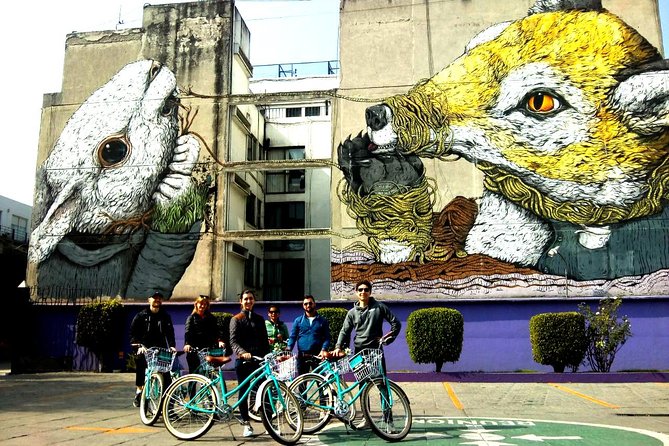
Mexico City’s best street art is not confined to the postcard center. This three-hour ride takes you through Colonia Guerrero, Lagunilla, Obrera, and Doctores, then toward Juárez and Cuauhtémoc, where murals are part of daily neighborhood life rather than a formal gallery. I like the way the bike gets you between scattered works quickly, and I like the small groups, which make it easier to ask questions and keep the ride calm.
I also appreciate the local food stop, with tacos, quesadillas, tlacoyos, gorditas, chilaquiles, and other choices for different diets. The main caution is the bicycles: most work well enough, but some riders have reported weak brakes or unreliable gears. Guides and support staff take street safety seriously, but you should still be comfortable cycling in a large city.
Key points to know before you book
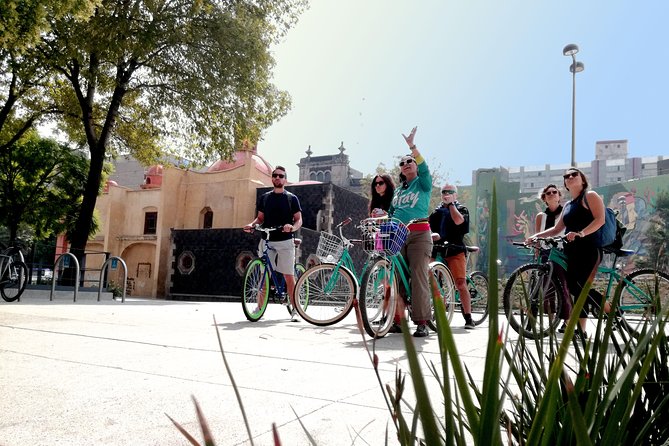
- Ride beyond the usual center: Visit Guerrero, Lagunilla, Obrera, Doctores, Juárez, and Cuauhtémoc instead of seeing only the main historic sights.
- Choose a north or south route: The operator offers two versions, with the northern option giving more emphasis to Mexico City history.
- Small group, maximum 10 people: Extra support guides may help manage traffic, especially with larger groups.
- Street food is part of the experience: Snacks can include tacos, quekas, tlacoyos, gorditas, and chilaquiles, with options for dietary restrictions.
- Guide quality can shape the day: Iván, Alberto, Gaby, Eduardo, and others are praised for their local stories and care with safety.
- Expect ordinary bikes, not racing machines: Bikes are fitted to you, but maintenance may vary.
Why this bike ride reveals a different Mexico City
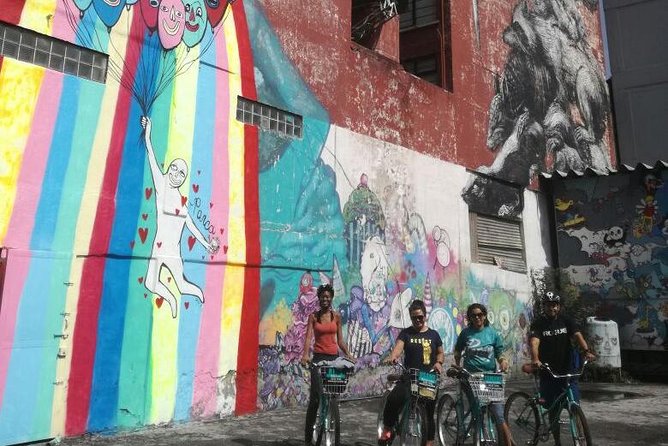
Mexico City is too large to understand from a single walking route. The ART NACO ride helps you cover several neighborhoods while keeping the focus on public art, local stories, and food.
You begin near Paseo de la Reforma at Avenida Paseo de la Reforma 24-1 in Colonia Centro. The start time is 10:00 am, and the ride returns to the same meeting point after about three hours. That central location is useful if you are staying in or near the historic center, and it is close to public transportation.
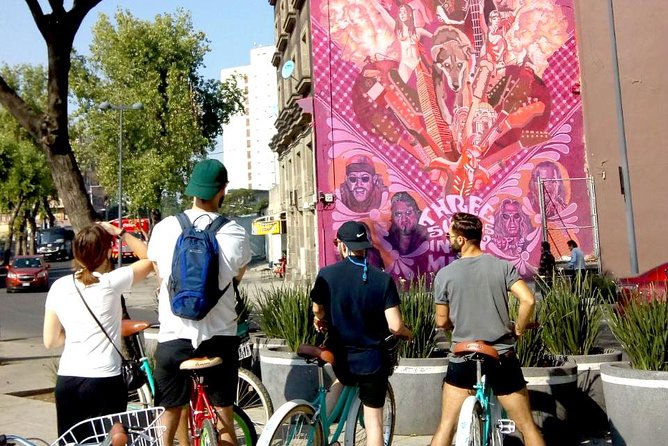
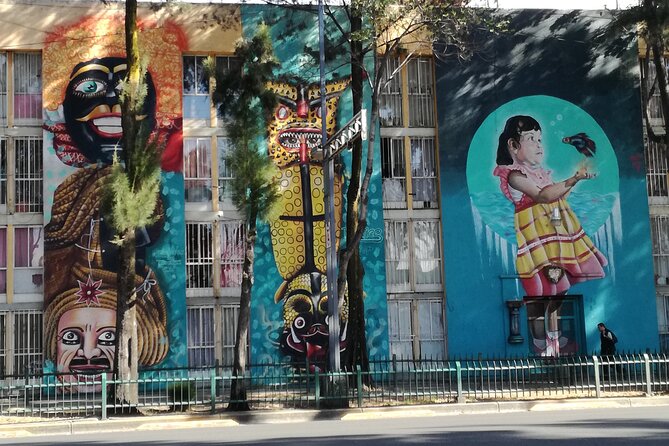
The experience is not built around a long list of famous monuments. Instead, the guides point out murals painted on walls, community spaces, museums, and streets you might otherwise pass without noticing. The art is the hook, but the neighborhoods give it meaning.
I would book this early in your Mexico City stay. It gives you a broad look at several districts, helps you get oriented, and may introduce you to areas you will want to revisit on foot. The ride is also a good break from museums and indoor sightseeing.
More Bike Tours in Mexico City
- Frida Kahlo VIP [Museum Tickets Included] Bike, Markets & Churros
★ 5.0 · 1,072 reviews - Mexico bike tour
★ 5.0 · 407 reviews - Mexico City E-Bike Tour with a taco and churros stop
★ 5.0 · 292 reviews
From Guerrero and Lagunilla into the working city
The route begins by moving toward Colonia Guerrero, Lagunilla, and parts of the center that sit outside the standard sightseeing circuit. These districts give the tour its strongest local flavor.
Lagunilla is especially useful for seeing how Mexico City works as a lived-in place. You are not simply crossing from attraction to attraction. You are cycling through neighborhoods with their own routines, street corners, and layers of decoration.
Your guide may explain how local artists and community groups use murals to talk about identity, history, politics, or neighborhood pride. The amount of detail depends on the guide. Iván is praised for explaining artists and historical context, while Alberto is often singled out for his patient manner and strong sense of the barrios.
The ride is generally slow. You should not expect a workout or a fast cycling tour. That pace lets you look up at walls, stop without feeling rushed, and stay with the group. It also makes the trip manageable for people who ride casually but are not used to covering long distances by bicycle.
Obrera and Doctores, where the art feels close to home
The route continues toward Obrera and Doctores, two neighborhoods that help show how far Mexico City’s street-art scene reaches. Here, the murals are not presented as isolated decorations. They are tied to the buildings and streets around them.
One major stop is the Antique Toy Museum, known locally as MUJAM. It hosted the first Street Art Festival in 2011, and the tour connects that event with the continuing effort to encourage and preserve new public art.
That connection matters. You get more than a quick photograph of a painted wall. You learn how a festival, artists, and residents can help create an ongoing art scene. The museum stop also gives the route a clear anchor, especially for anyone interested in how popular culture and public art overlap.
The Doctores and Obrera portion can feel less polished than the central districts. That is part of the point, but it also means the experience is not designed for people who want only grand buildings and tidy plazas. You are seeing working neighborhoods, with the normal movement and distractions of city life around you.
Safety support is one of the strongest parts of the ride. Guides may position themselves around the group and help you cross busy streets. Several guide teams include extra staff, and riders repeatedly describe feeling protected in traffic. That does not remove the need to pay attention, but it makes the city cycling feel far less intimidating.
A pause at Pushkin Garden and a change of pace
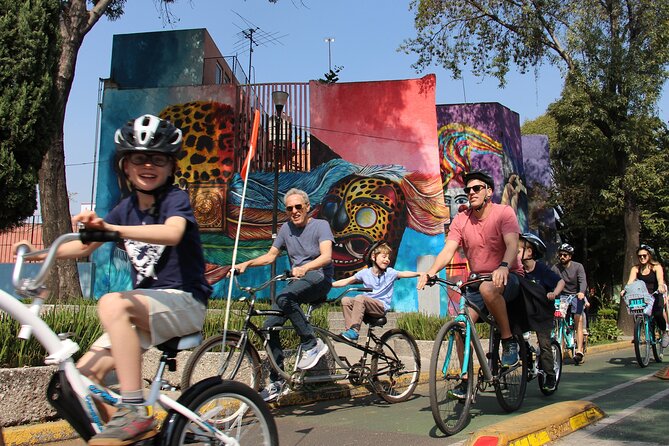
The tour includes a rest at Pushkin Garden. This is a useful break after the first section of riding and a chance to hear about the Roma area.
The pause keeps the three-hour route from becoming a nonstop procession of walls and explanations. You can catch your breath, ask about the neighborhoods, and reset before continuing toward Juárez and Cuauhtémoc.
Do not expect every stop to be a formal presentation. Some guides explain the cultural role of a mural in detail, while others may speak more broadly about local customs and history. One less favorable account described a guide as difficult to follow and too far off topic. If precise art criticism is your main goal, the guide you receive will matter.
English is offered, though the guide may be multilingual. English fluency can vary. Most of the strongest accounts praise the guides’ warmth, history, and art knowledge, but one rider felt the visit would have been better with smoother English. I would keep that in mind if you need highly detailed interpretation in English.
More City Tours in Mexico City
- Mexico City: Teotihuacan, Tlatelolco & Guadalupe Shrine Tour
★ 4.6 · 3,773 reviews - Teotihuacan Hot Air Balloon Flight from Mexico City / Volare
★ 5.0 · 3,262 reviews - Teotihuacan Private Tour from Mexico City
★ 5.0 · 1,890 reviews - Mexico City: Teotihuacan Early or Afternoon Access Tour
★ 4.6 · 1,547 reviews
Juárez and Cuauhtémoc, then the Alameda murals
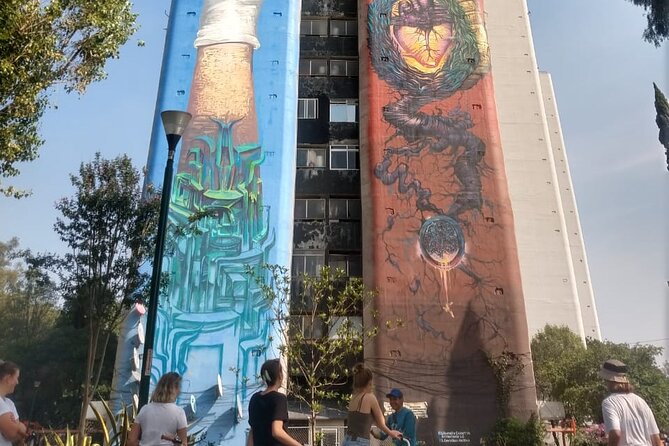
The later part of the route crosses Juárez and Cuauhtémoc, where you see some of the largest murals included on the ride. The route then reaches murals around Alameda and the Diego Rivera Mural.
This section gives the tour a broader artistic scale. Earlier stops may feel tied to neighborhood walls and local projects. Near Alameda, the works can feel more monumental and connected to Mexico City’s better-known public-art tradition.
The Diego Rivera mural is a natural closing point for a ride centered on Mexican art. It also helps link contemporary street painting with the country’s long mural tradition. Your guide may draw out the relationship between public art, national identity, and history.
The exact sequence can vary because there are two routes, north and south. If you are choosing between them, ask which route is operating and what it emphasizes. The northern route has been described as more history-focused, while the southern route may offer a different set of neighborhoods and art stops. The supplied details do not promise a fixed list of every mural, so do not book this expecting a precise museum-style checklist.
The food stop is more than a quick refill
Street food is included, and it is one of the most appealing parts of the outing. The choices may include tacos, quekas, tlacoyos, gorditas, chilaquiles, and other local dishes. Options are available for different dietary restrictions.
The food stop adds something a standard art walk cannot. You are not only looking at Mexican culture on walls. You are also tasting a small part of the everyday food culture that makes the city so memorable.
Several guides have taken groups to a local stand they know well. Iván is especially praised for introducing people to maize azul tacos and for giving context to the food. Other accounts describe the final stop as a very good local lunch or snack.
The details are not fixed enough to promise one restaurant or one dish. Think of this as a street-food tasting included in the ride, not a full culinary tour. If you have allergies or strict dietary needs, tell the operator when booking and remind the guide before eating.
I like that the food is folded into the route rather than treated as a separate add-on. It gives you a natural place to talk with the guide and fellow riders, and it slows the day down at just the right moment.
Safety, traffic, and the reality of the bikes
Cycling in Mexico City can sound nerve-racking, particularly if you have seen traffic from inside a taxi. The tour teams appear to understand that concern. Guides and assistants may block or manage traffic while the group crosses streets, and larger groups can have several staff members.
That extra help is a real value. You are not left to find your own way through intersections while trying to follow a guide ahead. The ride is described as slow and safe, with plenty of stopping.
Still, this is city cycling. You should be able to balance and steer confidently, follow instructions, and stay alert. The tour is suitable for most people who can ride a bicycle, but the supplied information does not promise a completely traffic-free route.
Bike condition is the main practical weakness. The operator fits a bike to you, and many people find the bikes comfortable. A few riders, however, have encountered weak brakes or gears that shifted without warning. One group needed to try more than one bike before finding suitable options.
That is not a reason to reject the tour, but it is a reason to check your bicycle carefully before setting off. Test both brakes, shift through the gears, and tell the staff about any problem immediately. Do not accept a bike that feels unsafe simply because the group is ready to leave.
How the guides shape the experience
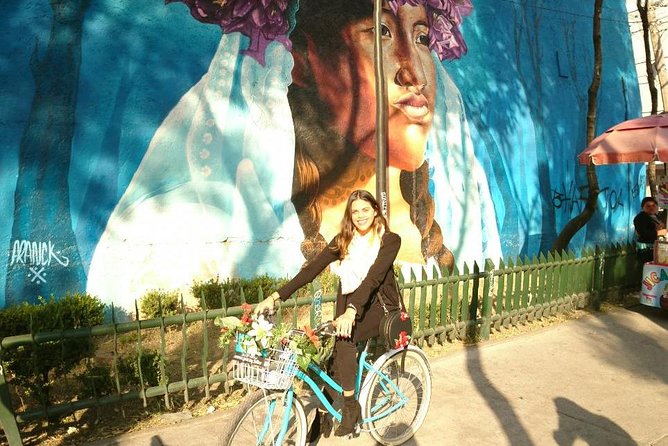
The guide is central here because the murals need explanation. A wall can look striking in a photograph, but the story of the artist, neighborhood, or festival is what turns the stop into a useful travel experience.
Iván receives especially strong praise for his art research, Mexican history, and local connections. He has helped riders understand the meaning behind the murals and has even offered to watch the bikes while they briefly explored a library that caught their interest.
Alberto is described as kind, patient, and familiar with the city’s barrios. Gaby is praised for clear cultural explanations and for keeping groups comfortable on busy streets. Eduardo is noted for combining art and Mexican history with a friendly approach.
You cannot select a particular guide unless the operator confirms one in advance. The standard allows for a multilingual guide, so the depth of English explanation can vary. I would ask questions as you go. The small group makes that practical, and a good question often brings out the best local detail.
The tour’s one very low rating described a ride with little useful art information. That appears to be an exception among the supplied comments, but it points to a fair concern: this is not a self-guided art course, and your experience depends in part on the person leading your group.
Is $60.56 a fair price?
At $60.56 per person, this is not the cheapest way to see Mexico City. You can walk through central districts for free, and public murals cost nothing to view.
The price makes more sense when you count what is bundled in: a fitted bicycle, a local guide, bottled water, a small group limited to 10 people, traffic support, and street food. You are also paying for access to a route that would be difficult to plan on your own, especially if you do not know which neighborhoods contain worthwhile murals or how to connect them efficiently.
I consider the value good for someone who wants art, food, and local orientation in one morning. It is less compelling if you already know the city well, own a bicycle, and are happy to research the street-art sites yourself.
The 16-day average advance booking suggests that you should not leave this until the last minute during a busy visit. The tour requires at least two people per booking, and the maximum is 10. A child rate is available only when the child shares with two paying adults, and children must be accompanied by an adult.
Who should book this ride?
I would recommend it to first-time visitors who want to see beyond the main historic sights. It also suits solo riders, couples, and families with teenagers who can manage a three-hour city ride.
Art lovers will get the most from it, especially if they enjoy learning who made a work and why it matters. Food-focused visitors will appreciate the local snack stop, while photographers will like the range of walls and districts.
This is not the best choice for you if you dislike cycling, need a guaranteed premium bicycle, or want a fixed academic lecture on mural history. It may also disappoint if you expect every stop to be a famous landmark.
The ride ends back at the starting point, and hotel pickup and drop-off are not included. Free cancellation is available up to 24 hours before the start time. Changes or cancellations made inside that window are not accepted for a refund.
My booking advice
I would book ART NACO early in a Mexico City visit, ideally on a morning when you can keep the afternoon flexible. Confirm the route, ask about current bike condition, and mention any food restrictions before you arrive.
For most people, the combination of off-route neighborhoods, art context, careful traffic support, and Mexican street food is worth the $60.56. Book it if you want to see the city at street level and are willing to accept ordinary bikes and some guide-to-guide variation. Skip it if your priority is polished equipment or a tightly scripted art lecture.
FAQ
Where does the Mexico City street-art bike tour begin?
It begins at Av. P.º de la Reforma 24-1, Colonia Centro, Cuauhtémoc, 06040 Ciudad de México, CDMX, Mexico.
What time does the tour start?
The tour starts at 10:00 am.
How long does the bike tour last?
It lasts approximately three hours.
Where does the tour finish?
The activity ends back at the meeting point.
How many people can join the tour?
The tour has a maximum of 10 people.
Is a bicycle included?
Yes. A bicycle fitted to you is included in the price.
Is food included?
Yes. The tour includes street-food snacks, with choices such as tacos, quekas, tlacoyos, gorditas, and chilaquiles.
Is bottled water included?
Yes. Bottled water is included.
Is the tour offered in English?
Yes. English is offered, though the guide may be multilingual.
Are hotel transfers included?
No. Hotel pickup and drop-off are not included.
Can I cancel for a full refund?
Yes. You can cancel at least 24 hours before the experience start time for a full refund. Cancellations or changes made less than 24 hours in advance are not accepted for a refund.
More Street Art Walks in Mexico City
- Street Art Bike Ride
★ 5.0 · 125 reviews - Street Art Tour With An Artist in Oaxaca
★ 5.0 · 54 reviews
More Bike Days in Mexico City
- Mexico City Highlights E-Bike Tour With Foodie Stops
★ 5.0 · 226 reviews - Street Food Bike Tour / Mexico is not only Tacos / All Inclusive
★ 5.0 · 170 reviews - Mexico City: Art Naco, murals & street art bike tour
★ 4.7 · 166 reviews - Teotihuacan Hot Air Balloon Ride with Optional Bike or Walking Tour
★ 5.0 · 144 reviews
New on the Mexico City list
- Day of the Dead Tour in San Andres Míxquic From Mexico City★ 3.7 · 52 reviews
- Half-Day Tour to Teotihuacan Pyramids from Mexico City★ 5.0 · 53 reviews
- Xochimilco floating gardens, Coyoacan and UNAM murals★ 4.0 · 53 reviews
- Guided Tour of Coyoacan and Leon Trotsky Museum★ 5.0 · 53 reviews
- Gay Side of History through Plazas & Temples★ 4.5 · 53 reviews
- Flavors of Mexico City: A Tasty Urban Expedition★ 4.5 · 53 reviews
- Butterfly Monarch Tour from Mexico City★ 5.0 · 53 reviews
- From Mexico City: Cholula Pyramid & Puebla Small Group Tour★ 4.6 · 54 reviews
Mexico City Tours, compared.
Teotihuacan, Guadalupe Shrine & Tlatelolco Day Tour with Lunch
Read our review →
Xochimilco, Coyoacan and Frida Kahlo with Optional Lunch
Read our review →
Balloon flight + Breakfast in cave + Pyramids + Pick up CDMX.
Read our review →
Teotihuacan pyramids morning or afternoon without tourist traps
Read our review →
Teotihuacan Early Access Guided Tour with optional Lunch
Read our review →
Balloon flight + pick up in CDMX + Breakfast in Cave + Pyramids
Read our review →
Balloon Flight + Cave Breakfast + Pick Up from CDMX or We Fly
Read our review →
Teotihuacan, Tlatelolco & Guadalupe Shrine Tour
Read our review →Browse the lists this tour appears in