Reviewed · MEXICO CITY TOURS
Guadalupe Shrine Tour
The Guadalupe Shrine is not one church but a large religious campus, with two basilicas, chapels, gardens, a hilltop shrine, and a museum. At its heart is the tilma associated with Juan Diego and the 1531 apparition of the Virgin of Guadalupe, a story that still shapes Mexican religious and cultural life.
I like the round-trip transport from central Mexico City and the chance to see the site with a guide who can explain what you are looking at. I also like that the tour includes Tepeyac Hill and the museum, not just a quick look inside the New Basilica. The main drawback is the 3 p.m. start. Some buildings close around 5 p.m., so a late departure can make the visit feel rushed.
Key points to know before booking
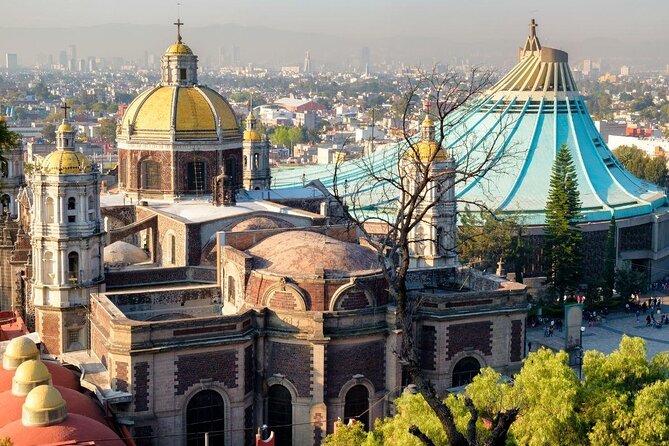
- The shrine is a full campus: Plan to see several churches, chapels, gardens, and historic sites rather than one basilica.
- The 1709 Old Basilica gives the visit its strongest colonial character: Its Spanish design includes Moorish influence, and the tilma is displayed inside.
- The 1976 New Basilica makes viewing the Virgin easy: Its circular plan lets you see the image from almost any place inside.
- Tepeyac Hill requires moderate effort: The stairs are maintained, but the climb may be tiring for some people.
- Guides can make a major difference: Guides including Herson, Ligia, Jocelyn, Miriam, Gabriel, and Antonio have been praised for clear explanations and personal attention.
- The meeting point is not a hotel: Standard departures leave from Hostal Amigo in Centro Histórico at 3 p.m.; hotel pickup is available only with the private option.
Why the Guadalupe Shrine matters in Mexico City
The Guadalupe story begins in 1531, when Juan Diego, a peasant man, is said to have encountered the Virgin Mary on Tepeyac Hill. According to the tradition, her image appeared miraculously on his tilma, or cloak. That image is now connected with the Basilica of Our Lady of Guadalupe and draws more than 20 million visitors each year.
You do not need to be Catholic to find the place worthwhile. The shrine works as a religious destination, a major part of Mexican identity, and a lesson in how belief and national culture can overlap. One particularly useful aspect of a guided visit is hearing why the Virgin matters beyond the church itself.
The site also gives you a clear sense of pilgrimage. Older worshippers may have spent years hoping to make the journey. You may see people entering the New Basilica to pray, attend mass, or approach the image with great care. Even if you come mainly for architecture or Mexican history, that atmosphere gives the visit weight.
A few other Mexico City days to price up
- Teotihuacan, Guadalupe Shrine & Tlatelolco Day Tour with Lunch
★ 5.0 · 11,603 reviews - Xochimilco, Coyoacan and Frida Kahlo with Optional Lunch
★ 4.5 · 7,320 reviews - Balloon flight + Breakfast in cave + Pyramids + Pick up CDMX.
★ 5.0 · 6,335 reviews
Getting from Centro Histórico to the basilica
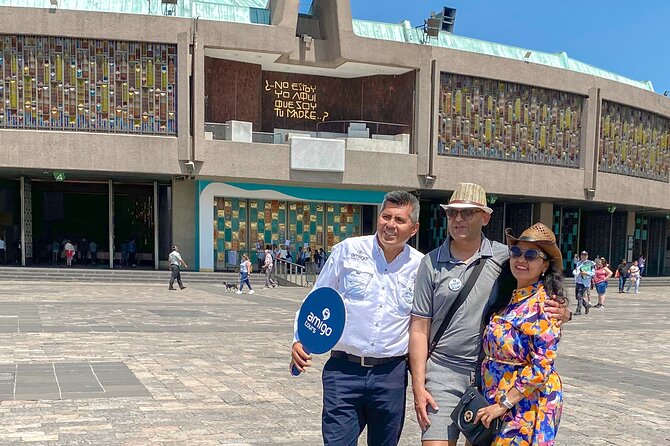
The standard tour begins at Hostal Amigo, at Isabel La Católica 61-A in Mexico City’s Centro Histórico. The start time is 3 p.m., and the tour ends back at the same meeting point after transportation to and from the shrine.
This arrangement removes the work of figuring out the route to northern Mexico City. That matters because the shrine is some distance from the downtown area, and the tour is short enough that losing time in transit or finding the correct entrance can cut into your visit.
The standard option does not include hotel pickup. You need to reach the hostel yourself unless you select the private tour, which offers hotel pickup after you provide the hotel name for coordination. Give yourself enough time to find the meeting point. One serious complaint focused on a difficult-to-find office and a late vehicle, while another account described the pickup as punctual and the vehicle as comfortable.
That mixed record is worth keeping in mind. Most of the positive experiences praised the transport and guide, but one late departure reportedly caused several buildings to close before the group arrived. If your schedule is tight, confirm the meeting instructions and leave room for delays.
The 1709 Old Basilica and the story of the tilma
The first major stop is the Basílica Antigua, built in 1709. This is the building to seek out if you enjoy Spanish colonial architecture. Its Moorish influence gives it a different look from the newer church, and its age helps place the Guadalupe devotion in Mexico’s colonial period.
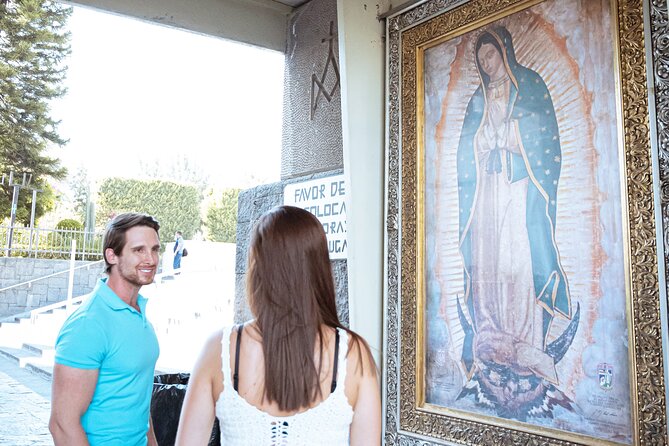
Inside, you can see the tilma associated with Juan Diego, along with devotional paintings. The image is the central object of the visit, but the setting around it matters too. The Old Basilica connects the living devotion you see today with earlier centuries of worship.
The tour guide explains the apparition story and the role of the Virgin in Mexican culture. This is where a guide can save you from simply walking through a church and wondering what deserves your attention. Guides such as Jocelyn and Ligia have been singled out for explaining the story of Juan Diego, the apparition points, and related Mexican history in a way that invites questions.
Photography is allowed in most areas, but the original chapel is an exception according to practical information from the tour. Follow any signs and instructions from staff. Religious sites can change their photography rules during services or special events.
Seeing the Virgin inside the 1976 New Basilica
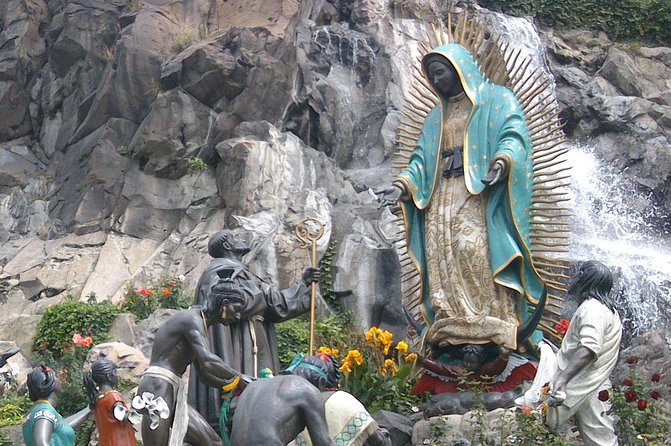
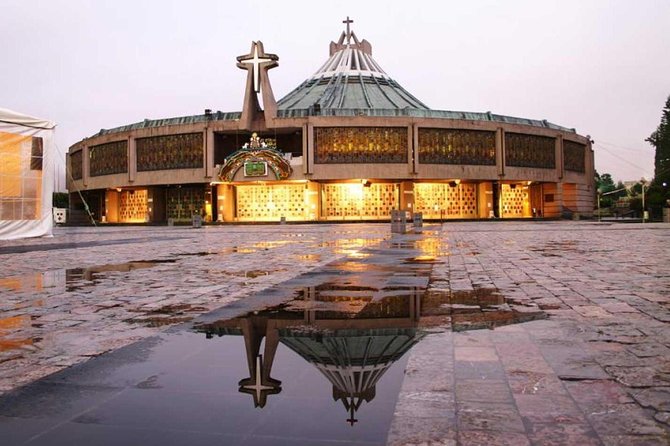
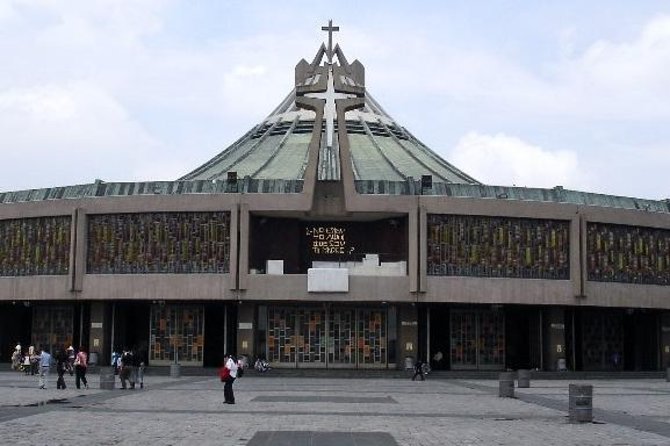
The New Basilica was completed in 1976 and looks very different from the Old Basilica. Its circular floor plan gives people a view of the Virgin from almost anywhere inside. That design is practical as well as symbolic: large numbers of people can enter, move through the building, and see the image without everyone crowding into one small area.
The basilica can seat more than 10,000 worshippers, giving you a sense of the scale of the devotion here. Pilgrims stream through the main aisle, often beneath the image. The arrangement allows you to see the tilma without stopping the flow of people heading toward prayer or mass.
Your guide can point out the way the building functions during a service and explain the meaning of the Virgin for Mexico. You also receive free time at the end of the tour to attend mass if the timing works, or to walk around the grounds independently.
If attending mass matters to you, tell the guide early. A guide named Ligia was praised for waiting while a group attended services, and other small groups were able to attend Sunday mass. The tour does not promise a particular service, so treat this as a possible addition rather than a guaranteed part of the schedule.
Same stretch of coast, a very different day:
- Teotihuacan pyramids morning or afternoon without tourist traps
★ 5.0 · 6,186 reviews - Teotihuacan Early Access Guided Tour with optional Lunch
★ 4.5 · 6,138 reviews - Balloon flight + pick up in CDMX + Breakfast in Cave + Pyramids
★ 5.0 · 5,651 reviews - Balloon Flight + Cave Breakfast + Pick Up from CDMX or We Fly
★ 5.0 · 4,410 reviews
Climbing Tepeyac Hill for the original apparition site
Tepeyac Hill is where the Guadalupe story began, and it adds an outdoor element to what could otherwise be an indoor church visit. You walk uphill to the site associated with the apparition and can look back over the surrounding area.
The climb requires moderate physical fitness. The stairs are well maintained, but this is not a flat stroll. If you have limited mobility, ask the guide about the easiest route before starting. Several guides have helped people using wheelchairs or accompanying older family members, but the tour description does not promise full step-free access throughout the site.
The hill can also be the part most affected by the late start. One account described not having enough time to see the hill and additional churches because the group arrived close to closing time. That is a good reason to keep your pace steady and ask the guide to prioritize Tepeyac Hill if it is important to you.
The reward is not only the viewpoint. The hill explains why the shrine exists where it does. Once you understand the connection between the slope, the chapel, Juan Diego, and the basilicas below, the whole complex makes more sense.
The museum of 4,000 pieces of religious art
Behind the Old Basilica is a museum with about 4,000 pieces of 17th-century religious art. This stop gives you a wider view of the religious world surrounding the Guadalupe devotion.
The museum is especially useful if you want more than the famous image. Paintings and religious objects help show how faith was expressed in Mexico during the colonial period. The museum also gives you a quieter change of pace after the large New Basilica and busy pilgrimage areas.
The practical issue is time. The tour lasts about four hours, and the 3 p.m. start leaves a limited window before some buildings close around 5 p.m. The museum is included in the planned visit, but how much time you receive there can depend on traffic, group size, services, and the pace of earlier stops.
I would tell the guide at the beginning if the museum is a priority. The same applies to the hill, mass, or the Old Basilica. A small group may allow more flexibility, while a group of up to 20 people requires more coordination.
What the guides add to the experience
The strongest part of this tour is often the guide. The best guides do more than recite dates. They explain the apparition story, identify the important churches, answer questions, and help you understand how the shrine fits into Mexican culture.
Several guides have received especially strong praise. Herson was described as friendly and well informed, and the vehicle was considered comfortable. Ligia was praised for detailed explanations, patience, and helping a group attend mass. Jocelyn was valued for teaching both the Guadalupe story and wider Mexican history. Miriam, Gabriel, and Antonio were also noted for friendly service and clear help around the large complex.
The experience can become almost private when only a few people book. One couple had a conversation-style visit with plenty of time for questions, and another small group received individual attention. That is a pleasant bonus, but it is not something you can count on. The maximum group size is 20.
There is also a warning here. One poor experience described a late guide, a vehicle nearly an hour behind schedule, and an English tour that did not provide the expected English commentary. Another account found the guide’s information too basic. These reports are not consistent with the many positive accounts, but they show why the quality of the guide and the timing matter so much.
Price, group size, and what you receive
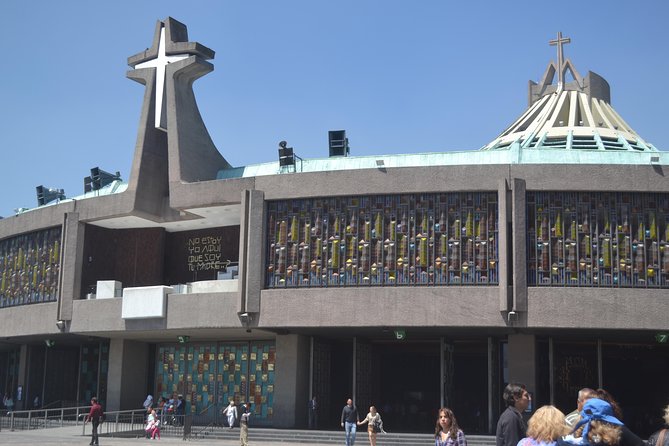
The tour costs $51 per person. That covers a professional guide and round-trip transportation. Admission to the listed shrine stop is free, and food and drinks are not included.
Could you visit the shrine on your own for less? Yes, the site is accessible by public transportation, and independent sightseeing would reduce the cost. The value of this tour is convenience and interpretation. You do not have to plan the route, sort out the multiple buildings, or work out which chapel connects to which part of the story.
The price makes the most sense if you are staying in central Mexico City, prefer organized transport, or want an English-speaking guide. It is also useful for a first visit, since the complex is much larger than the name Basilica of Guadalupe suggests.
For a couple or family, compare the standard and private options carefully. Private hotel pickup adds convenience, but it will cost more than the advertised per-person rate. Group discounts may be available, though the exact saving is not specified.
Timing, fitness, and family considerations
The advertised duration is approximately four hours, with a 3 p.m. departure. The visit may return around early evening, depending on traffic and how long the group spends at the shrine.
This is not a hard physical excursion, but you should be comfortable walking around a large religious campus and climbing Tepeyac Hill. Older family members may need more time, particularly on the stairs. Guides have helped wheelchair users find easier routes, which is encouraging, but you should discuss mobility needs before booking because the hill and older buildings may not be equally easy to access.
The tour is offered in English and confirmation is provided at booking. The meeting point is near public transportation. Since food and drinks are excluded, plan to eat before departure or after returning to the city center.
The late start may appeal if you want a slower morning for museums or central Mexico City sights. It is less suitable if you want to explore every chapel and museum room in detail. If you are visiting during a particularly busy religious period, allow extra time and expect the schedule to depend on conditions at the shrine.
Who should book this Guadalupe tour?
I would recommend it to a first-time visitor who wants context, transport, and a clear route through a large and meaningful site. It is also a good fit for anyone interested in Mexican culture, colonial church design, religious art, or pilgrimage traditions.
You do not need to share the faith to appreciate the visit. The architecture, art, history, and scale of the complex offer plenty to see. The guide also helps you understand why the Virgin of Guadalupe is both a religious figure and a major cultural symbol.
I would think twice if you want a long, unhurried exploration of every building. The 3 p.m. start can leave less than an hour before some areas close, especially if transport runs late. Independent visitors who are comfortable using public transportation may prefer to arrive earlier and set their own pace.
The cancellation policy is practical: you can cancel for a full refund at least 24 hours before the start time. Changes or cancellations made less than 24 hours before departure are not accepted for a refund.
Final call: a worthwhile visit with one timing concern
The Guadalupe Shrine Tour offers a useful balance of transport, explanation, and access to the main parts of the complex. I especially like that it includes the Old Basilica, New Basilica, Tepeyac Hill, and the 17th-century art museum instead of treating the shrine as a single photo stop.
The main question is timing. Book it if the 3 p.m. departure suits your day and you value having an English-speaking guide. If you want to attend mass, climb the hill, and see the museum without watching the clock, ask about the day’s schedule and prioritize those stops at the start.
At $51, you are paying for ease and guidance rather than admission. For a first visit to one of Mexico City’s most important religious and cultural sites, that can be fair value, especially when the guide is as helpful as Herson, Ligia, Jocelyn, Miriam, Gabriel, or Antonio. For the best chance of a smooth visit, arrive early at the meeting point, confirm the English departure, and leave some flexibility in your evening plans.
FAQ
How much does the Guadalupe Shrine Tour cost?
The listed price is $51 per person. Group discounts may be available, but the exact discount is not specified.
How long does the tour last?
The experience lasts approximately four hours.
What time does the tour start?
The standard tour starts at 3 p.m.
Where does the tour begin?
The standard meeting point is Hostal Amigo at Isabel La Católica 61-A in Centro Histórico, Mexico City.
Does the tour include hotel pickup?
Hotel pickup is available only if you select the private tour option. You must provide your hotel name to coordinate pickup.
Where does the tour end?
The activity ends back at the original meeting point in Centro Histórico.
Is the tour offered in English?
Yes. The tour is offered in English.
What is included in the price?
A professional guide and round-trip transportation are included. Admission to the listed shrine stop is free.
Are food and drinks included?
No. Food and drinks are not included.
How large can the group be?
The maximum group size is 20 people.
Do I need good physical fitness?
A moderate level of physical fitness is recommended. The visit includes walking around the shrine complex and climbing Tepeyac Hill.
Can I attend mass during the tour?
You receive free time to attend mass if the timing allows. The tour does not guarantee a particular service.
Can I cancel for a full refund?
Yes. You can cancel at least 24 hours before the local start time for a full refund. Cancellations or changes made less than 24 hours before the start are not accepted for a refund.
New on the Mexico City list
- Day of the Dead Tour in San Andres Míxquic From Mexico City★ 3.7 · 52 reviews
- Half-Day Tour to Teotihuacan Pyramids from Mexico City★ 5.0 · 53 reviews
- Xochimilco floating gardens, Coyoacan and UNAM murals★ 4.0 · 53 reviews
- Guided Tour of Coyoacan and Leon Trotsky Museum★ 5.0 · 53 reviews
- Gay Side of History through Plazas & Temples★ 4.5 · 53 reviews
- Flavors of Mexico City: A Tasty Urban Expedition★ 4.5 · 53 reviews
- Butterfly Monarch Tour from Mexico City★ 5.0 · 53 reviews
- From Mexico City: Cholula Pyramid & Puebla Small Group Tour★ 4.6 · 54 reviews
Mexico City Tours, compared.
Teotihuacan, Guadalupe Shrine & Tlatelolco Day Tour with Lunch
Read our review →
Xochimilco, Coyoacan and Frida Kahlo with Optional Lunch
Read our review →
Balloon flight + Breakfast in cave + Pyramids + Pick up CDMX.
Read our review →
Teotihuacan pyramids morning or afternoon without tourist traps
Read our review →
Teotihuacan Early Access Guided Tour with optional Lunch
Read our review →
Balloon flight + pick up in CDMX + Breakfast in Cave + Pyramids
Read our review →
Balloon Flight + Cave Breakfast + Pick Up from CDMX or We Fly
Read our review →