
Reviewed · MEXICO CITY TOURS
Gay Side of History through Plazas & Temples
Mexico City’s grandest plazas and temples hold stories that standard sightseeing tours often skip. This three-and-a-half-hour walk connects the Templo Mayor, Cathedral, Zócalo, and former Inquisition sites with LGBTQ+ history, giving familiar landmarks a different meaning.
I especially like the opening coffee with a view from Librería Porrúa and the downloadable Rainbow Mexico e-book and digital map. Guide Carlos also has a gift for placing Mexican history in a wider social context. The main drawback is that the tour depends heavily on the guide, and one recent booking was cancelled only an hour before departure.
Key points to know before booking
- The tour begins above the Templo Mayor ruins, with coffee and a broad introduction to Mexico’s past.
- Guide Carlos leads an engaging, discussion-based walk when he is assigned to the group.
- The LGBTQ+ theme is woven into wider Mexican history, from the Aztec era through the Spanish conquest, Inquisition, Reform, and Revolution.
- The route covers about one mile, but the three-and-a-half-hour length allows time for stories, questions, and pauses.
- Your $99 fee includes useful follow-up material, including a digital LGBT+ map and the Rainbow Mexico PDF.
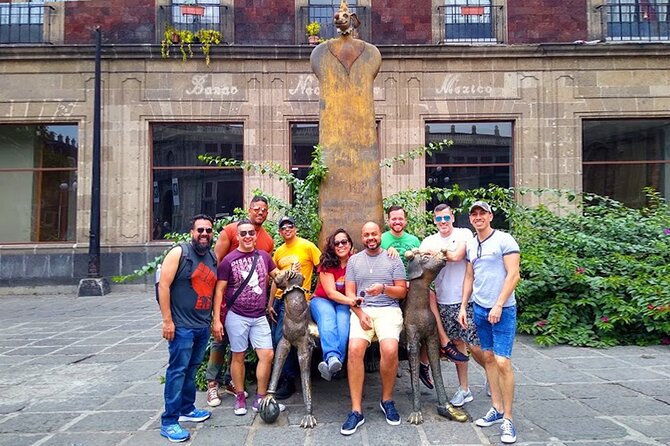
- The group is limited to 10 people, making it easier to ask questions and shape the conversation around your interests.
Why this tour adds something new to Mexico City sightseeing
You can walk through the Historic Center and see the same postcard sights as everyone else. The difference here is the question being asked: where do LGBTQ+ lives, relationships, persecution, and public identities fit into the story of Mexico?
That question does not replace the city’s political, religious, or Indigenous history. It gives you another way to read it. The tour uses well-known monuments as starting points, then adds stories about sexuality, social rules, power, religion, and changing ideas of citizenship.
The experience is aimed at adults only, with a minimum age of 18. You do not need to identify as LGBTQ+ to get value from it. One particularly useful aspect is the way the tour connects gay history to the broader story of Mexico, rather than treating it as a separate subject.
This is also not a quick point-and-photo walk. The distance is only about one mile, but the route takes roughly three and a half hours. You will spend time listening, discussing, and asking questions. If you prefer a fast tour that covers many sights, this pace may feel slow. If you like context, it gives the historic center room to breathe.
More Historical Tours in Mexico City
- Historic Downtown Walking Tour
★ 5.0 · 1,289 reviews - Historic Center Food Tour in Mexico City
★ 5.0 · 1,263 reviews - Mexico City: Historic Downtown Walking Tour
★ 4.8 · 1,039 reviews
Starting at Librería Porrúa above the Aztec capital
The tour begins at Librería Porrúa, at República de Argentina 15, at 10:00 a.m. The bookstore’s rooftop balcony provides the first memorable setting. From here, you can look toward the Palace of the Royal Duty, the former hiding rooms associated with Frida Kahlo, and the exposed ruins of the Templo Mayor.
Coffee or tea and bottled water are included, which is a small but welcome touch at the start of a long morning. More important, the elevated view gives Carlos a natural place to explain the city before you begin walking through it.
The opening discussion reportedly reaches from the early population of the Americas to the Mexica capital and the Spanish conquest. It can also extend into later Mexican history, including the Inquisition, Benito Juárez, Porfirio Díaz, and the 1910 Revolution.
That broad framing is one of the strongest parts of the experience. LGBTQ+ history makes more sense when you understand the institutions that shaped daily life: Indigenous authority, colonial religion, the state, courts, the military, and changing law.
The balcony is also practical. You begin seated, with a chance to orient yourself before entering the busy streets. Since the tour relies on explanation rather than admission to a long list of interiors, this first stop does a lot of work.
Templo Mayor and the layers beneath modern Mexico City
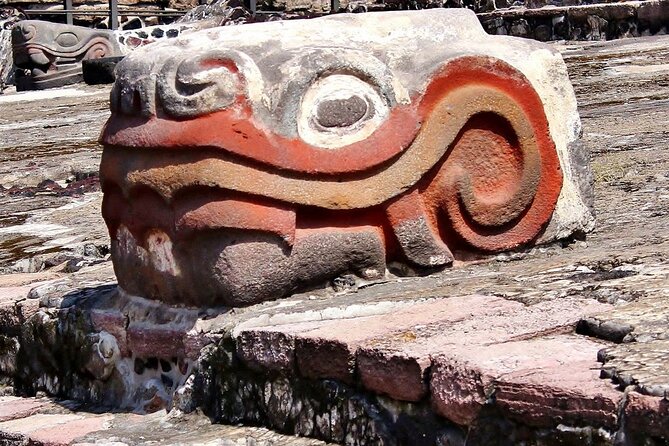
The Templo Mayor was the central temple of the Mexica people in their capital city. Its ruins sit beside the later colonial buildings, making the area a clear lesson in how Mexico City was built layer upon layer.
The LGBTQ+ focus here is not simply a search for a modern label in an ancient society. Instead, the guide uses the site to discuss how gender, sexuality, power, and social roles have been understood differently across time. That distinction matters. It helps you avoid forcing present-day categories onto societies that organized identity in other ways.
You will also see how conquest changed the city’s institutions and moral systems. The tour then follows those changes into the colonial period, when the Catholic Church and Spanish authorities shaped public behavior and punishment.
The Templo Mayor stop is included within the first hour, but the exact amount of time spent at each nearby view can depend on questions and group interest. Carlos has been praised for sitting down and providing context before approaching a site. That approach suits this subject, since the history is not always obvious from the stones in front of you.
The Cathedral and the power of colonial institutions
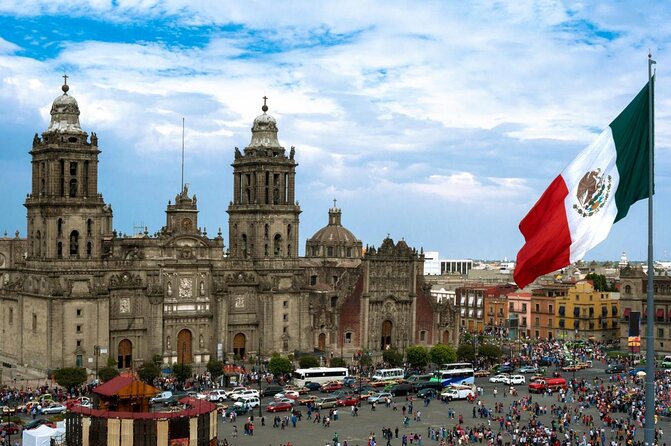
The Metropolitan Cathedral of the Assumption of the Most Blessed Virgin Mary into Heaven dominates the Zócalo. It is one of the Historic Center’s defining buildings and a useful place to discuss the authority of the Catholic Church in colonial Mexico.
Here, the tour places LGBTQ+ history within the larger machinery of religion, law, and public morality. The subject can be serious, especially when discussing the persecution of homosexual people under colonial institutions. Still, the experience is described as engaging rather than grim, with humor and conversation used to keep the material approachable.
You should expect historical explanation rather than a formal cathedral tour. The focus is on how the cathedral fits into the city’s political and social structure. If you want a detailed architectural survey, this is not the right tour for that. If you want to understand how religious power affected private life, the stop has a clear purpose.
Comfortable shoes are important. The route is not strenuous, but you will be on your feet for a long time, with stops for discussion rather than continuous walking.
More historic sites around Mexico City:
- Walking Tour of the Historic Center of Mexico City
★ 5.0 · 870 reviews - Mexico City Historical Centre Food Tour with 7 Authentic Tastings
★ 5.0 · 723 reviews - Walking Tour in Mexico City for Exploring their Cultural Heritage
★ 5.0 · 245 reviews - Walking Tour – Impressive murals in Historical Center of Mexico City
★ 5.0 · 224 reviews
The Zócalo, Mexico City’s great public room
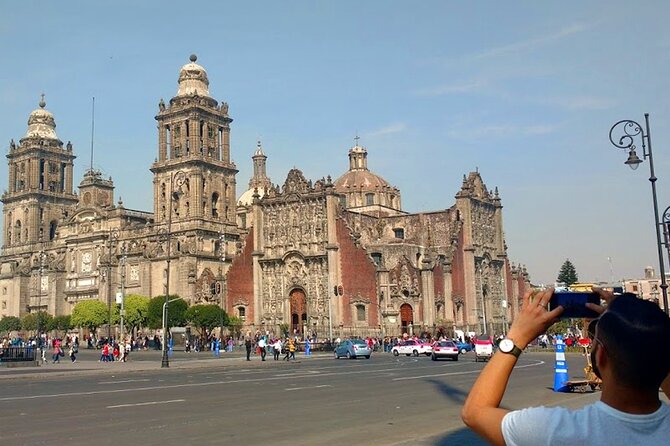
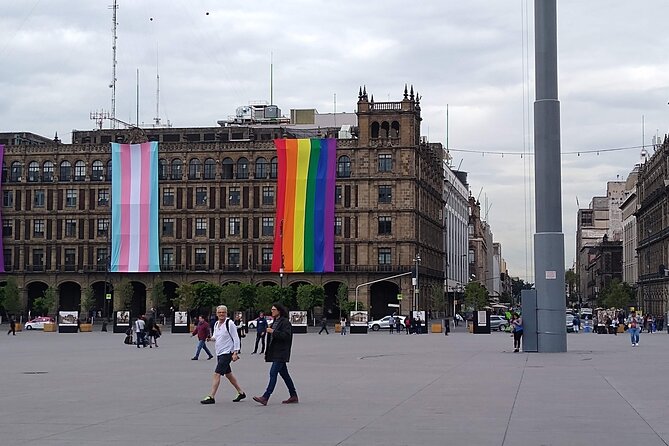
The Zócalo is the heart of Mexico City and a natural place to pause for about 30 minutes. It has served as a gathering place since the 16th century, and the National Palace occupies its eastern side.
The plaza lets Carlos connect private lives to public power. The National Palace is the seat of Mexico’s federal executive and, since 2018, has also served as the official residence of the president. The point is not just to identify the building. It is to consider who has controlled the city, who has been visible in public, and who has had to remain out of sight.
This is where the tour can feel especially different from a basic city orientation. You are not only learning dates and names. You are being encouraged to see the Zócalo as a place where political authority, national identity, religion, protest, celebration, and social change meet.
The open plaza can also be the least predictable part of the route. Conditions vary with weather and public activity, and the tour operates in all weather. Bring sun protection or rain gear as needed, and do not assume the morning will stay cool simply because the start time is early.
Centro Cultural de España and a restored colonial mansion
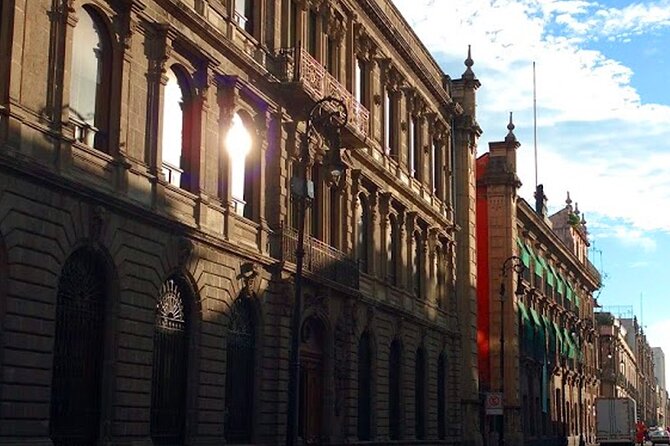
The walk continues to the Centro Cultural de España en México at 18 Guatemala Street, just behind the Cathedral. The building was once an old mansion in poor condition. Mexico City ceded it to the Spanish government in the late 1990s, and after restoration it reopened as a cultural center in 2002, inaugurated by the King of Spain and Mexico’s president.
This stop gives the tour another useful angle: buildings change meaning as governments change. A colonial mansion can become a cultural institution, and a neglected structure can be brought back into public use.
The tour does not promise a special exhibition or interior program, so you should treat the center as a historical stop along the route rather than a guaranteed museum visit. Its location is valuable because it helps you notice the tight concentration of major sites in this part of the Historic Center.
From here, the route moves toward Santo Domingo. You will pass the Old Customs Building, located on the east side of Santo Domingo Plaza. That building introduces the commercial and administrative side of colonial Mexico, adding another layer to the tour’s discussion of authority and social control.
Plaza de Santo Domingo and the former Inquisition
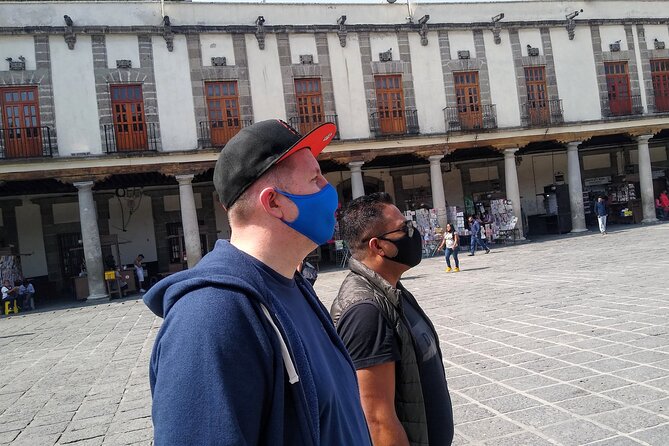
The final stop is Plaza de Santo Domingo, the Historic Center’s second-largest plaza. It is framed on one side by the Portal de Evangelistas, a Tuscan colonnade where scribes work with typewriters and older printing equipment.
That detail gives the plaza an unusually human feel. Instead of being only an architectural backdrop, it remains associated with writing, documents, and public services. The tour uses the setting to discuss how information, law, and official records affected people’s lives.
The Church of Santo Domingo faces the plaza. It also marks the old starting point of El Camino Real, the trading route that ran from Old Mexico toward New Mexico. The tour presents the route as a place connected with gay male couples seeking a safe haven, a reminder that travel and movement have long been part of LGBTQ+ life.
The experience ends at the former Palace of the Holy Inquisition, at República de Brasil 33, on the corner of República de Venezuela and República de Brasil. The stated historical focus here is the Spanish Inquisition as a civilian institution involved in executing people convicted of homosexuality between 1521 and 1821.
This is a sobering ending, but it gives the tour a clear arc. You begin with the foundations of the Mexica capital, move through conquest and religious authority, and finish by confronting the legal punishment of sexuality under colonial rule. The tour does not present LGBTQ+ history as only a modern success story. It includes fear, concealment, state power, and survival.
What makes Carlos an important part of the experience
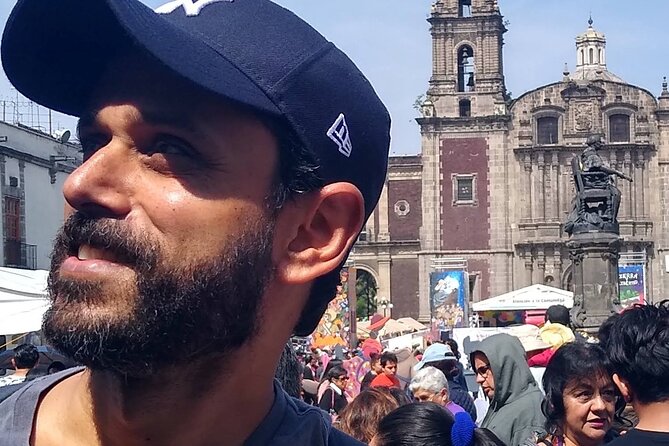
The strongest praise for this tour centers on Carlos. He is described as personable, entertaining, serious about the subject, and able to answer detailed questions. He also asks about your interests and works those interests into the discussion.
That personal approach matters here. The route includes famous places, but much of the value comes from how the guide links them. A less prepared guide could easily turn the experience into a list of disconnected claims. Carlos appears to prefer a slower conversation, often giving background before you reach a site.
The tone is another plus. The subject includes persecution and exclusion, yet the tour is also described as funny and enjoyable. That balance helps keep the history accessible without treating it lightly.
The quality may depend on whether Carlos is your assigned guide. The supplied information identifies him by name in the strongest comments, but it does not promise that every departure will be led by him. If his approach is a major reason you want to book, confirm the guide when possible.
What the $99 price includes
At $99 per person, this is more expensive than a basic group walk through the Historic Center. The difference is the time, the specialist theme, the small group size, and the added materials.
The group can have a maximum of 10 people. That is a useful limit for a discussion-heavy tour. You are more likely to hear the guide clearly and ask a personal question than you would in a large group moving between monuments.
The fee includes:
- A local guide
- Coffee or tea
- Bottled water
- A digital LGBT+ map of the Historic Center
- Extra digital resources
- A downloadable PDF of Rainbow Mexico: Bridging Forgotten Pasts and Vibrant Futures
The map and e-book add value after the walk. You can revisit the places at your own pace and use the material to continue exploring LGBTQ+ history in Mexico.
I would consider the price fair if you want a focused historical experience and expect to ask questions. It is less appealing if you mainly want entrance into major museums or a broad introduction to every part of Mexico City. Admission is listed as free at the Zócalo, Centro Cultural de España, and Plaza de Santo Domingo, so you are paying primarily for interpretation and access to the guide’s research, not for a long list of tickets.
Timing, walking, and practical details
The meeting point is Librería Porrúa at República de Argentina 15 in the Centro Histórico. The tour starts at 10:00 a.m. and finishes at the former Palace of the Holy Inquisition at Plaza de Santo Domingo.
The route covers about one mile over three hours. That is an easy distance for most people with moderate physical fitness, but the length means you should plan for extended standing and listening. Wear comfortable shoes and dress for the forecast because the tour runs in all weather.
The route is near public transportation, and service animals are allowed. The experience is offered in English and uses a mobile ticket. Confirmation is received when you book.
Cancellation is free up to 24 hours before the start time. A late cancellation or change is not refundable. There is also one important reliability concern: one booking was cancelled about an hour before departure, with no reason given and no prompt response to calls or messages. That appears to be an isolated but serious problem, so I would confirm the departure if your schedule is tight.
Who will get the most from this walk
I would recommend this tour to LGBTQ+ visitors who want more than nightlife recommendations or a modern overview of gay Mexico City. It also suits anyone interested in how sexuality fits into colonial, religious, and national history.
Allies can enjoy it too. The tour is built around Mexican history as much as LGBTQ+ history, and the strongest experiences connect both subjects. It is a good choice for solo visitors and couples who like conversation and questions rather than a silent march from monument to monument.
History fans will likely get the most from the three-and-a-half-hour format. The tour can cover the Aztecs, the Spanish conquest, the Inquisition, the Reform era, Porfirio Díaz, the Revolution, and modern LGBTQ+ life. That is a lot of ground, so you should expect an interpretive overview rather than a full academic treatment of each period.
I would skip it if you want a short, highly visual tour or if you dislike serious discussions about persecution and religion. I would also avoid scheduling it immediately before a fixed appointment. The normal end time is approximate, and strong questions can extend the conversation.
FAQ
How long is the Gay Side of History through Plazas & Temples tour?
The tour lasts approximately 3 hours and 30 minutes.
How far will I walk?
You will walk about 1 mile during the experience.
Where does the tour begin?
It begins at Librería Porrúa, República de Argentina 15, in Mexico City’s Historic Center.
Where does the tour end?
The tour ends at the former Palace of the Holy Inquisition at República de Brasil 33, beside Plaza de Santo Domingo.
What time does the tour start?
The scheduled start time is 10:00 a.m.
Is the tour offered in English?
Yes. English is the listed tour language.
What is included in the $99 price?
The price includes a local guide, coffee or tea, bottled water, a digital LGBT+ map of the Historic Center with extra resources, and a downloadable PDF copy of Rainbow Mexico: Bridging Forgotten Pasts and Vibrant Futures.
Should you book this Mexico City LGBTQ+ history tour?
Book it if you want the Historic Center explained through an LGBTQ+ lens, with enough time to ask questions and connect the sites. The rooftop view at Librería Porrúa, the Templo Mayor setting, the Zócalo, Santo Domingo Plaza, and the former Inquisition building create a strong route, while the digital materials help the experience continue after the walk.
The best reason to go is Carlos’s approach: personal, broad-ranging, and willing to connect gay history with the larger story of Mexico. The sensible caution is operational reliability, since one departure was cancelled at the last minute. Confirm your booking close to the date, wear good shoes, and leave room in your schedule.
For curious adults who want history that goes beyond the usual monument checklist, this is a thoughtful and unusually focused way to meet Mexico City.
New on the Mexico City list
- Day of the Dead Tour in San Andres Míxquic From Mexico City★ 3.7 · 52 reviews
- Half-Day Tour to Teotihuacan Pyramids from Mexico City★ 5.0 · 53 reviews
- Xochimilco floating gardens, Coyoacan and UNAM murals★ 4.0 · 53 reviews
- Guided Tour of Coyoacan and Leon Trotsky Museum★ 5.0 · 53 reviews
- Flavors of Mexico City: A Tasty Urban Expedition★ 4.5 · 53 reviews
- Butterfly Monarch Tour from Mexico City★ 5.0 · 53 reviews
- From Mexico City: Cholula Pyramid & Puebla Small Group Tour★ 4.6 · 54 reviews
- Cacahuamilpa Caves and Taxco: Private & Small Groups From Mexico City★ 4.5 · 54 reviews
Mexico City Tours, compared.
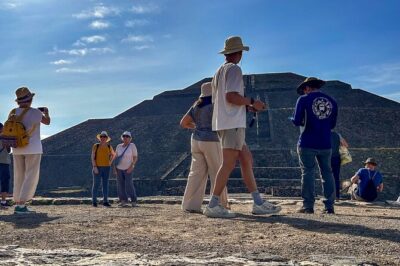
Teotihuacan, Guadalupe Shrine & Tlatelolco Day Tour with Lunch
Read our review →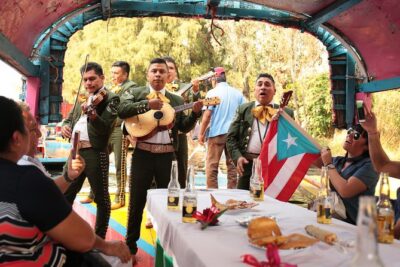
Xochimilco, Coyoacan and Frida Kahlo with Optional Lunch
Read our review →
Balloon flight + Breakfast in cave + Pyramids + Pick up CDMX.
Read our review →
Teotihuacan pyramids morning or afternoon without tourist traps
Read our review →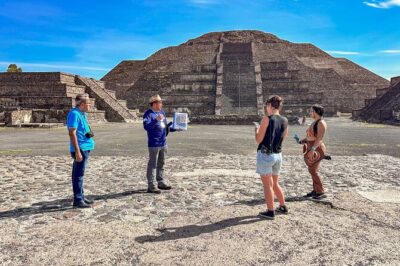
Teotihuacan Early Access Guided Tour with optional Lunch
Read our review →
Balloon flight + pick up in CDMX + Breakfast in Cave + Pyramids
Read our review →
Balloon Flight + Cave Breakfast + Pick Up from CDMX or We Fly
Read our review →
Teotihuacan, Tlatelolco & Guadalupe Shrine Tour
Read our review →Browse the lists this tour appears in