Reviewed · MEXICO CITY TOURS
Arrivals & Survival of Jews in Mexico from 1519
Mexico City’s Jewish story begins long before the modern community you see today. This tour traces Jewish arrivals, forced secrecy under the Spanish Inquisition, political refuge, and the creation of Mexico’s first synagogues, all within the historic center. The most striking feature is the way Jewish history is tied to the city’s larger story, from the Aztec capital to Diego Rivera, Frida Kahlo, and Leon Trotsky.
I like the opening view from Librería Porrúa, where you look across the ruins of the Great Aztec Temple while discussing religion in modern Mexico. I also like the finish at the first Sephardic and Ashkenazi synagogues, since the tour ends with surviving places of Jewish worship rather than only church façades and colonial monuments.
The main caution is that this is not a synagogue-only tour. A substantial part covers Mexican, Catholic, colonial, and Inquisition history. One past participant felt that only about an hour focused directly on Jewish history, while others valued the broader setting. You should book it for context and storytelling, not for a nonstop survey of Jewish institutions.
Key points to know before you book
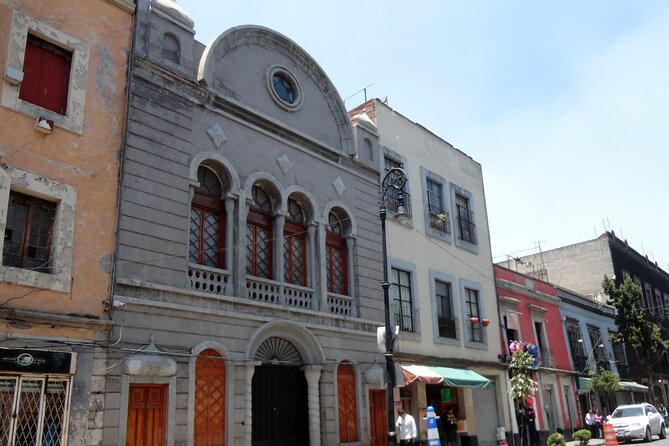
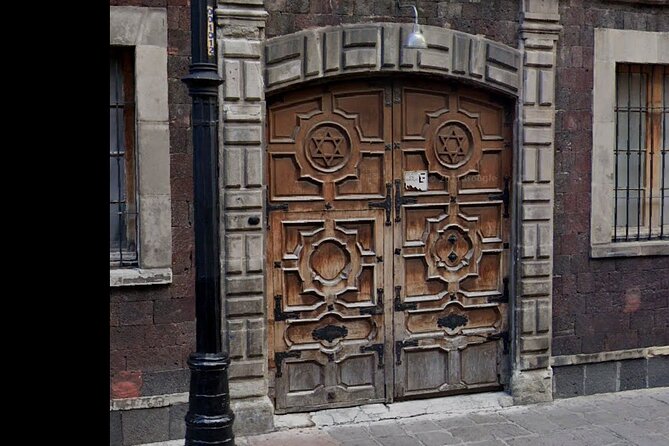
- See two firsts in Mexican Jewish history: Visit the former Justo Sierra Synagogue, the first Ashkenazi synagogue in Mexico, and the nearby sites connected with the first purpose-built Sephardic synagogue.
- Begin above the ruins of the Great Aztec Temple: The terrace at Librería Porrúa gives the opening discussion a powerful visual setting.
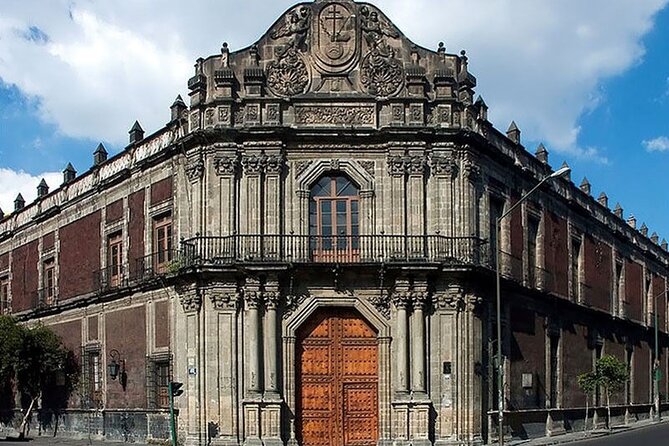
- Follow the Inquisition through the historic center: The route links the Metropolitan Cathedral, Santo Domingo, the Palace of the Inquisition, and the Perpetual Prison.
- Connect Jewish history with Mexican art and politics: The walk includes the place associated with Diego Rivera and Frida Kahlo, plus discussion of Mexico’s anti-Fascist movement and Leon Trotsky.
- Expect a small, personal group: The maximum is 10 people, and the 3.5-hour route includes pauses rather than one long march.
- Plan around the morning start: The tour begins at 10 a.m. at República de Argentina 15 and finishes near Plaza Loreto on Justo Sierra Street.
Why the Great Aztec Temple is the right place to begin
The meeting point is at Librería Porrúa in the Centro Histórico, not far from the Metropolitan Cathedral and the ruins of the Templo Mayor. The opening conversation takes place from a terrace with a view over the archaeological site.
That setting does useful work. Instead of treating Jewish history as a separate subject, the guide places it inside Mexico City’s long sequence of cultural change. You begin with the former Aztec capital, then move into Spanish colonial rule, Catholic control, trade, migration, and the modern republic.
The view also helps you get your bearings. Mexico City’s historic center can feel like a jumble of churches, government buildings, plazas, and uncovered ruins. Starting with a seated introduction gives you a map of the city’s past before you set off.
Some past participants appreciated having coffee and a snack during this opening talk, though the tour information does not promise refreshments as part of the admission. Think of the bookstore terrace as a comfortable place for orientation, not a café stop that should shape your booking decision.
The guide is a major part of the experience. Carlos is the guide most often named in the comments provided, and he is described as engaging, articulate, warm, and able to answer detailed questions. The operator may assign someone else, so I would not treat Carlos as guaranteed unless you confirm directly before booking.
A few other Mexico City days to price up
- Teotihuacan, Guadalupe Shrine & Tlatelolco Day Tour with Lunch
★ 5.0 · 11,603 reviews - Xochimilco, Coyoacan and Frida Kahlo with Optional Lunch
★ 4.5 · 7,320 reviews - Balloon flight + Breakfast in cave + Pyramids + Pick up CDMX.
★ 5.0 · 6,335 reviews
The cathedral and the problem of religious control
From the bookstore, the route heads toward Catedral Metropolitana de la Ciudad de México. You do not go inside for a formal cathedral visit. Instead, the stop takes you behind the cathedral to the Chapel of the Souls and a vantage point for examining the colonial setting.
The guide explains teachings against heresy and uses the architecture to discuss how Spanish colonial power kept non-Catholic faiths at the margins. The tour presents the design and placement of these religious buildings as part of a system meant to control public belief and keep Jews away from certain spaces.
This is one of the places where the tour’s wide scope matters. You are not simply looking for a Jewish building with a plaque. You are examining the machinery around Jewish life: Catholic teaching, official suspicion, public surveillance, and the pressure to hide one’s identity.
The stop lasts about 20 minutes, so expect an explanation rather than a long interior visit. If you want a detailed architectural tour of the cathedral itself, this experience will not replace one. Its purpose is to show how the cathedral and surrounding colonial order shaped the lives of people whose faith did not fit the official system.
Santo Domingo and the Jewish merchants under watch
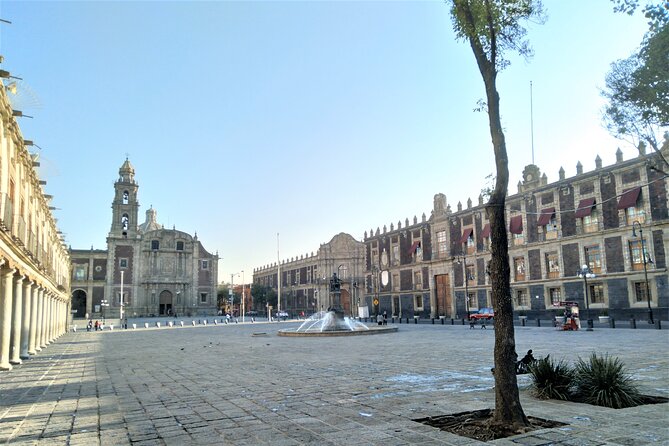
Plaza de Santo Domingo was a major trading marketplace from the 16th through the 19th centuries. The tour uses the plaza to explain the position of Jews in hiding, who needed to trade while being watched by authorities connected with the Palace of the Inquisition.
This stop gives the story an everyday angle. Religious persecution was not only a matter of trials and punishments. It also affected where people could sell goods, how they moved through the city, and how carefully they had to manage their public identity.
The guide also points out what the tour describes as anti-Semitic messages hidden in the Palace of the Inquisition and the Santo Domingo church. He connects the church with the beginning of El Camino Real, presenting the route as a safer path for Jewish traveling merchants of the period.
You should allow room for interpretation here. This is a spoken history walk, and much of the value comes from the guide explaining connections that are not obvious from the buildings alone. If you prefer museum labels, dates, and a long list of documented sources, you may find some explanations too broad. One participant specifically wanted more references and suggested reading, while others enjoyed the guide’s larger view of Mexico, Spain, trade, and Jewish life.
The Palace of the Inquisition and its Perpetual Prison
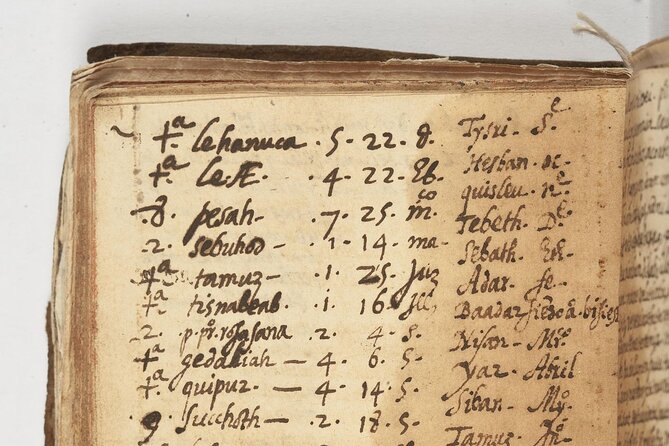
The next section passes the former administrative buildings of the Inquisition, its living quarters, and the Perpetual Prison. The tour describes this as the place where Jews were tortured and sentenced to death.
It is a grim part of the route, but it gives weight to the earlier discussion of secrecy. The need to hide was not an abstract social custom. It was connected to real legal danger and the power of religious courts.
The stop lasts around 20 minutes. You are mainly seeing the buildings from outside and listening to the guide. There is no indication that a special museum admission or private prison visit is included, so keep your expectations focused on the street-level setting and the interpretation.
This portion may be difficult for some children, and it can feel heavy if you have just spent the morning visiting churches and colonial monuments. Still, I think it belongs on the route. Without it, the later story of Jewish community-building would lose much of its force.
Same stretch of coast, a very different day:
- Teotihuacan pyramids morning or afternoon without tourist traps
★ 5.0 · 6,186 reviews - Teotihuacan Early Access Guided Tour with optional Lunch
★ 4.5 · 6,138 reviews - Balloon flight + pick up in CDMX + Breakfast in Cave + Pyramids
★ 5.0 · 5,651 reviews - Balloon Flight + Cave Breakfast + Pick Up from CDMX or We Fly
★ 5.0 · 4,410 reviews
Diego Rivera, Frida Kahlo, and Mexico’s political welcome
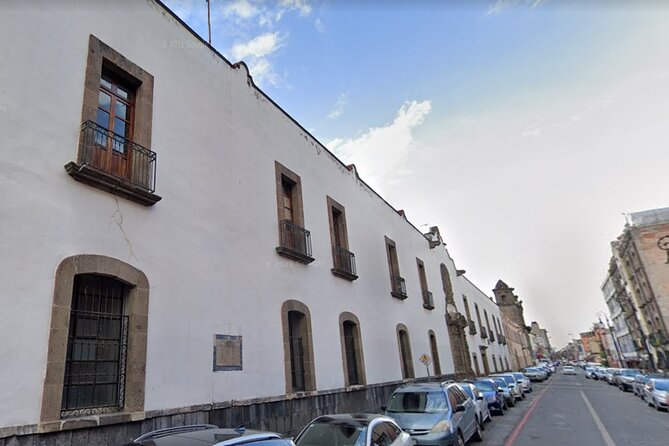
At Antiguo Colegio de San Ildefonso, the tour shifts from colonial persecution to 20th-century art and politics. You see the site from outside and hear about the meeting of Diego Rivera, described here as being of Sephardic origin, and Frida Kahlo, described as being of Ashkenazi origin.
The stop is brief, about 15 minutes, but it adds a memorable personal link. Many people know Rivera and Kahlo as central figures in Mexican art. Fewer visitors expect their story to appear on a Jewish history walk, so this is one of the route’s more unusual connections.
The guide also discusses the Mexican anti-Fascist movement, the cancellation of the first and only anti-Semitic national convention, and Mexico’s reception of Lev Davidovich Bronstein, better known as Leon Trotsky, as a refugee.
This is where the tour moves beyond victimhood. Jewish history in Mexico is shown not only through persecution and concealment, but also through political alliances, public debate, art, and refuge. The broader Mexican setting helps you understand why the country’s modern Jewish community developed as it did.
The tour does not promise entry to the former college at this stop. If you are hoping for a full Rivera mural tour or an interior visit, check the day’s exact arrangements. The importance here is the place and the story attached to it.
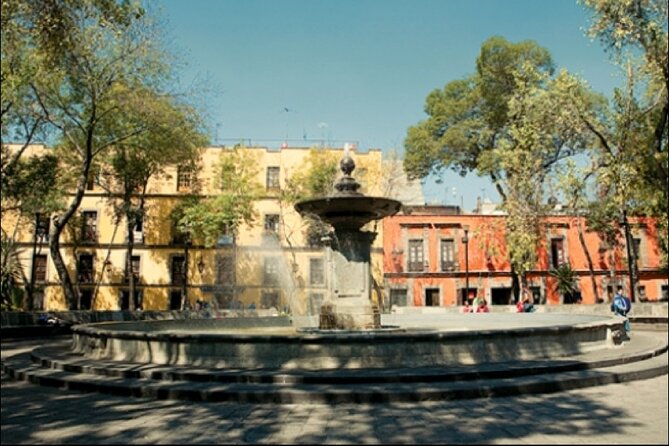
Plaza Loreto and the first synagogues
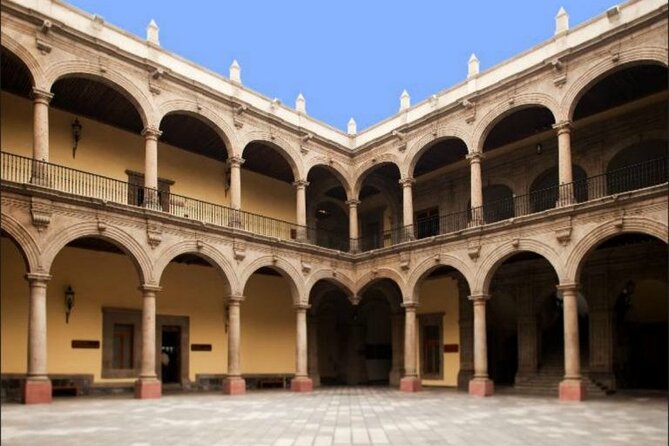
The walk ends around Plaza Loreto, where two major landmarks of Mexican Jewish life sit near one another. The route passes the first purpose-built Sephardic synagogue in Mexico, Mount Sinai, and the nearby Nidjei Israel, identified as the first Ashkenazi synagogue.
This is a satisfying change of pace after the colonial material. You have spent much of the morning looking at places that represent official power, surveillance, and Catholic authority. Now you reach buildings created for Jewish communal life.
The distinction between Sephardic and Ashkenazi traditions is especially useful for visitors who know Jewish history in broad terms but are less familiar with the different communities that settled in Mexico. The tour presents these synagogues as evidence of an organized Jewish presence, not simply isolated families practicing in private.
The end point is Justo Sierra 71, directly in front of Loreto Park on the south side of Justo Sierra Street. That makes the finish easy to identify, and it leaves you in the Centro Histórico rather than sending you back to the original meeting point.
Inside the former Justo Sierra Synagogue
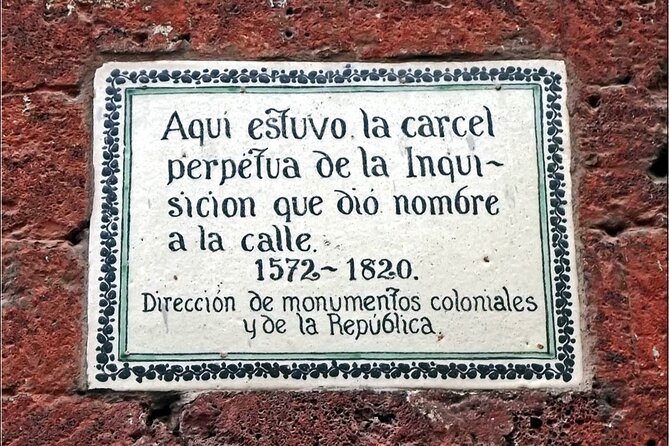
The final stop is the decommissioned Justo Sierra Synagogue, described as the first Ashkenazi synagogue in Mexico. This is the one stop that gives the tour a strong interior destination, provided access is available as arranged for the visit.
Ending here is smart. The synagogue gives physical form to the story you have been following. Jewish life begins in the tour as something hidden and endangered, then appears in a purpose-built communal space.
The stop lasts about 20 minutes. That is enough time for a focused visit and explanation, but not a lengthy service, lecture, or museum program. You should also remember that the tour’s access arrangements can involve public and private places, so the exact entry experience may depend on the day.
For many people, this will be the emotional high point. The old synagogue is not merely another historic building. It represents the shift from survival to community, and it gives the final minutes a clear sense of place.
How much walking and history you get in three and a half hours
The experience lasts about three hours and 30 minutes. The stops are spread through the historic center, but the route is broken into short segments with pauses of 15 to 20 minutes and a longer opening conversation.
Several participants found the walking manageable and noted that the group did not walk for long stretches at a time. Even so, you need a moderate level of physical fitness. Historic-center pavements can be uneven, and the tour does involve moving between several sites.
The maximum group size is 10. That matters here because the subject benefits from questions. Carlos, in particular, is repeatedly praised for answering questions carefully and adding both Mexican and Jewish perspectives. A small group also makes it easier to hear on busy streets and to stay together around plazas.
The format is best described as a history walk with occasional access to significant religious sites. It is not a museum-heavy program, and it is not designed around long periods inside each synagogue or church.
What the $99 price buys you
At $99 per person, this is not the least expensive way to walk through Mexico City’s Centro Histórico. Much of the route takes place outdoors, and several stops are viewed from public streets or plazas.
The value comes from the guide’s interpretation, the small group, and the access arrangements at some public and private places. You are paying for a carefully connected story rather than a collection of unrelated sights.
I would consider the price fair if you have a strong interest in Jewish history, the Spanish Inquisition, Mexican politics, or the relationship between art and migration. It is also a useful alternative to a standard Centro Histórico walk if you have already seen the major cathedral and central plazas but want a more focused theme.
The value is less convincing if you want only Jewish institutions. One person felt that the direct Jewish content made up roughly an hour of a four-hour experience. The published duration is closer to three and a half hours, but the point remains: expect Mexican and colonial history to take up a large share of the morning.
The tour is offered in English and includes a mobile ticket and local guide. Admission to certain public and private locations has been arranged, waived, or included, but the information does not list separate entrance fees for each stop.
Who will get the most from this walk
I would choose this tour if you want:
- A Jewish history experience tied closely to Mexico City’s colonial center
- A small group with time for questions
- An English-speaking guide who can move between Mexican, Jewish, European, and political history
- A first look at Sephardic and Ashkenazi community sites
- A moderate walking route rather than a full-day museum program
- A different angle on Rivera, Kahlo, Trotsky, and Mexico’s response to Fascism
You may want another activity if you prefer a strictly chronological Jewish history lecture, extensive written references, or long interior visits. The guide’s storytelling carries much of the experience, and one person found some of the history basic and oversimplified. I would ask for recommended reading afterward if you want to continue the subject on your own.
This is also a better fit for adults and older children who can follow a serious discussion of religious persecution, torture, and political exile. The route has memorable visual stops, but it is not built as a children’s activity.
Timing, meeting point, and cancellation details
The tour starts at 10 a.m. at República de Argentina 15 in the Centro Histórico. Arrive with enough time to find Librería Porrúa and locate the terrace meeting area.
It ends at Justo Sierra 71, in front of Loreto Park. The end point is not the same as the start, so do not plan to leave a bag or arrange a pickup at the original meeting point.
The activity is near public transportation, allows service animals, and requires moderate physical fitness. Confirmation is provided when you book.
Free cancellation is available up to 24 hours before the local start time for a full refund. Changes or cancellations made less than 24 hours ahead are not accepted for a refund. Because some past departures were cancelled close to the start time for health, security, or major-crowd concerns, keep your phone and booking messages available on the morning of the tour, and confirm the operator’s contact procedure before your visit.
Should you book Arrivals & Survival of Jews in Mexico?
Book it if you want a thoughtful, place-based introduction to Jewish life in Mexico City and are happy to spend part of the morning on the city’s wider colonial and political story. The route’s strongest moments are the terrace view over the Templo Mayor, the Inquisition sites, the Rivera and Kahlo connection, and the final synagogue visit.
I would especially recommend it for first-time visitors who have already planned ordinary Centro Histórico sightseeing and want a more personal theme. The small group, English presentation, and frequent questions can make the $99 worthwhile.
Skip it if you expect three and a half hours of synagogue interiors or a tightly academic survey with extensive sources. For most people interested in how Jewish communities survived, organized, and found a place in Mexico, this is a memorable morning walk with a serious subject and a useful sense of place.
FAQ
How long does the tour last?
The tour lasts approximately 3 hours and 30 minutes.
What time and where does the tour begin?
It begins at 10 a.m. at República de Argentina 15 in Mexico City’s Centro Histórico.
Where does the tour end?
The tour ends at Justo Sierra 71, directly in front of Loreto Park on the south side of Justo Sierra Street.
Is the tour offered in English?
Yes. The experience is offered in English.
How large is the group?
The tour has a maximum of 10 participants.
What is the cancellation policy?
You can cancel at least 24 hours before the start time for a full refund. Cancellations or changes made less than 24 hours before the experience are not accepted for a refund.
New on the Mexico City list
- Day of the Dead Tour in San Andres Míxquic From Mexico City★ 3.7 · 52 reviews
- Half-Day Tour to Teotihuacan Pyramids from Mexico City★ 5.0 · 53 reviews
- Xochimilco floating gardens, Coyoacan and UNAM murals★ 4.0 · 53 reviews
- Guided Tour of Coyoacan and Leon Trotsky Museum★ 5.0 · 53 reviews
- Gay Side of History through Plazas & Temples★ 4.5 · 53 reviews
- Flavors of Mexico City: A Tasty Urban Expedition★ 4.5 · 53 reviews
- Butterfly Monarch Tour from Mexico City★ 5.0 · 53 reviews
- From Mexico City: Cholula Pyramid & Puebla Small Group Tour★ 4.6 · 54 reviews
Mexico City Tours, compared.
Teotihuacan, Guadalupe Shrine & Tlatelolco Day Tour with Lunch
Read our review →
Xochimilco, Coyoacan and Frida Kahlo with Optional Lunch
Read our review →
Balloon flight + Breakfast in cave + Pyramids + Pick up CDMX.
Read our review →
Teotihuacan pyramids morning or afternoon without tourist traps
Read our review →
Teotihuacan Early Access Guided Tour with optional Lunch
Read our review →
Balloon flight + pick up in CDMX + Breakfast in Cave + Pyramids
Read our review →
Balloon Flight + Cave Breakfast + Pick Up from CDMX or We Fly
Read our review →