Reviewed · MEXICO CITY TOURS
Iztapalapa: Cable Car Tour and Urban Art From the Heights
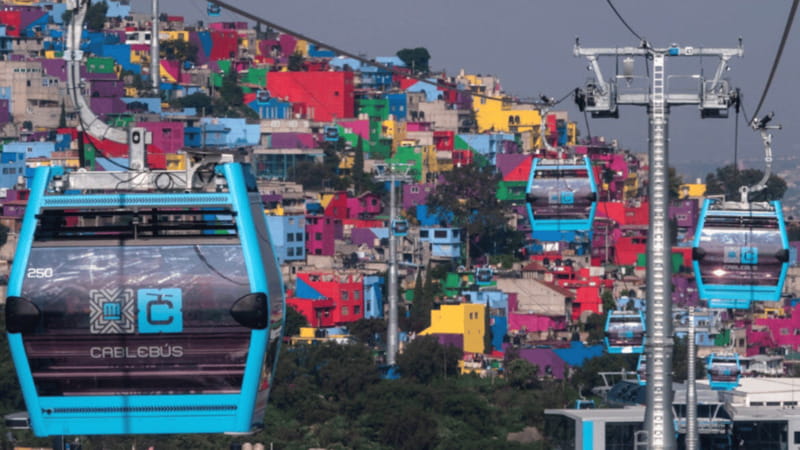
Iztapalapa is best seen from a Cablebús cabin, where rooftops, murals, crowded streets, and distant volcanoes line up in one wide view. I like the way this tour takes you far beyond the usual central-city sights, and I like that it teaches you to use the metro rather than keeping you inside a tourist bubble. The rooftop art is the visual star.
The four-hour outing also includes local food, a park stop, and tortilla-making. The main drawback is the amount of time spent getting there and back: about 45 minutes on the metro each way, with only a short guided visit on the ground. If you already know Mexico City’s subway well, some of the transport lesson may feel repetitive.
Key points at a glance

- See Iztapalapa from the Cablebús: The ride gives you a rare view of dense neighborhoods, murals, roads, and surrounding mountains.
- Use public transport with a guide: Your guide handles the route while showing you how Mexico City’s metro and cable car work.
- Read the murals from above: The art is not decoration alone. Your guide explains its history and meaning for people who pass beneath it daily.
- Visit a less-touristed part of the city: Iztapalapa offers a look at daily life beyond the historic center and fashionable neighborhoods.
- Taste local food and make tortillas: Gorditas, market snacks, drinks, and fresh tortillas add a hands-on food element.
- Travel in a small group: Groups are limited to nine people, which makes it easier to ask questions and stay together in crowded stations.
Why the Cablebús changes your view of Mexico City
Most first visits to Mexico City stay close to the historic center, Chapultepec, Roma, Condesa, and Coyoacán. Those areas are worth your time, but they show only one slice of this huge capital. The trip to Iztapalapa gives you a wider sense of how the city works, especially how public transportation connects communities far from the center.
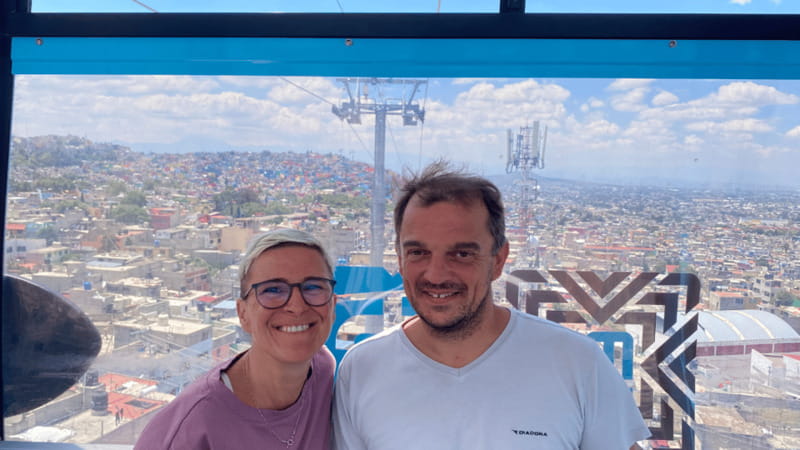
The Cablebús is the centerpiece. From the cabin, you look down on streets that are difficult to understand from ground level. Houses and shops fit together in tight blocks, roads twist through the neighborhood, and painted rooftops appear in unexpected places. On clear days, mountains and volcanoes frame the city in the distance.
The line is described as the world’s longest public transport cable car, and the scale is easy to appreciate during the ride. This is not a short amusement-park lift. It carries you across several miles of city, giving you time to watch the neighborhoods change below.
I especially like the fact that the cable car is a working part of the transit network. You are not simply paying for a view. You are riding a practical system used by local residents, and your guide explains how it helps connect outlying communities with the rest of Mexico City.
A few other Mexico City days to price up
- Teotihuacan, Guadalupe Shrine & Tlatelolco Day Tour with Lunch
★ 5.0 · 11,603 reviews - Xochimilco, Coyoacan and Frida Kahlo with Optional Lunch
★ 4.5 · 7,320 reviews - Balloon flight + Breakfast in cave + Pyramids + Pick up CDMX.
★ 5.0 · 6,335 reviews
Meeting at Bellas Artes and learning the metro
The tour begins at the Parisian entrance to the Bellas Artes subway station, on the left side of the Palace of Fine Arts. Look for a guide wearing a green shirt and carrying a green umbrella. This meeting point is specific, but it can still be easy to miss in the busy area, so save a picture of the entrance and keep the guide’s WhatsApp contact available.
From Bellas Artes, you spend roughly 45 minutes traveling by metro. That may sound like a long warm-up, but it is an important part of the experience. Mexico City’s subway is vast, and many first-time visitors hesitate to use it alone. A guide such as Eduardo, Benjamin, Gabi, Oscar, or Alexia can explain the system, help you follow transfers, and show you how to move through stations with more confidence.
This portion works best if you are new to the city’s public transportation. Several guides are praised for making the metro feel less intimidating, and one of the tour’s practical benefits is that you may feel ready to use it later in your trip.
Still, be realistic about the balance. The metro ride takes a large share of the four-hour schedule. If you live in a city with a familiar underground system, you may prefer less explanation and more time in Iztapalapa. One British participant specifically found the subway lesson longer than needed because of experience with the London Underground.
The tour uses a public transport card, and the Cablebús and metro rides are included. That makes the outing easy to budget, especially if you do not yet understand the fare system or route maps.
Riding above Iztapalapa’s rooftops
The Cablebús ride lasts about 40 minutes on the way out, followed by another ride of roughly 25 minutes on the return. The difference in timing reflects the route and schedule, but together they provide a good stretch of sightseeing from the cabin.
The first thing you notice is the change in scale. From street level, you see one block at a time. From the cable car, you can follow streets, rooflines, and clusters of homes across a much larger section of Iztapalapa. The city feels less like a collection of separate districts and more like one enormous, connected place.
The murals are another major reason to book this tour. Large works appear on rooftops and walls below the cable car. Some are designed to be seen from above, so the cabin gives you an angle unavailable to pedestrians. Your guide explains how the murals were created and what they mean to the communities and daily commuters who see them.
Bring a phone or camera, but do not expect every picture to be easy. The cabin is moving, views can pass quickly, and reflections may appear on the glass. Listen first, then photograph when the guide points out a mural or a clear view.
The cabins are described as modern, clean, safe, and quiet. That matters because the ride is long enough to be tiring if the system feels cramped or rough. People who get motion sickness or feel uneasy with heights should think carefully before booking. The activity specifically advises against it for people with vertigo, seasickness, or motion sickness.
Iztapalapa beyond the cable car
After leaving the Cablebús, the group has a guided walk of about 20 minutes and a photo stop of around 15 minutes. This is not a long neighborhood hike. The experience is designed for people who want to see the area without spending hours on foot.
That limited walking is useful, but it also sets expectations. You will not explore every corner of Iztapalapa or spend a full afternoon in one market. Instead, the tour gives you a concentrated introduction, with the guide selecting points that help explain the area’s growth, challenges, art, and local identity.
The neighborhood discussion adds needed context to the views from above. Iztapalapa is not presented as a backdrop for photographs. You hear about how the district expanded, how it has dealt with difficulties, and how public transportation has changed access for communities farther from central Mexico City.
Guides bring different personalities to this part of the tour. Benjamin is described as warm and thoughtful, while Alexia is noted for her care in explaining the city and community. Eduardo is often praised for clear explanations and practical help with the transit system. Gabi is particularly good for visitors who want food suggestions along with city context.
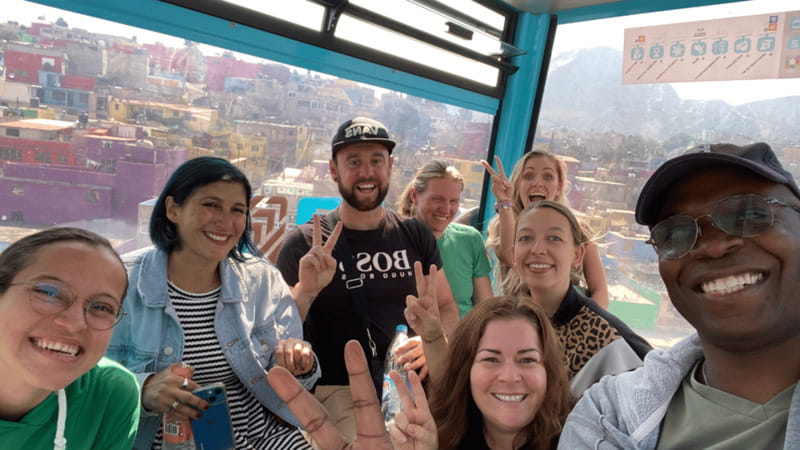
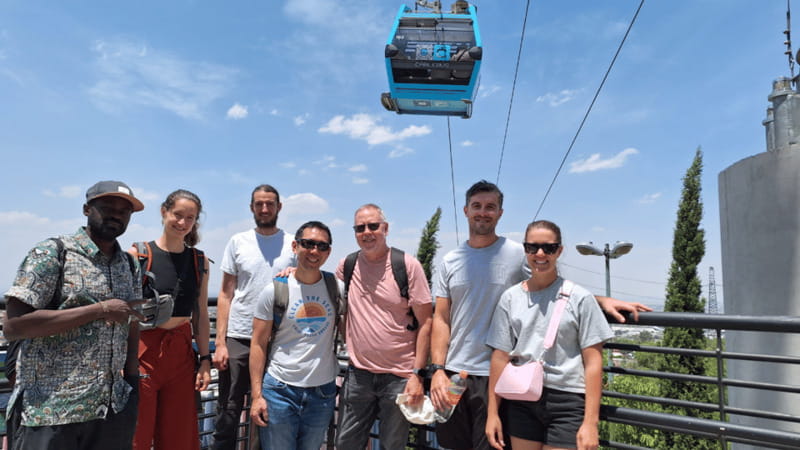
The group size is limited to nine people. That is a real advantage at stations and photo stops, where a large crowd can scatter. A small group also gives you a better chance to ask about the murals, neighborhood life, or the transport network without shouting over ten other people.
Same stretch of coast, a very different day:
- Teotihuacan pyramids morning or afternoon without tourist traps
★ 5.0 · 6,186 reviews - Teotihuacan Early Access Guided Tour with optional Lunch
★ 4.5 · 6,138 reviews - Balloon flight + pick up in CDMX + Breakfast in Cave + Pyramids
★ 5.0 · 5,651 reviews - Balloon Flight + Cave Breakfast + Pick Up from CDMX or We Fly
★ 5.0 · 4,410 reviews
The park, volcano views, and local music
The local park stop adds open space to a day spent inside stations and cable car cabins. From here, you may see volcanoes and the city in the distance, depending on visibility. The view gives you another useful way to read Mexico City’s setting, with mountains surrounding the broad urban area.
Your guide also talks about Iztapalapa’s musical culture. Cumbia, sonidero, and urban rock are part of the discussion. This is a small detail, but it helps you understand the neighborhood through sound as well as buildings and transport.
Sonidero in particular is useful context for the area’s social life, although the supplied information does not promise a live performance. Think of this as a conversation about local rhythms and their place in the community, not a music show.
Weather and air clarity will affect the mountain view. The cable car still offers plenty to see when the horizon is hazy, but do not book solely for a perfect volcano photograph. The strongest part of the outing is the combined view of city, art, and transport.
Market food and the tortilla lesson
Food is woven into the tour rather than added as a formal meal. Meals and drinks are not included, but you should carry cash for typical snacks. Gorditas cost 15 pesos, and local market stops may offer food, sweets, fruit juice, or other items at your own expense.
This is one place where the tour’s value depends on your choices. You can keep spending low by buying only the included tortillas and a small snack, or you can turn the stop into a fuller tasting experience. Several guides take groups to local stalls for gorditas, tacos, drinks, and sweets, but the exact food selection can vary.
The tortilla-making activity gives the food stop more meaning. You learn why tortillas matter in the Mexican diet and culture, then take part in making them. That hands-on element is simple, but it connects the day’s history lesson with something you can see, touch, and eat.
Do not confuse the included tortillas with a full lunch. If you need a substantial meal, plan to buy food at the market and bring cash. Drinks and meals are extra, and gorditas are specifically listed at 15 pesos.
I would also follow the clothing advice closely. The tour asks for discreet clothing and recommends avoiding shorts, skirts, dresses, sandals, sleeveless shirts, hats, and sunglasses. Comfortable closed shoes are the sensible choice for metro platforms and short neighborhood walks. Leave large bags, oversize luggage, drones, and valuables behind.
What you are paying for at $24

At $24 per person, the price is reasonable if you would not feel comfortable navigating the route alone. You are paying for the guide’s local knowledge, the transport card, the metro and Cablebús rides, the tortilla activity, and educational material.
The strongest value is not the cable car fare itself. It is the confidence and context that come with the route. A first-time visitor can learn how to use the metro while seeing a part of the city that is rarely included in standard sightseeing programs. You also avoid the trial and error of finding the right line, transfer, and Cablebús station.
If you already know Mexico City’s transit system, the value is less clear. You may still love the murals and views, but the repeated route explanations could make the four hours feel less efficient. In that case, you are paying mainly for access to a local guide and a carefully arranged introduction to Iztapalapa.
The activity allows cancellation up to 24 hours before the start for a full refund, and you can reserve while paying later. Starting times vary, so check availability before planning the rest of your day.
Who should book this Iztapalapa outing
I would recommend it to you if you want to see a less familiar side of Mexico City, enjoy public transportation, or care about public art. It is also a strong first-day or second-day choice for someone nervous about using the metro. The guide gives you a practical lesson while you are actually moving through the city.
It suits adults and older children, but children under five are not accepted. The tour is not appropriate for people with vertigo, respiratory issues, altitude sickness, motion sickness, or a body weight over 220 pounds, or 100 kilograms. Mobility scooters, non-folding wheelchairs, non-folding strollers, bicycles, and large bags are not allowed.
You should also be comfortable with some uncertainty. The day depends on public transportation, and the food stop can vary. The tour is in English or Spanish, but some material may be presented in its original language.
Should you book it?
Book this tour if your idea of Mexico City includes more than grand buildings and famous neighborhoods. The combination of metro travel, a long Cablebús ride, rooftop murals, volcano views, local music, and tortillas gives you a useful picture of how the city lives and connects.
Skip it if you dislike public transportation, heights, or a schedule with substantial travel time. Also skip it if you want a long walking tour, a formal meal, or a polished attraction with no local transit involved.
For most visitors who want an off-center experience, the $24 fee is a fair trade for four hours of guidance and access to a part of the city you might not reach confidently on your own. Bring cash, wear plain comfortable clothes, confirm the Bellas Artes meeting point, and let the Cablebús do the sightseeing work.
FAQ
Where does the tour begin?
It begins at the Parisian entrance of the Bellas Artes subway station, on the left side of the Palace of Fine Arts. Guides wear a green shirt and carry an umbrella.
How long does the experience last?
The tour lasts four hours. Check availability for the exact starting time.
What transportation is included?
The tour includes the public transport card, metro rides, and Cablebús rides to and from Iztapalapa.
Is the tour available in English?
Yes. Live guides are available in English and Spanish. Some content may be shown in its original language.
Is food included?
Tortillas are included, but meals and drinks are not. Gorditas cost 15 pesos, and you should bring cash for local snacks.
How large is the group?
The group is limited to nine participants.
Who should not join this activity?
The tour is not suitable for children under five, people with vertigo, respiratory issues, altitude sickness, seasickness, or motion sickness, or people over 220 pounds, or 100 kilograms.
New on the Mexico City list
- Day of the Dead Tour in San Andres Míxquic From Mexico City★ 3.7 · 52 reviews
- Half-Day Tour to Teotihuacan Pyramids from Mexico City★ 5.0 · 53 reviews
- Xochimilco floating gardens, Coyoacan and UNAM murals★ 4.0 · 53 reviews
- Guided Tour of Coyoacan and Leon Trotsky Museum★ 5.0 · 53 reviews
- Gay Side of History through Plazas & Temples★ 4.5 · 53 reviews
- Flavors of Mexico City: A Tasty Urban Expedition★ 4.5 · 53 reviews
- Butterfly Monarch Tour from Mexico City★ 5.0 · 53 reviews
- From Mexico City: Cholula Pyramid & Puebla Small Group Tour★ 4.6 · 54 reviews
Mexico City Tours, compared.
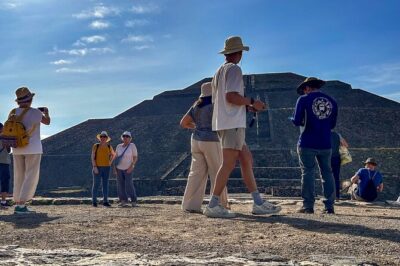
Teotihuacan, Guadalupe Shrine & Tlatelolco Day Tour with Lunch
Read our review →
Xochimilco, Coyoacan and Frida Kahlo with Optional Lunch
Read our review →
Balloon flight + Breakfast in cave + Pyramids + Pick up CDMX.
Read our review →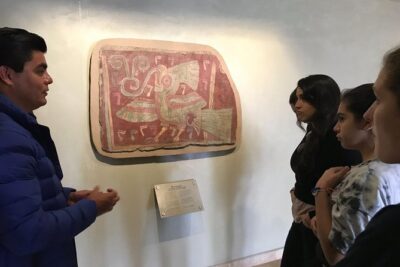
Teotihuacan pyramids morning or afternoon without tourist traps
Read our review →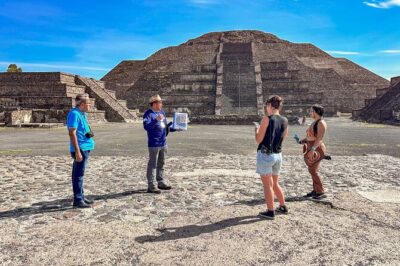
Teotihuacan Early Access Guided Tour with optional Lunch
Read our review →
Balloon flight + pick up in CDMX + Breakfast in Cave + Pyramids
Read our review →
Balloon Flight + Cave Breakfast + Pick Up from CDMX or We Fly
Read our review →