
Reviewed · FRIDA KAHLO & COYOACAN TOURS
La Catrina & Muralism: Diego Rivera’s Legacy & Frida Kahlo
Mexico City’s murals are not just decoration. They are history lessons painted at giant scale, filled with revolution, social struggle, Día de Muertos, and competing ideas about what Mexico should become. This walk brings that story together, from the old college where Diego Rivera and Frida Kahlo first crossed paths to the famous La Catrina mural and Palacio de Bellas Artes.
I like the small maximum of 12 people, which gives you a real chance to ask questions, and I like that museum tickets and public transportation are included. Guides such as Sofía, Ulysses, Ady, Diana, and Warrior are praised for making complex art and history easy to follow. The main caution is timing: the advertised 2 hours 30 minutes can stretch well past lunch, so bring water and a snack.
Key points to know before booking
- La Catrina gets the spotlight: See Diego Rivera’s celebrated mural at Museo Mural Diego Rivera and learn how the skeleton figure connects with Día de Muertos.
- Four central stops: The route links San Ildefonso, Museo Vivo del Muralismo, Museo Mural Diego Rivera, and Palacio de Bellas Artes.
- More than Rivera: The story also places Rivera alongside José Clemente Orozco and David Alfaro Siqueiros.
- Small English-speaking group: The tour uses one language and caps attendance at 12 people.
- Expect plenty of standing: The walk includes museums, courtyards, public spaces, and transportation, with no scheduled food or drink stop.
- A useful Centro Histórico finish: You end near Bellas Artes, where your guide shares ideas for nearby food and sightseeing.
Why Mexican muralism makes a good walking tour
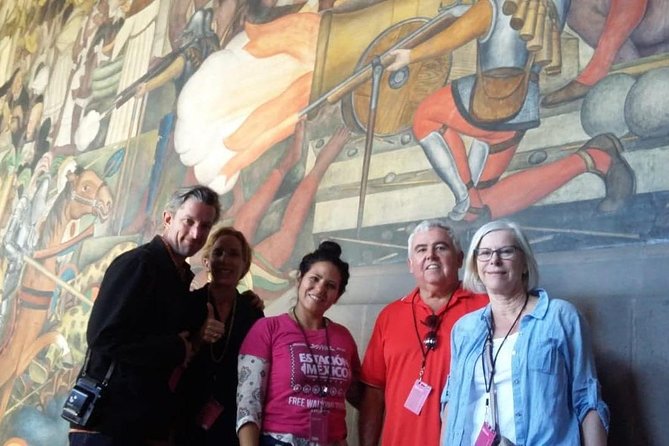
Mexican muralism can look overwhelming at first. The walls are enormous, the scenes are crowded, and the people, symbols, and political messages may not be clear without help. A good guide gives you a way into the picture.
This movement grew in the period after the Mexican Revolution, when public art became a way to tell national stories to a broad audience. Murals were placed in schools, government buildings, markets, and cultural institutions rather than only in private galleries. The result is art that speaks about workers, students, Indigenous communities, political power, religion, death, and the daily struggle to build a fairer country.
That context is the real value here. You can visit several buildings on your own, but it is harder to understand why one artist presents a historical figure as a hero while another shows the same period through conflict or suffering. Guides including Ulysses, Sofía, Warrior, and Erin have been singled out for explaining those connections in a clear, lively way.
The tour also gives you a useful introduction to three major muralists: Diego Rivera, Orozco, and Siqueiros. Rivera is the central name in the title, but the wider movement is more interesting when you see that these painters did not all tell Mexico’s story in the same way.
A few other Mexico City days to price up
- Xochimilco, Coyoacan and Frida Kahlo with Optional Lunch
★ 4.5 · 7,320 reviews - CDMX: Xochimilco, Coyoacan, Frida Kahlo Museum & Murals Tour
★ 4.4 · 3,025 reviews - Frida Kahlo VIP [Museum Tickets Included] Bike, Markets & Churros
★ 5.0 · 1,072 reviews
San Ildefonso: where the Rivera and Kahlo story begins
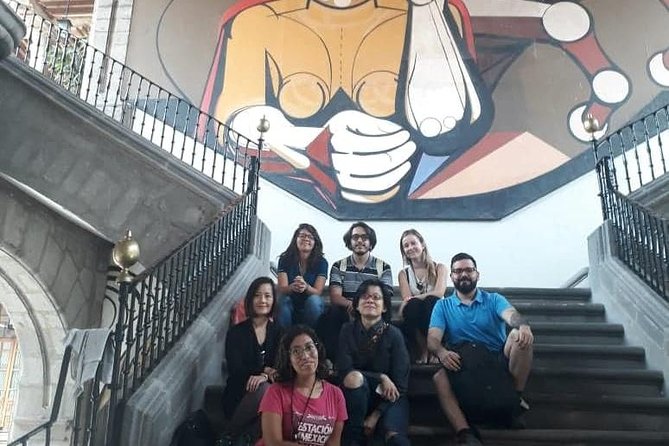
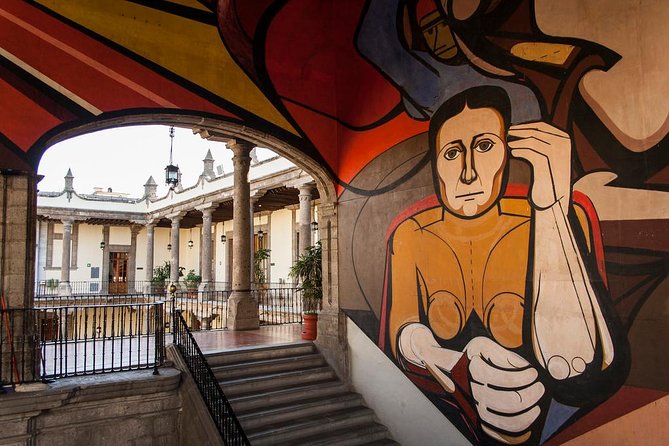
The walk starts at Antiguo Colegio de San Ildefonso, at Justo Sierra 16 in Centro Histórico. This former college is more than a convenient meeting point. It is tied to the early development of Mexican muralism and to the meeting of Diego Rivera and Frida Kahlo, Mexico’s most famous artistic couple.
You spend about 35 minutes here, with admission included. The opening introduction to Rivera’s life and work helps set up the rest of the visit. I like beginning with the people behind the paintings, because Rivera’s public work can seem impersonal until you understand the ambitions, arguments, and relationships surrounding it.
The building itself adds weight to the visit. You are not simply looking at isolated works in a modern gallery. You are entering an older educational setting where art and public life became closely linked. Your guide can help you notice how the setting affects the message.
This first stop is also where the one-language format matters. Instead of switching between languages or trying to follow a large crowd, you receive the story in English from a guide focused on one group. Guides vary by departure, but names praised for warmth and strong storytelling include Ady, Sofía, Ulysses, Diana, David, and Warrior.
Museo Vivo del Muralismo and its three levels
Next comes Museo Vivo del Muralismo, a site arranged around two courtyards and three levels. You spend roughly 35 minutes here, and the museum ticket is included.
The layout gives the visit some variety. You move through courtyards and different floors rather than viewing one wall in a single room. That matters because muralism is a large, physical art form. You need time to step back, look across a whole scene, and then return to small details.
This stop also helps explain why murals belong in public buildings. The art is tied to education, government, and the telling of national identity. Rather than treating the paintings as separate masterpieces, the guide connects them to the building and to the people who were meant to see them.
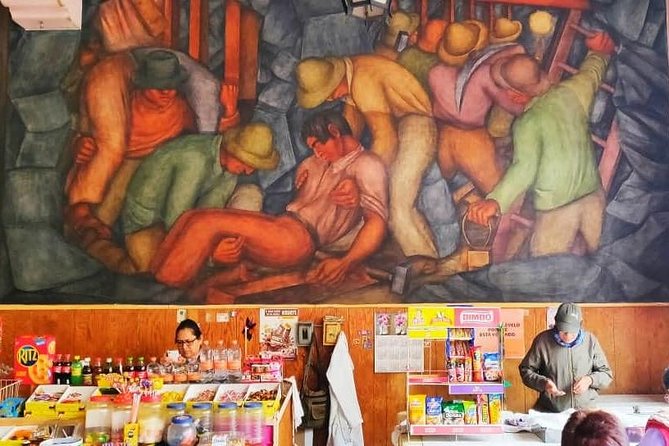
The route may include works that are easy to miss if you walk through alone. Some of the most rewarding moments can come in places that do not advertise themselves as major art stops. Accounts of this tour repeatedly point to murals in market areas and other parts of downtown that are difficult to locate without a guide.
Do not rush this museum. You may find yourself standing for most of the visit, listening and looking upward. Wear comfortable shoes and keep your water handy.
La Catrina at Museo Mural Diego Rivera
The third stop is Museo Mural Diego Rivera, where you see one of the best-known works associated with Mexican muralism. The main attraction is Rivera’s mural featuring La Catrina, the elegant skeleton figure strongly linked with Día de Muertos.
You spend about 30 minutes here, with entry included. La Catrina is instantly recognizable, but the painting rewards more than a quick photograph. The guide helps place the figure within Rivera’s larger view of Mexican society and explains how death, memory, class, and national identity meet in the scene.
This is likely the moment many people have in mind when they book a tour with Rivera’s name in the title. It delivers that famous image, but the larger payoff is learning to read the crowd around it. Watch how the figures are arranged, how historical personalities share the space, and how the painting brings together different periods of Mexican life.
I would not treat this as a Frida Kahlo tour in the museum sense. Kahlo is part of the opening story and of the wider artistic world surrounding Rivera, but the route is primarily about muralism and public art. If you want a detailed visit focused on Kahlo’s paintings, this is not a substitute for a dedicated Frida museum experience.
Same stretch of coast, a very different day:
- Teotihuacan, Guadalupe Shrine & Tlatelolco Day Tour with Lunch
★ 5.0 · 11,603 reviews - Balloon flight + Breakfast in cave + Pyramids + Pick up CDMX.
★ 5.0 · 6,335 reviews - Teotihuacan pyramids morning or afternoon without tourist traps
★ 5.0 · 6,186 reviews - Teotihuacan Early Access Guided Tour with optional Lunch
★ 4.5 · 6,138 reviews
Palacio de Bellas Artes and Rivera’s controversial mural
The final planned stop is Palacio de Bellas Artes, Mexico City’s most important cultural venue. The tour spends about 30 minutes here and ends nearby on Avenida Juárez.
Bellas Artes is a fitting finish because it gathers major Mexican art under one roof and gives the tour a strong sense of place. Here you see Rivera’s controversial mural created in the United States, now preserved for public viewing in Mexico City.
The guide explains the circumstances around the mural and why it caused such a dispute. That story adds a useful reminder: these works were never just pretty wall paintings. They could challenge powerful people, argue over national identity, and bring political ideas into public view.
The building also gives you a practical end point. After the tour, you are in one of the best-connected parts of Centro Histórico, with the guide offering suggestions for food and nearby things to do. This is handy if you want to continue your day instead of returning to your hotel.
One detail is worth watching: the museums on the route may change based on availability. The provider keeps the general muralism focus, but a specific interior or stop can shift.
The guides are a major part of the experience
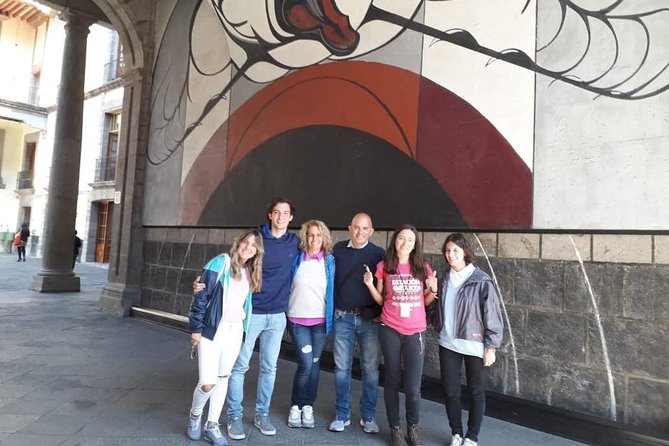
The art matters, but the guide determines how much you get from it. The strongest guides on this route are not simply reciting dates. They explain symbols, link paintings to Mexican history, and respond to questions without making the material feel like a lecture.
Sofía is praised for passion and clarity. Ulysses is noted for finding works that are difficult to locate and for showing parts of familiar buildings that are easy to miss. Warrior, also identified as Waryor or Guerrero in some comments, is repeatedly described as energetic, generous with his time, and deeply interested in the city’s art.
Ady is praised for being warm, friendly, and an effective communicator. Diana is noted for presenting the three major muralists clearly. David is described as especially strong at connecting the murals with Mexican history and culture.
You may not receive one of these particular guides, so do not book on the assumption that a named person will lead your departure. The consistent strength is the subject knowledge and personal enthusiasm expected from the Estación México team.
The group limit of 12 is a real advantage. A small group can stop in front of a mural without blocking an entire corridor, and you can ask about a small detail that might otherwise pass by. On quieter departures, the guide may have more time for individual questions, but the regular benefit is simply a more personal pace than a large coach tour.
How long does the tour really take?
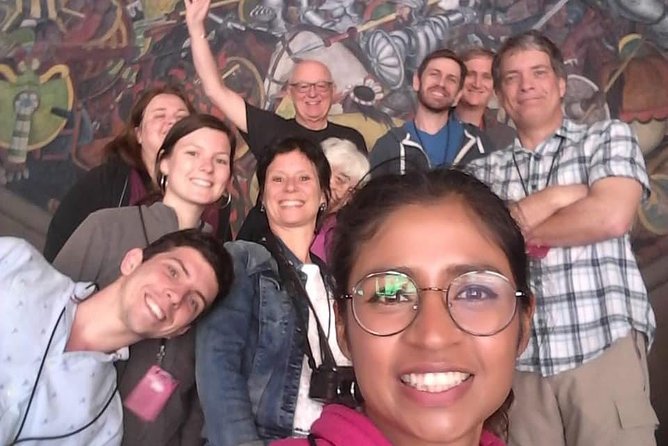
The official duration is about 2 hours 30 minutes, starting at 11:00 a.m. That makes it easy to fit into a morning or afternoon plan, at least on paper.
In practice, allow extra time. Some outings have run 3.5 hours or more, and one extended version continued for over four hours. The reasons are easy to understand: a passionate guide may spend longer on a painting, the group may pause for questions, or public transportation and museum access may take time.
This can be a benefit if you want a serious art lesson. It becomes a problem if you have a timed lunch, another booked attraction, or an afternoon flight. I would leave several hours open after the stated finish.
There is no planned water, snack, or toilet break listed. Bring a bottle of water and a small snack, especially because the 11:00 a.m. start can carry you into lunchtime. The walk is not described as highly strenuous, but it includes standing, museum floors, courtyards, and time on foot between locations. One account specifically warns that you need to be able to walk some distance.
Public transportation is included, which keeps the route affordable and lets you move through the center as a resident might. The meeting point is near public transportation, and most people can participate, but you should still plan for an active outing rather than a seated museum talk.
What the $66.14 price gives you
At $66.14 per person, this is not the cheapest way to look at one mural. It is a fairer comparison to a small-group history lesson that includes several museum entries, a guide, and transportation.
The included admissions matter. You do not have to work out separate tickets for four cultural stops, and the guide gives you a connected story instead of a string of unrelated visits. The one-language format also adds value if you want detailed English explanations.
The price makes the most sense for you if you care about context. If you are content to photograph La Catrina, walk past public art, and read a few wall labels, you can spend less by visiting places independently. If you want to understand what the images mean and how they relate to Mexican history, the fee buys time and interpretation.
The small group improves the value again. A cap of 12 is far more useful for art viewing than a large group where you stand at the back and hear only fragments. The best guides also point out works in markets and buildings that you might not find on a standard museum visit.
Food and drinks are not included. That is a small extra cost, but the lack of a built-in break is more important than the price of lunch. Carry your own water and plan where you will eat near Bellas Artes after the walk.
Who should book this mural walk?
I would recommend it most strongly to:
- First-time visitors who want a clear introduction to Mexican muralism
- People interested in Rivera, Orozco, Siqueiros, or Frida Kahlo’s artistic circle
- Art students, painters, and anyone who wants to study public art rather than only museum collections
- Families with older children or teenagers who can handle standing and walking
- Solo visitors who want an informed guide and a small group
- Anyone who enjoys political art and wants help reading symbols and historical references
It may not suit you if you need a strict 2.5-hour schedule, dislike standing, or want a tour devoted mainly to Frida Kahlo. It is also not the right choice if your main goal is a relaxed food outing, since lunch is not built into the route.
The tour is conducted in English, and confirmation arrives at booking. You meet at San Ildefonso and finish near Bellas Artes. Free cancellation is available up to 24 hours before the start time. Inside that window, the payment is not refunded and changes are not accepted.
My verdict on La Catrina and Mexican muralism
This is a strong choice for seeing Mexico City through its public art. The route covers famous works, but it also makes room for less obvious murals in markets and downtown buildings. That mix gives you more than a checklist of Rivera paintings.
I especially like the way the walk links art with the Mexican Revolution, social inequality, national identity, and Día de Muertos. The best guides, including Sofía, Ulysses, Ady, and Warrior, appear to make the subject accessible without flattening its politics.
Book it if you want the story behind the walls and can keep your schedule flexible. Bring water, a snack, comfortable shoes, and enough time for the tour to run long. If that sounds like a good day in Centro Histórico, the $66.14 price offers solid value.
FAQ
Where does the tour start?
The tour starts at Antiguo Colegio de San Ildefonso, Justo Sierra 16, Centro Histórico de la Ciudad de México.
Where does the tour end?
It ends near Palacio de Bellas Artes at Avenida Juárez, in Centro Histórico.
What time does the tour begin?
The stated start time is 11:00 a.m.
How long is the tour?
The approximate duration is 2 hours 30 minutes, though some departures have lasted longer.
Is the tour offered in English?
Yes. It is offered in English and uses a one-language format.
Are museum tickets included?
Yes. Tickets for the museums on the route are included in the tour price.
Is transportation included?
Yes. Public transportation is included.
What is the cancellation policy?
You can cancel at least 24 hours before the start time for a full refund. Cancellations or changes made less than 24 hours before the start time are not accepted and are not refunded.
New on the Mexico City list
- Day of the Dead Tour in San Andres Míxquic From Mexico City★ 3.7 · 52 reviews
- Half-Day Tour to Teotihuacan Pyramids from Mexico City★ 5.0 · 53 reviews
- Xochimilco floating gardens, Coyoacan and UNAM murals★ 4.0 · 53 reviews
- Guided Tour of Coyoacan and Leon Trotsky Museum★ 5.0 · 53 reviews
- Gay Side of History through Plazas & Temples★ 4.5 · 53 reviews
- Flavors of Mexico City: A Tasty Urban Expedition★ 4.5 · 53 reviews
- Butterfly Monarch Tour from Mexico City★ 5.0 · 53 reviews
- From Mexico City: Cholula Pyramid & Puebla Small Group Tour★ 4.6 · 54 reviews
Frida Kahlo & Coyoacan Tours, compared.

Xochimilco, Coyoacan and Frida Kahlo with Optional Lunch
Read our review →
Xochimilco, Coyoacan, Frida Kahlo Museum & Murals Tour
Read our review →![Frida Kahlo VIP [Museum Tickets Included] Bike, Markets & Churros](https://pics.mexicanexplorer.com/wp-content/uploads/frida-kahlo-vip-museum-tickets-included-bike-markets-churros-400x300.jpg)
Frida Kahlo VIP [Museum Tickets Included] Bike, Markets & Churros
Read our review →![Frida Kahlo VIP [Museum Tickets Included] Walk, Markets & Churros](https://pics.mexicanexplorer.com/wp-content/uploads/frida-kahlo-vip-museum-tickets-included-walk-markets-churros-400x267.jpg)
Frida Kahlo VIP [Museum Tickets Included] Walk, Markets & Churros
Read our review →
EXCLUSIVE TOUR Frida Kahlo Museum – SMALL GROUPS
Read our review →
Frida Kahlo Museum Entry Ticket w/Digital Guide
Read our review →
Private City Tour in Frida Kahlo, Coyoacan, and Xochimilco
Read our review →
PREMIUM Frida Kahlo Museum and Xochimilco (Small Groups)
Read our review →Browse the lists this tour appears in