
Reviewed · MEXICO CITY TOURS
Anthropology Museum Guided Tour
The National Museum of Anthropology holds the objects that define Mexico’s ancient past: the Stone of the Sun, enormous Olmec heads, Maya treasures, and a model of Tenochtitlan. A good guide gives these pieces a timeline, a place, and a human story instead of leaving you to wander a giant museum full of Spanish labels.
I like two things here: admission is included in the $39 price, and the morning start leaves your afternoon open for Chapultepec, the historic center, or another museum. The main concern is consistency. Guides such as Alan, Alexa, Ligia, Leonardo, and Antonio have earned glowing praise, while some visitors found the group too large, the meeting point confusing, or the English difficult to follow.
Key points at a glance
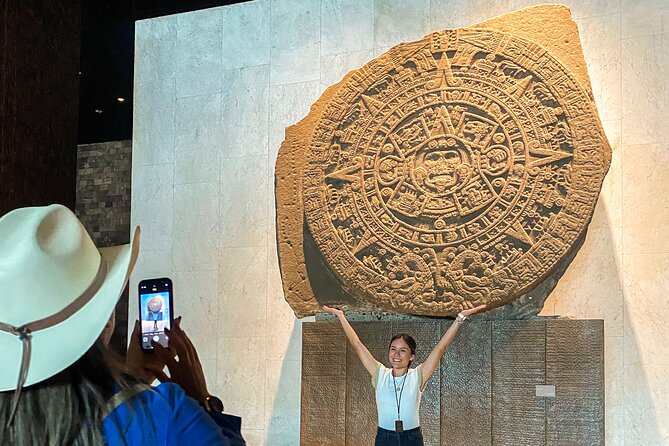
- The Stone of the Sun anchors the visit: This famous Aztec monument is one of the museum’s essential sights, but its meaning becomes clearer when placed beside the model of Tenochtitlan.
- Olmec heads make an unforgettable first impression: These giant stone faces came from the jungles of Tabasco and Veracruz.
- Two and a half hours gives you a useful framework: You will not see every room in detail, but you can understand the main cultures and choose what to revisit.
- The guide makes the biggest difference: Alan, Alexa, Ligia, Leonardo, Antonio, Lili, and Gibran or Alex received especially warm praise for clear explanations and strong command of the subject.
- Arrive early and travel light: Food, drinks, and backpacks are not allowed inside. Only a handbag is permitted.
- English delivery can vary: Most of the feedback is very positive, but some people struggled with accents, audio equipment, or fast, one-way presentations.
Why this museum deserves a guided visit
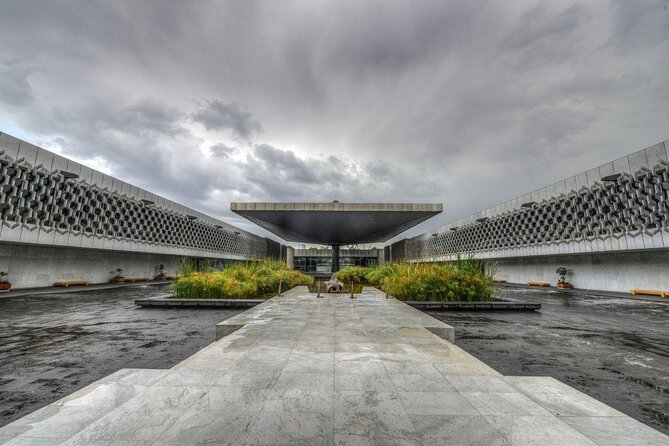
Mexico City’s National Museum of Anthropology is not a small, tidy collection. Its permanent ground-floor galleries cover the pre-Columbian cultures of modern Mexico, along with areas that were once part of Mexico and are now in the southwestern United States.
That scope is both the museum’s strength and its problem. You can move from Olmec sculpture to Teotihuacan, Toltec, Mexica, Maya, and other cultures in a single visit. Without a basic timeline, the rooms can begin to feel like a string of impressive objects with no clear connection.
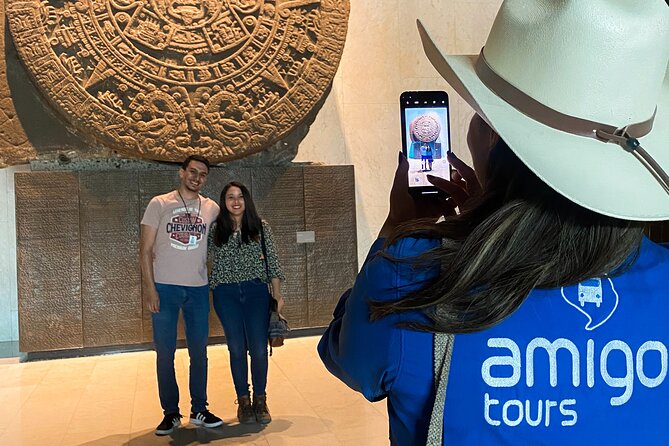
I see the guide as a useful interpreter rather than a simple escort. The best guides begin with geography and chronology, then explain why an object matters. Alan was praised for starting with a broad view of the region before moving into individual cultures. Alexa reportedly used photographs and drawings to explain how buildings were made. Gibran, also identified as Alex, brought a binder of images and examples to make difficult subjects easier to follow.
That kind of visual help matters. Museum labels do not always provide enough context in English, and much of the written material is in Spanish. Even if you speak Spanish, the museum is large enough that a clear route and strong narrative can save time.
More Museums in Mexico City
- CDMX: Xochimilco, Coyoacan, Frida Kahlo Museum & Murals Tour
★ 4.4 · 3,025 reviews - Chapultepec Castle & Anthropology Museum Tour
★ 4.5 · 1,348 reviews - Frida Kahlo VIP [Museum Tickets Included] Bike, Markets & Churros
★ 5.0 · 1,072 reviews
Meeting at Reforma and entering Chapultepec
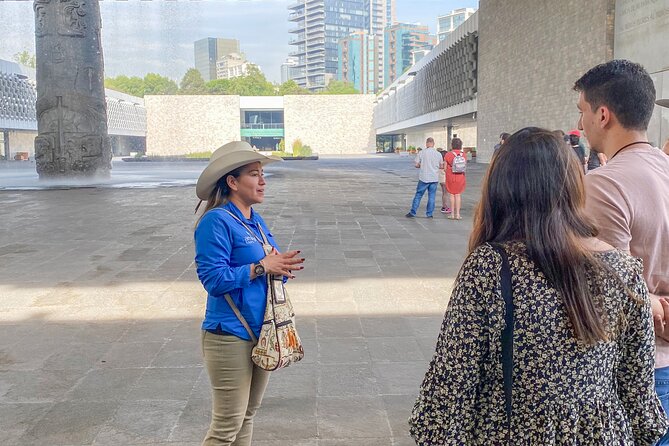
The meeting point is outside the Museo Nacional de Antropología on Avenida Paseo de la Reforma, in the Polanco section of Chapultepec. The museum is near public transportation, but Mexico City traffic can be slow and unpredictable, especially in the morning.
Be there early. This is not a tour that can reliably wait for late arrivals. One person who arrived ten minutes late found the group already gone and could not reconnect by phone or app. The operator’s response made clear that the group cannot wait or be rejoined once it has left.
That policy may feel strict, but it matters in a museum with timed entry procedures and a fixed route. Still, the meeting process needs attention. Some people had trouble identifying their guide, while others waited in the wrong line before being directed to the group. In one case, ticket validation and queueing took roughly half an hour.
My practical advice is simple: arrive at least 15 minutes before the stated meeting time, keep your phone available, and look for the tour representative before joining the general ticket line. If you are delayed, contact the operator as soon as possible, but do not assume a message guarantees that the group can wait.
The tour ends back at the museum meeting point. There is no food or drink included, and you cannot take either into the museum. Since backpacks are prohibited, bring only a handbag and leave extra items at your accommodation if possible.
The Stone of the Sun and the Mexica galleries
The Stone of the Sun, often called the Aztec Calendar, is the museum’s best-known object. It gives the tour a natural starting point for discussing Mexica society, religion, time, and the city of Tenochtitlan.
A guide can help you avoid a common mistake: treating the stone as a simple calendar. Its imagery reflects a broader Mexica view of time and the universe. The value of the explanation is not just learning names. It is seeing how the object connects to the city, temples, ceremonies, and political power.
The museum also has a model showing the location and layout of Tenochtitlan. Modern Mexico City occupies much of the same central area, so this model helps you understand how an island capital once fit within the lake system of the Valley of Mexico.
I especially like this part of the route because it joins an object you can see with a city you can picture. A good guide should point out the geography clearly, not simply compare Tenochtitlan with other ancient cities. Some poor experiences resulted from jumping between cultures without enough attention to maps or dates, so listen for a guide who gives you the basic order of events before adding details.
The Mexica galleries can be crowded and visually intense. If your guide pauses to let you examine a room alone, use that time to look closely, then return your attention when the explanation resumes. A few people found that the timing between free viewing and commentary was not always well planned, so do not be afraid to ask where the group is going next.
Olmec stone heads from Tabasco and Veracruz
The giant Olmec heads are among the museum’s most memorable pieces. They were carved from huge blocks of stone and found in the jungle regions of Tabasco and Veracruz.
Their size immediately grabs your attention, but the useful questions are less obvious. How were they made? Why do the faces look the way they do? What do they tell us, and what remains uncertain? A guide can separate established archaeological evidence from easy assumptions.
This is one place where a clear explanation adds real value. The heads are famous enough that you may already recognize photographs of them, but seeing them in person and learning where they came from gives them more weight. The museum presents them alongside other objects from early Mesoamerican cultures, helping you see that Mexico’s ancient past was not limited to the Mexica or Maya.
The route may also include Teotihuacan and Toltec material. These galleries require careful chronology because the cultures did not all belong to the same period, and their major cities were not interchangeable. If the guide gives you a simple timeline and explains the difference between a city, a culture, and a later Mexica interpretation, you will get much more from the displays.
More museums around Mexico City:
- Frida Kahlo VIP [Museum Tickets Included] Walk, Markets & Churros
★ 5.0 · 982 reviews - EXCLUSIVE TOUR Frida Kahlo Museum – SMALL GROUPS
★ 5.0 · 901 reviews - Mexico City: Anthropology Museum Guided Visit
★ 4.4 · 708 reviews - Mexico City: Frida Kahlo Museum Entry Ticket w/Digital Guide
★ 4.5 · 683 reviews
Maya tombs, Chichen Itza, and the southern galleries
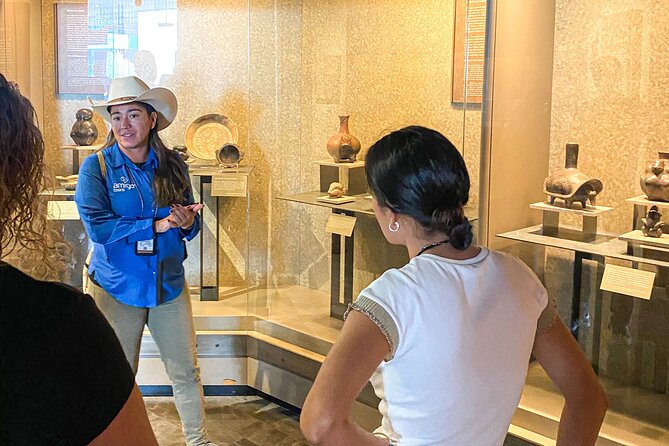
The Maya sections bring together objects and reconstructions from a broad region. The museum includes treasures recovered from the Sacred Cenote at Chichen Itza, along with reconstructions of Maya tombs and material connected with Maya civilization.
This part of the museum rewards patience. You may see funerary objects, stone carvings, and architectural details that look striking but are hard to place without a map. The strongest guides use images or drawings to show how the pieces relate to temples, tombs, cities, and ceremonies.
Do not expect to study every Maya room in depth during a 2.5-hour tour. The museum’s permanent displays are too extensive for that. Instead, treat the guided visit as an introduction. Note the rooms or objects you want to revisit after the tour, especially if Maya archaeology is your main interest.
A useful guide should also explain that Mesoamerica was not one single culture. Maya, Olmec, Teotihuacan, Toltec, and Mexica traditions developed in different places and periods, with contact and influence between them but clear differences as well. That distinction is one of the main reasons to choose a guide instead of racing through the galleries alone.
Contemporary Mexico and the museum’s larger purpose
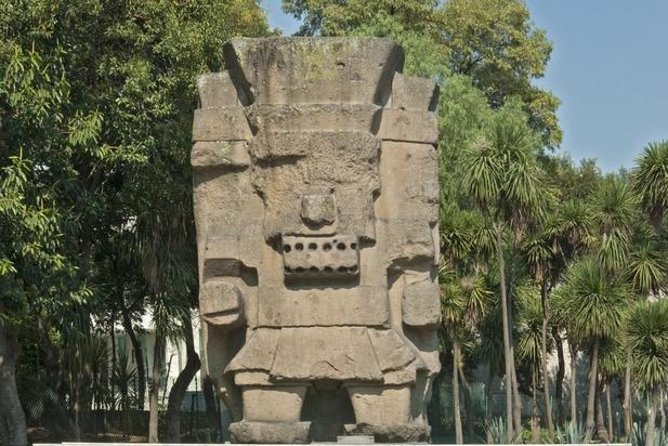
The museum is not only a storehouse of ancient objects. It presents an idea of Mexico, linking Indigenous civilizations to the country’s modern identity.
That connection is important, but it needs careful handling. The Spanish conquest did not erase the people, languages, traditions, and communities connected to these cultures. A thoughtful guide can help you see how ancient symbols, foods, building traditions, crafts, and political ideas continue to shape contemporary Mexico.
The museum’s permanent galleries focus on cultures located in what is now Mexico, as well as former Mexican territory in today’s southwestern United States. This wider scope gives you a broader view of Indigenous history than a narrow Aztec-only visit would.
The museum also hosts temporary exhibitions, generally focused on major cultures from other parts of the world. The guided experience centers on the permanent archaeological collections, so do not assume the temporary galleries are part of the planned route.
The guide is the make-or-break factor
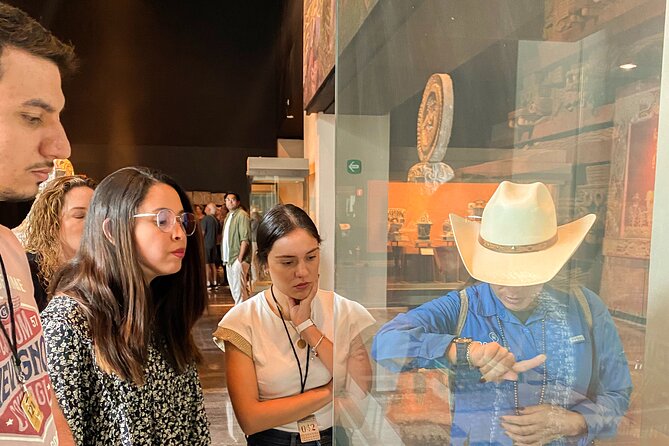
The strongest part of this experience is the human explanation. Alan received praise for a well-organized progression from geography to culture. Alexa was singled out for making the subject lively with photographs and drawings. Ligia was praised for answering questions and accommodating different pacing needs.
Leonardo was valued for combining interesting historical facts with practical navigation through the huge building. Antonio was described as warm and enthusiastic, with a clear way of bringing the displays to life. Lili was praised for patience and passion, while Gibran or Alex was credited with extensive preparation and visual aids.
Those examples point to what you should expect from a strong guide: a clear timeline, geographic orientation, a manageable number of major objects, and time for questions. You should not need to memorize every dynasty or date. You should leave knowing what you saw and why it matters.
The weak points are just as important. Some guides spoke almost continuously without checking whether the group understood. Others were difficult to follow in English because of accent or audio problems. One person felt that only about an hour of the 2.5-hour tour contained useful explanation because too much time went to crowd management.
The operator advertises a maximum of 25 people. That is not a small private tour. A group of this size can work if the guide uses audio equipment, sets firm meeting points, and keeps the route organized. It becomes frustrating when people cannot hear, the group spreads out, or the guide spends more time gathering everyone than discussing the collection.
Is $39 a fair price?
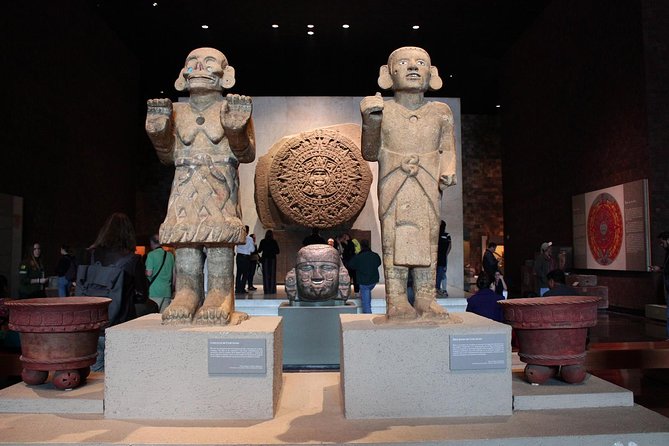
At $39 per person, the price includes both museum admission and a professional guide. That is reasonable if your guide gives you a strong overview and helps you use your limited time well.
The value depends less on the ticket itself than on the explanation. You can enter a museum, look at the objects, and read what is available on your own. But the building is large, the subject covers thousands of years, and the English information is not always sufficient. For someone visiting Mexico City for the first time, a good introduction can prevent the museum from becoming an exhausting parade of names and dates.
The price is less attractive if you expect a private experience, a guaranteed small group, or detailed attention to every gallery. The listed group limit is 25, and some reports describe groups that felt larger or difficult to manage. If you want total control over pace and subject matter, a private guide would be a different type of booking.
The morning schedule is a real advantage. After two and a half hours, you can have lunch, explore Chapultepec, visit Chapultepec Castle, or head toward the historic center. You also avoid spending your entire day inside one museum, even though you may want to return for a second look.
Who should book this tour?
I would recommend it to first-time visitors who want a strong introduction to Mexican archaeology without planning their own route. It suits people who enjoy history but do not want to read every label before understanding the basic story.
It is also a good fit if you do not read Spanish comfortably. The guide can provide the English context that the museum’s signs may not provide. Families may appreciate the stories, maps, and drawings, especially when younger visitors need more than a label to stay interested.
You should think twice if you dislike group pacing or need a very quiet museum visit. You may also prefer another provider if clear English delivery is your top concern, since the guide assignment can shape the entire morning.
For the best chance of a smooth visit, arrive early, travel light, confirm who is leading the group, and ask questions when the guide pauses. If you receive a strong guide such as Alan, Alexa, Ligia, Leonardo, Antonio, Lili, or Gibran, the tour can turn a huge collection into a readable story. If the logistics go poorly, the same museum can feel confusing and rushed.
Should you book it?
Book this tour if you want context more than independence. The National Museum of Anthropology is too important to skip, and a good English-speaking guide can show you how the Stone of the Sun, Olmec heads, Maya treasures, and Tenochtitlan fit together.
I would not book it expecting a private tour or a perfectly uniform experience. The overall rating is strong, but the uneven reports about meeting procedures, group size, audio, and English clarity deserve attention. Arrive early, pack only a handbag, and choose the tour for its potential value: admission plus a two-and-a-half-hour introduction to one of Mexico City’s essential museums.
FAQ
Where does the Anthropology Museum tour start?
It starts at the Museo Nacional de Antropología on Avenida Paseo de la Reforma in Polanco, within Chapultepec.
Where does the tour end?
The activity ends back at the museum meeting point.
How long does the tour last?
The scheduled duration is approximately 2 hours and 30 minutes.
Is museum admission included?
Yes. The price includes entrance to the National Museum of Anthropology and a professional guide.
Is the tour offered in English?
Yes. The activity is offered in English, though the clarity of delivery can vary by guide.
How much does the tour cost?
The listed price is $39 per person.
What is the maximum group size?
The stated maximum is 25 travelers.
Can I bring food or a backpack?
No. Food, drinks, and backpacks are not allowed inside. Only a handbag is permitted.
Is the museum near public transportation?
Yes. The meeting point is near public transportation.
Can I cancel for a full refund?
Yes, if you cancel at least 24 hours before the experience’s start time. Cancellations made less than 24 hours in advance are not refunded.
New on the Mexico City list
- Day of the Dead Tour in San Andres Míxquic From Mexico City★ 3.7 · 52 reviews
- Half-Day Tour to Teotihuacan Pyramids from Mexico City★ 5.0 · 53 reviews
- Xochimilco floating gardens, Coyoacan and UNAM murals★ 4.0 · 53 reviews
- Guided Tour of Coyoacan and Leon Trotsky Museum★ 5.0 · 53 reviews
- Gay Side of History through Plazas & Temples★ 4.5 · 53 reviews
- Flavors of Mexico City: A Tasty Urban Expedition★ 4.5 · 53 reviews
- Butterfly Monarch Tour from Mexico City★ 5.0 · 53 reviews
- From Mexico City: Cholula Pyramid & Puebla Small Group Tour★ 4.6 · 54 reviews
Mexico City Tours, compared.
Teotihuacan, Guadalupe Shrine & Tlatelolco Day Tour with Lunch
Read our review →
Xochimilco, Coyoacan and Frida Kahlo with Optional Lunch
Read our review →
Balloon flight + Breakfast in cave + Pyramids + Pick up CDMX.
Read our review →
Teotihuacan pyramids morning or afternoon without tourist traps
Read our review →
Teotihuacan Early Access Guided Tour with optional Lunch
Read our review →
Balloon flight + pick up in CDMX + Breakfast in Cave + Pyramids
Read our review →
Balloon Flight + Cave Breakfast + Pick Up from CDMX or We Fly
Read our review →
Teotihuacan, Tlatelolco & Guadalupe Shrine Tour
Read our review →Browse the lists this tour appears in