
Reviewed · MEXICO CITY TOURS
Mexico City: Anthropology Museum Guided Visit
Mexico City’s National Museum of Anthropology is the kind of museum that can leave you admiring everything and understanding very little. A good guide gives the collection a clear path, from 10,000-year-old spear points and everyday clay vessels to the famous Stone of the Sun. The scale is astonishing, but the stories make it manageable.
I like two things especially: the guide puts small objects into human context, and the tour links cultures across Mexico instead of treating each gallery as a separate box. English-speaking visitors also gain a lot from having the displays explained aloud, since many labels are in Spanish. Guides including Leonardo, Lili, Alan, Giovanna, and Hector have been praised for clear explanations, humor, and a steady pace.
The trade-off is price. At $67 per person, this costs far more than museum admission alone, and a large group can make the experience feel less personal. The two-and-a-half-hour visit also gives you highlights rather than a complete museum tour, so plan extra time if you want to see the collection properly.
Key points to know before you go
- Start with the flagpole: Meet beside the main entrance at 8:50 am, not inside the galleries.
- See the objects in context: Your guide connects spear points, clay vessels, religious pieces, and monumental sculpture to daily life and belief.
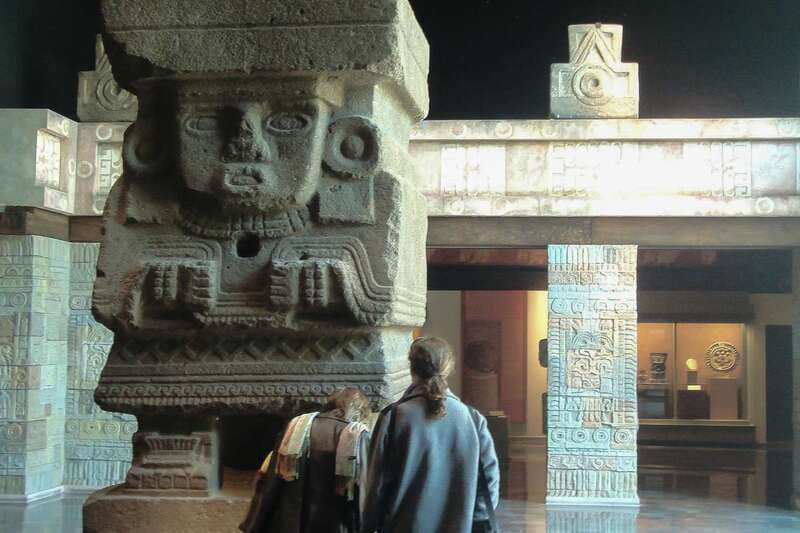
- Expect a broad historical sweep: The route introduces Maya, Aztec, Zapotec, Teotihuacán, and other cultures across present-day Mexico.
- English guidance matters: Many exhibit descriptions are in Spanish, making spoken explanation especially useful for English-speaking visitors.
- Save time to wander: The guided portion ends with free time, which lets you return to objects that caught your eye.
- Consider a private group: A private option or family version may suit you better if you have many questions or want a custom pace.
Why this museum deserves a guided first visit
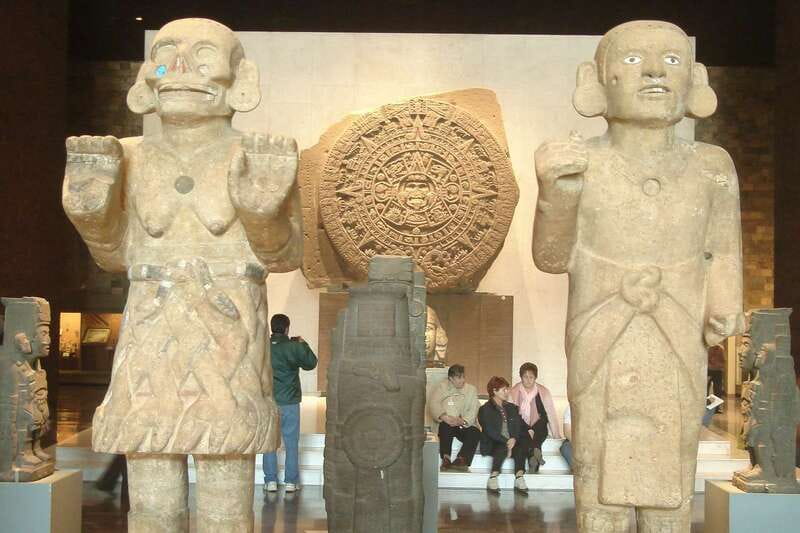
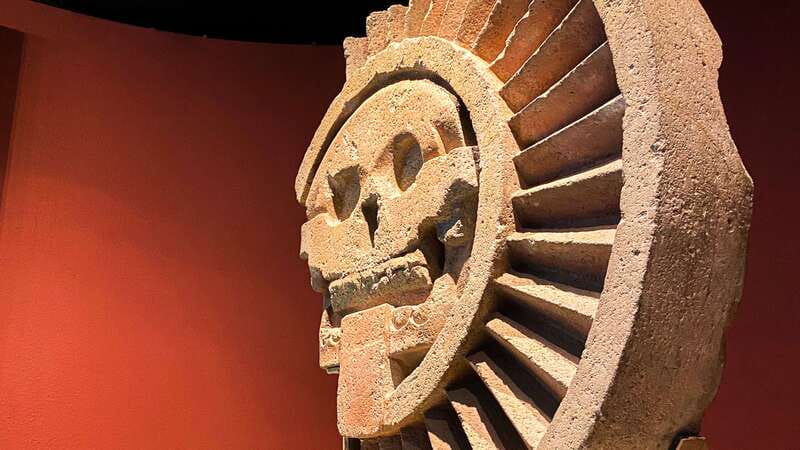
The National Museum of Anthropology is Mexico’s most popular museum, drawing about two million people a year. It was created to protect and explain the legacy of Mexico’s Indigenous peoples, and its purpose is bigger than displaying old objects behind glass. The museum asks you to see these cultures as organized societies with skilled artists, farmers, hunters, builders, traders, rulers, and religious thinkers.
That can be a lot to absorb alone. The collection covers huge stretches of time and territory, and the rooms move between early human settlement, major Mesoamerican cultures, and objects linked to the development of Mexican identity. I like having a guide here because the best question is often not What is this? but Why did it matter?
A guide can also help you avoid a common museum mistake: spending twenty minutes on one case, then racing through the rooms at the end. The strongest guides reported for this experience, including Alan, Lili, Leonardo, Roberto, and Alex Gonzales, are praised for turning individual objects into one connected story. That connection is the real service you are paying for.
More City Tours in Mexico City
- Mexico City: Teotihuacan, Tlatelolco & Guadalupe Shrine Tour
★ 4.6 · 3,773 reviews - Teotihuacan Hot Air Balloon Flight from Mexico City / Volare
★ 5.0 · 3,262 reviews - Teotihuacan Private Tour from Mexico City
★ 5.0 · 1,890 reviews
Meeting at 8:50 am by the main entrance
You meet at the flagpole next to the museum’s main entrance at 8:50 am. The activity begins and ends at the National Museum of Anthropology, so you arrange your own way there and back. Hotel pickup, drop-off, food, drinks, and transportation are not included.
That simple setup is useful in Mexico City, where traffic can make cross-town plans unpredictable. Give yourself enough time to reach Chapultepec, locate the entrance, and find the flagpole without starting the morning in a panic. The meeting point is specific, but it is still smart to check your booking details for the exact starting time when you reserve.
The tour includes admission and is designed to help you skip the ticket line. That matters most on busy mornings, when standing outside waiting to enter can eat into a short museum visit. You should still arrive ready to identify your guide and group, since the flagpole area may have several people gathering.
First rooms: hunters, tools, and ordinary life
The tour begins with the earliest part of the collection, including small objects that are easy to overlook. Spear points used by early hunters more than 10,000 years ago give you a direct connection to people living on the continent long before the great cities and monuments associated with Mesoamerica.
I find these pieces valuable precisely because they are modest. A huge carved stone demands attention, but a small point shows practical skill and survival. Your guide explains what these objects were used for and helps place them within the lives of early communities.
You also see simple clay pieces. Some served basic household needs, while others played a role in ceremonies and religious practice. The contrast is important: an object can be useful, symbolic, or both. Without explanation, a small clay form may look plain. With context, it becomes evidence of how people cooked, stored things, honored deities, and made sense of the world.
This part of the tour also sets up a useful habit. Instead of judging ancient cultures only by their biggest monuments, you begin watching for evidence of work, food, family life, ritual, and craft. That makes the later galleries easier to understand.
Maya, Aztec, Zapotec, and Teotihuacán connections
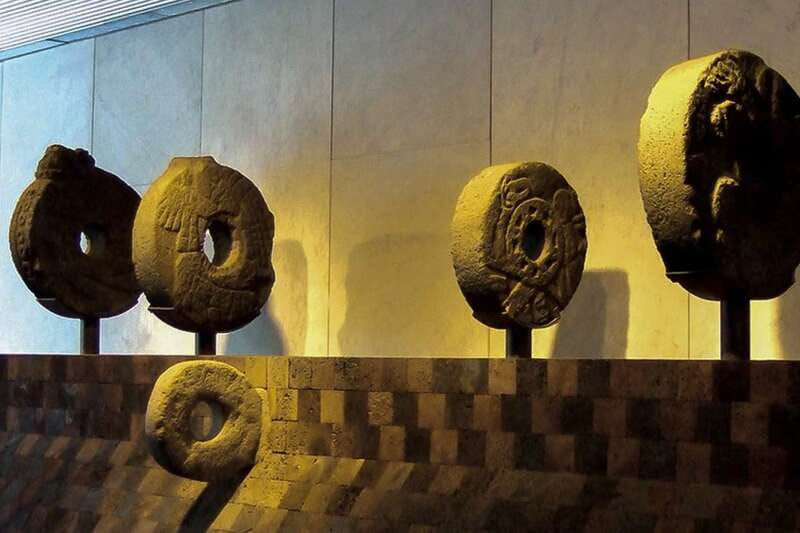
As the route moves through the museum, your guide introduces the cultures that shaped Mesoamerica, including the Maya, Aztec, Zapotec, and people connected with Teotihuacán. These names are familiar, but it is easy to flatten them into one vague idea of ancient Mexico. A guide helps you keep the cultures distinct while showing where their stories overlap.
The tour is not simply a march past famous objects. You learn how historians interpret the artifacts and why those interpretations have changed. Archaeology is not a finished script. New discoveries and different readings can force experts to reconsider how Mesoamerican societies developed, interacted, and influenced later generations.
That point gives the museum unusual energy. You are not only looking at things from the past. You are seeing evidence that continues to shape modern understanding of Mexico.
Guides praised for this route use different methods. Alex Gonzales has brought extra visual material to explain difficult points. Roberto has used a folder and phone images to add detail during a private tour. Others, such as Hector and Giovanna, have been especially effective at laying out a timeline in plain language. The exact style depends on your guide, but the goal is the same: help you remember the main ideas after the objects blur together.
More Museums in Mexico City
- CDMX: Xochimilco, Coyoacan, Frida Kahlo Museum & Murals Tour
★ 4.4 · 3,025 reviews - Chapultepec Castle & Anthropology Museum Tour
★ 4.5 · 1,348 reviews - Frida Kahlo VIP [Museum Tickets Included] Bike, Markets & Churros
★ 5.0 · 1,072 reviews - Anthropology Museum Guided Tour
★ 4.5 · 1,035 reviews
The Stone of the Sun and the museum’s major icons
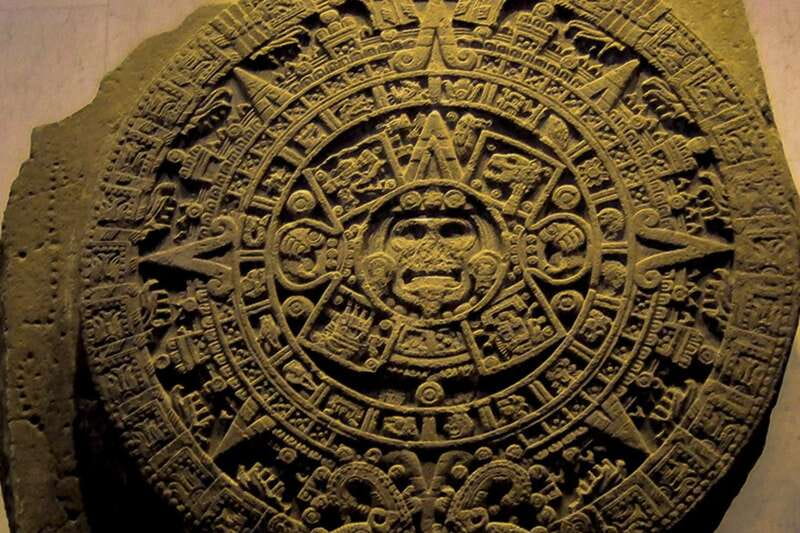
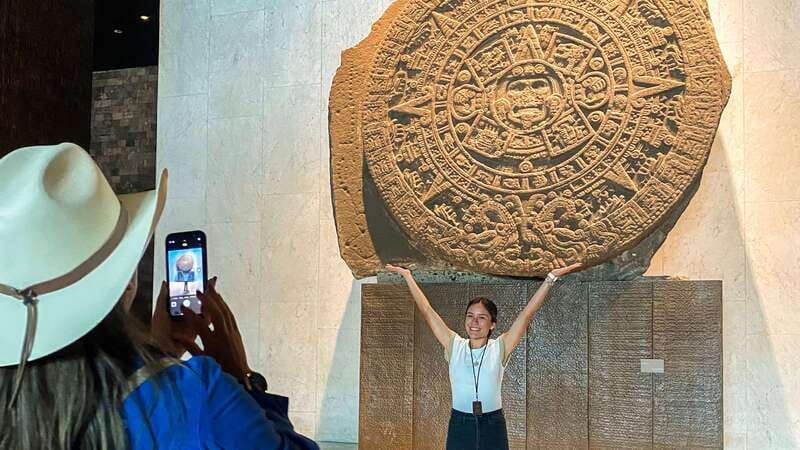
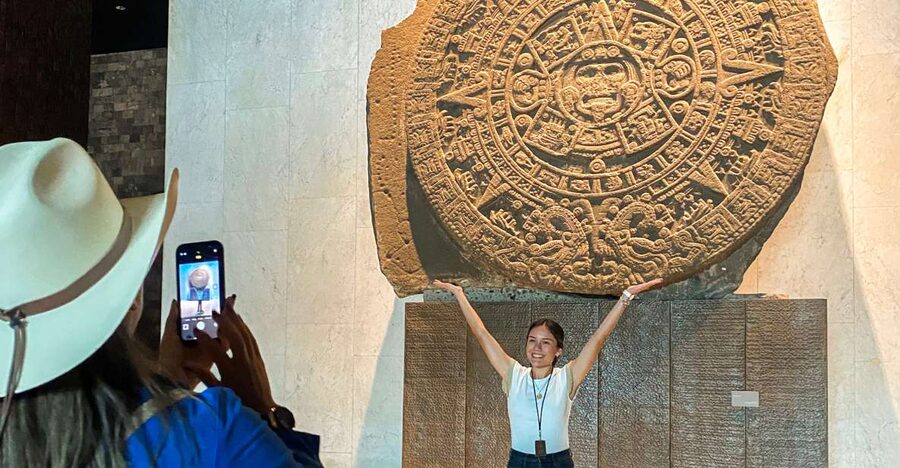
The biggest moment for many people is the Stone of the Sun, often called the Aztec calendar stone. It is an impressive object, but its meaning is not self-evident. Your guide explains the symbolism and helps you understand why this contribution matters to Mexican culture and historical study.
This is where guided interpretation earns its keep. You can admire the stone on your own, but the carved forms invite questions about time, ceremony, power, and belief. A guide gives you a framework without expecting you to memorize every symbol.
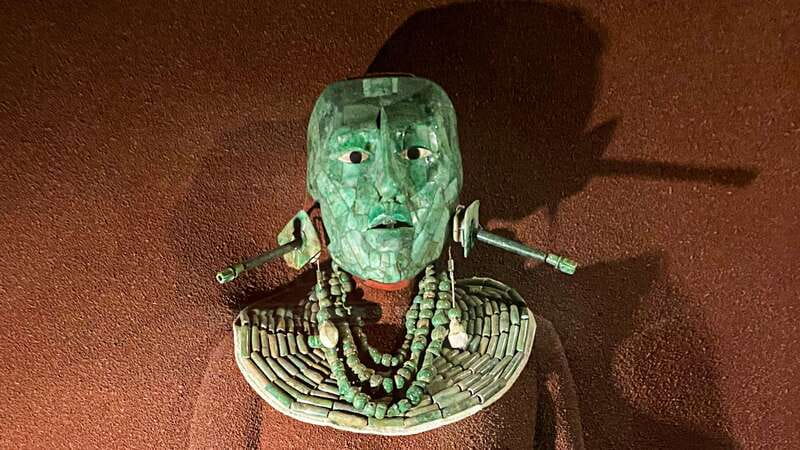
The same approach applies to other major pieces in the museum. Some objects are originals, while others are replicas or reconstructions intended to help you picture how a site or ritual may have looked. Giovanna has been particularly careful to point out that distinction, which is useful when a reconstruction appears beside an ancient artifact.
Do not assume the most famous object will be your favorite. I often find that the small pieces, tools, vessels, and figures tell the most intimate stories. The monumental works are memorable, but the humble objects show how people actually lived.
A focused 2.5 hours, then time to explore
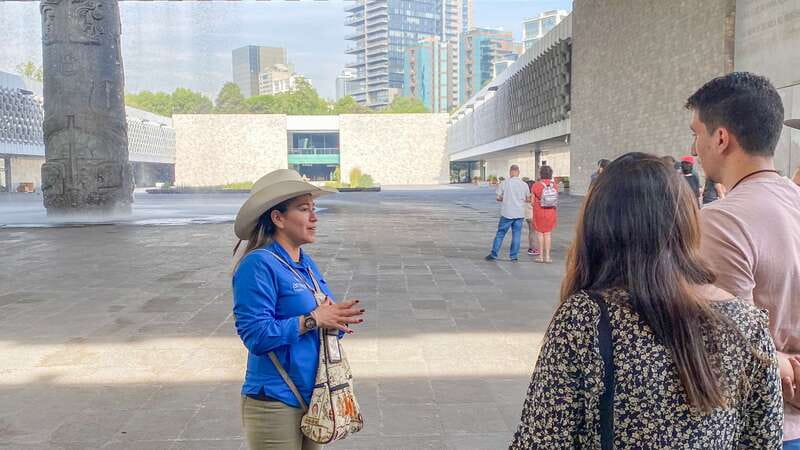
The guided visit lasts about two and a half hours, including walking through the museum and sightseeing in the main rooms. That is a sensible length for a first orientation, but it is not enough to cover every gallery in detail. One guest found the visit ran close to five hours, so ask your guide about the expected finish if you have fixed plans afterward.
Most people should treat the guided portion as a strong introduction. Your guide selects important rooms, keeps the chronology moving, and explains the objects most likely to make the rest of the museum click. You will not leave knowing every culture or artifact, but you should leave with a usable map in your head.
The free time afterward is important. Use it to return to a favorite gallery, take a closer look at objects the group passed quickly, or see rooms that did not fit the main route. If you have a special interest in archaeology, art, religion, or early settlement, this is when you can set your own pace.
The museum is large enough that one visit may feel like an outline rather than a complete study. Some people could easily spend a full day here, and anyone who wants serious coverage may need two visits. I would not see that as a weakness. It means the tour gives you a starting point instead of pretending that a giant collection can be absorbed in one morning.
Why English-speaking visitors may gain the most
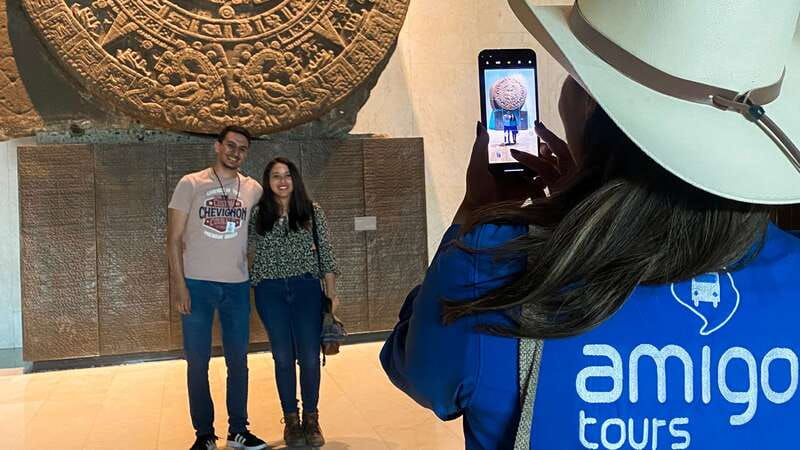
The tour is offered in English and Spanish. For English speakers, the guide can make a major difference because individual exhibit descriptions are mostly in Spanish. You are not forced to guess at the meaning of an object or skip the cultural explanation attached to it.
Clear spoken English is a key part of the experience. Guides such as Leonardo, Alan, Giovanna, Lili, and Hector have been singled out for being easy to follow, while Antonio and Sergio have been praised for making serious material lively without losing the main facts.
A good guide also answers questions that labels cannot anticipate. You can ask how one culture relates to another, why a piece is important, or how archaeologists know what an object was used for. That back-and-forth is harder to get from a printed sign.
Spanish speakers may still appreciate the service, especially if they want a structured visit or a family-friendly explanation. A family tour tailored to your needs is available when that option is selected.
Group size, private tours, and the question of pace
A standard group can include up to about 20 people, according to the tour details. That is large enough to affect how close you can get to an object and how often you can interrupt with questions. It also helps explain the lower personal attention compared with a private visit.
The guides generally keep a good pace, but a museum this large creates a natural tension. Stop too long and you miss later rooms. Move too fast and the details become a blur. Comments about guides staying engaging for three hours, answering questions, and sometimes running longer suggest that the human quality of the tour can shape the pace quite a bit.
A private group is available. I would consider it if you have a strong interest in archaeology, are traveling with family, or want to ask many questions. One private participant had enough time to pursue detailed questions and received extra visual material from the guide.
For a first visit with limited time, a standard group is likely enough. You are buying orientation and interpretation, not exclusive access. The private option makes more sense when the museum is a major reason for your trip.
Is $67 a fair price?
The price is $67 per person. Admission alone is much cheaper, around 200 pesos according to one price comparison supplied for the experience, so the tour fee is not a bargain if you only want entry.
You are paying for the guide, a planned route, ticket-line convenience, and the ability to understand objects that may otherwise be difficult to place. I think the price is defensible for English speakers visiting for the first time, especially if the museum is part of a larger Mexico City itinerary and you want a clear introduction rather than hours of unfocused wandering.
The value is less convincing for Spanish speakers who already know the museum, or for visitors happy to read, browse, and return another day. A group of 20 can also make $67 feel high, particularly when the included admission costs far less.
My practical advice is to ask how much you value your time. If two and a half hours with a guide helps you understand a museum that might otherwise take a full day to approach, the fee may be worthwhile. If you love slow museum visits and plan to spend two days here, buying admission and exploring on your own could suit you better.
Who should book this museum visit?
I would recommend it to first-time visitors, English-speaking visitors, people with limited time, and anyone who wants the cultural links explained rather than simply seeing objects. It is also a good opening activity before visiting Teotihuacán, since one participant found the museum prepared them well for that site the next day.
Families may benefit from the tailor-made family option, especially if children need a shorter explanation or more room for questions. History and archaeology fans should consider the private version if they want to pursue details.
I would hesitate if you dislike group pacing, already have strong knowledge of Mesoamerican cultures, or want to inspect every gallery at your own speed. The museum is too large for a single guided route to satisfy every interest.
The experience has earned a 4.4 rating from 708 bookings, with repeated praise for guides such as Leonardo, Lili, Alan, Giovanna, Hector, Roberto, and Alex Gonzales. The pattern is clear: the guide makes the difference. Names and assignments can change, so you cannot count on a particular person, but the strongest part of the service is the live explanation, not the admission ticket.
Practical details before booking
The tour includes museum entry and a live guide in English or Spanish. Food, drinks, transportation, hotel pickup, and drop-off are not included, so plan those parts yourself.
You can cancel up to 24 hours before the start for a full refund, and the reserve-now, pay-later option keeps you from paying at the time of booking. Check available starting times, then confirm the meeting instructions and arrive at the flagpole next to the main entrance at 8:50 am.
Wear comfortable shoes for several hours of walking. The museum’s size is the main physical demand, not a strenuous activity, but you will appreciate a pause after the guided route. Since free time is included, do not schedule another fixed activity immediately afterward unless you have confirmed the actual finish time with your guide.
Should you book it?
Book this tour if you want the National Museum of Anthropology to make sense on your first visit. The guide gives you a timeline, explains why the objects matter, and points out the difference between original pieces and replicas. For English speakers facing mostly Spanish labels, that help is especially valuable.
Skip it if you prefer independent museum wandering, speak Spanish comfortably, or plan to return for a longer visit. At $67, the added cost is real. Still, for a huge collection filled with unfamiliar names, symbols, and time periods, I think the guided introduction is a smart use of a morning, followed by free time to make the museum your own.
FAQ
Where does the Anthropology Museum tour begin?
Meet your guide at the flagpole next to the main entrance of the National Museum of Anthropology at 8:50 am.
How long does the guided museum visit last?
The stated duration is two and a half hours. Some visits may run longer, so check the expected finish time if you have another activity planned.
What does the $67 price include?
The price includes a live guide and entrance to the National Museum of Anthropology.
Is transportation included?
No. Hotel pickup, hotel drop-off, and transportation are not included. You make your own way to and from the museum.
Is the tour offered in English?
Yes. Live guiding is available in English and Spanish.
Can I explore the museum after the guided portion?
Yes. The experience includes free time after the guided tour, allowing you to revisit exhibits or see additional rooms independently.
New on the Mexico City list
- Day of the Dead Tour in San Andres Míxquic From Mexico City★ 3.7 · 52 reviews
- Half-Day Tour to Teotihuacan Pyramids from Mexico City★ 5.0 · 53 reviews
- Xochimilco floating gardens, Coyoacan and UNAM murals★ 4.0 · 53 reviews
- Guided Tour of Coyoacan and Leon Trotsky Museum★ 5.0 · 53 reviews
- Gay Side of History through Plazas & Temples★ 4.5 · 53 reviews
- Flavors of Mexico City: A Tasty Urban Expedition★ 4.5 · 53 reviews
- Butterfly Monarch Tour from Mexico City★ 5.0 · 53 reviews
- From Mexico City: Cholula Pyramid & Puebla Small Group Tour★ 4.6 · 54 reviews
Mexico City Tours, compared.
Teotihuacan, Guadalupe Shrine & Tlatelolco Day Tour with Lunch
Read our review →
Xochimilco, Coyoacan and Frida Kahlo with Optional Lunch
Read our review →
Balloon flight + Breakfast in cave + Pyramids + Pick up CDMX.
Read our review →
Teotihuacan pyramids morning or afternoon without tourist traps
Read our review →
Teotihuacan Early Access Guided Tour with optional Lunch
Read our review →
Balloon flight + pick up in CDMX + Breakfast in Cave + Pyramids
Read our review →
Balloon Flight + Cave Breakfast + Pick Up from CDMX or We Fly
Read our review →
Teotihuacan, Tlatelolco & Guadalupe Shrine Tour
Read our review →Browse the lists this tour appears in