
Reviewed · MEXICO CITY TOURS
Walking Tour – Impressive murals in Historical Center of Mexico City
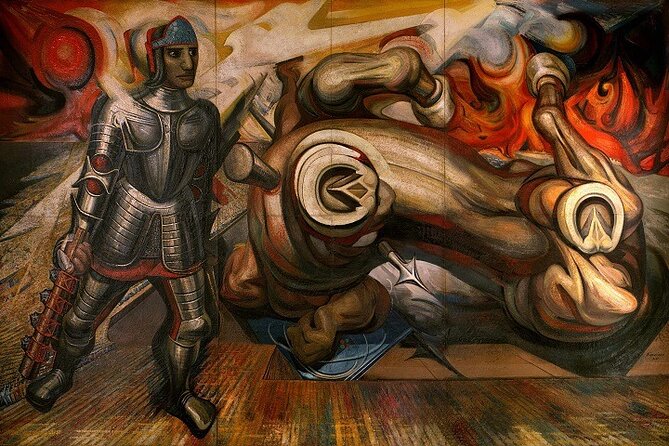
Mexico City’s mural movement is best understood up close, not from a postcard. This walking tour takes you into grand public buildings where Rivera, Orozco, Jean Charlot, Amado de la Cueva, and others filled walls with ideas about revolution, labor, Indigenous culture, and Mexico’s future. I especially like the first look at Rivera’s La Creación and the vast courtyards of the Public Education Ministry.
I also like the guides’ personal approach. Balaam and Miguel are praised for explaining symbols in plain English, answering questions, and adding useful context about food, architecture, archaeology, and city life. The main drawback is the walking: the route can run close to three hours, and the Public Education Ministry is closed Tuesdays, so the exact stops change.
Key things to know before booking
- Rivera’s first mural appears at San Ildefonso: See La Creación in the old amphitheater where Rivera first met a teenage Frida Kahlo.
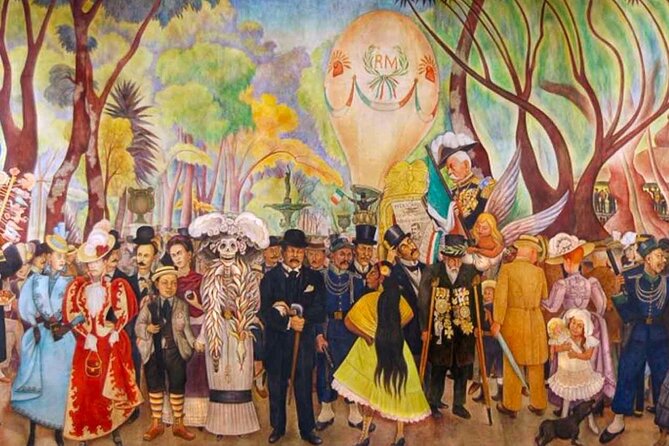
- The Public Education Ministry holds thousands of square meters of murals: Its Fiestas and Trabajo courtyards are the artistic heart of the usual route.
- Bellas Artes adds major works in a landmark building: The final stop brings the tour to Mexico City’s leading cultural venue.
- Balaam and Miguel receive the strongest praise: Expect art interpretation mixed with politics, history, Indigenous traditions, and local tips.
- Tuesday requires a different plan: The Public Education Ministry is closed that day, with alternate murals and museums used instead.
- Plan for serious time on your feet: Comfortable shoes matter, and slower walkers may find the pace and distances demanding.
Why these murals matter in Mexico City
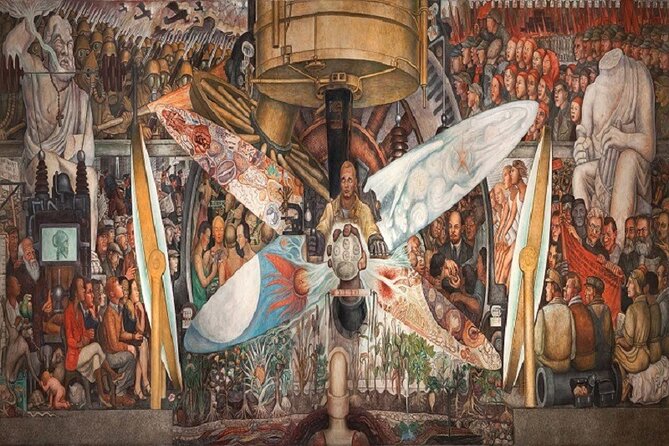
Mexican muralism was not simply decoration for public buildings. It was a way to tell the story of a country after revolution, often in places where ordinary people could see it for free. The artists used enormous walls to explain labor, class, religion, conquest, Indigenous identity, education, and political power.
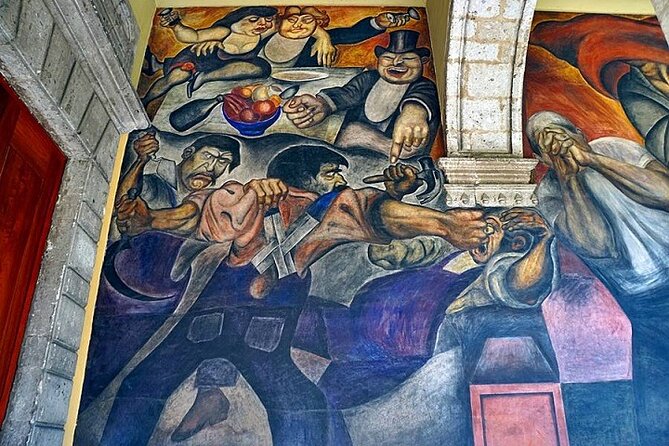
That is why a guide makes such a difference here. A mural can look crowded and confusing at first. With help, you begin to notice who holds the tools, who controls the money, which figures represent older Indigenous traditions, and how Rivera or Orozco shaped a scene to make a political point.
The tour also gives you a useful introduction to several artists rather than treating Rivera as the only name that matters. Rivera receives the most attention, but the route can include Orozco, Siqueiros, Jean Charlot, Amado de la Cueva, Roberto Montenegro, and others connected with Mexico’s mural movement.
Balaam is especially strong at linking the artwork to Mexican politics from the 1920s through the 1960s. Miguel takes a similarly broad approach, adding architecture, archaeological sites, street food, and local customs along the walk. You are not only looking at pictures. You are learning how the city around you shaped them.
More City Tours in Mexico City
- Mexico City: Teotihuacan, Tlatelolco & Guadalupe Shrine Tour
★ 4.6 · 3,773 reviews - Teotihuacan Hot Air Balloon Flight from Mexico City / Volare
★ 5.0 · 3,262 reviews - Teotihuacan Private Tour from Mexico City
★ 5.0 · 1,890 reviews
San Ildefonso and Rivera’s first major statement
The meeting point is the Former College of San Ildefonso at Justo Sierra 16 in the Historic Center. The old National Preparatory School is important in Mexican art because it is often described as the birthplace of muralism.
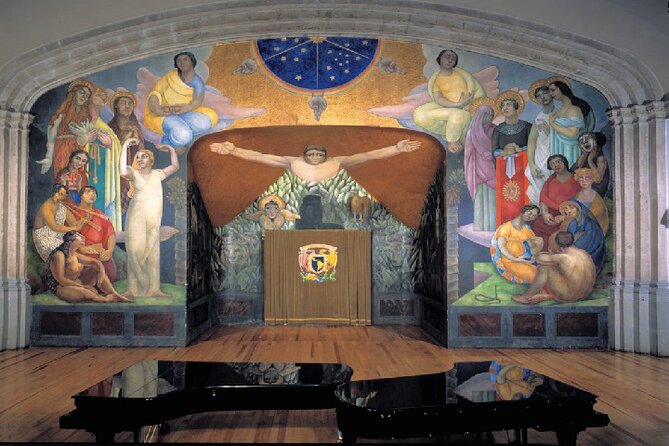
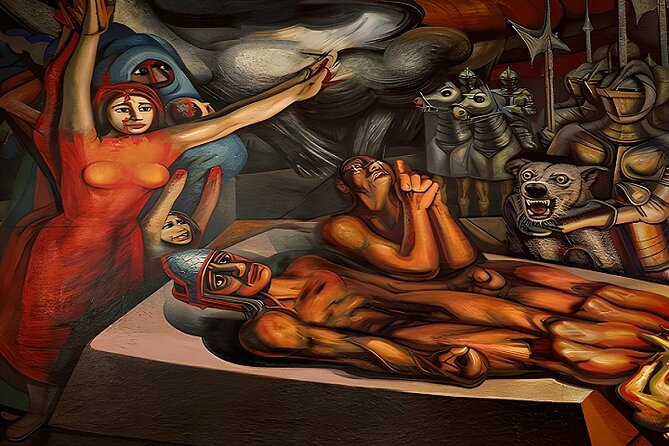
The centerpiece here is Diego Rivera’s La Creación, painted in the amphitheater. You get about 30 minutes at this stop, with admission included. That is enough time for a focused explanation, though art lovers may wish they could linger longer.
This is also where the story of Rivera and Frida Kahlo enters the tour. Rivera met Kahlo here when she was a teenager. That detail gives the building a human connection, but the mural itself remains the reason to pay attention. Look at the way Rivera combines religious imagery, classical references, and Mexican identity rather than treating the work as a simple religious painting.
San Ildefonso is a good opening stop because it sets up the central question of the tour: why did artists place serious ideas on public walls? Your guide can explain how murals reached people who might never enter a private gallery or buy a painting.
The building is historic, and the experience is more about close looking than speed. If you are already tired from a morning of sightseeing, this is a place to slow down. The walking tour becomes more rewarding when you give your eyes time to adjust to the scale and detail.
The Public Education Ministry’s mural courtyards
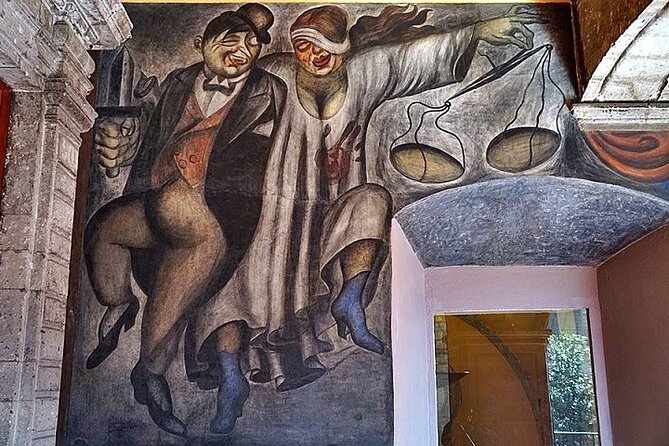
The next major stop is the Ministry of Public Education, known in Spanish as the Secretaría de Educación Pública. Its Fiestas and Trabajo courtyards contain more than 3,000 square meters of murals, making this the largest and most sustained part of the regular route.
You have about 40 minutes here. That sounds brief for such a large collection, but a guide helps you focus on key sections instead of wandering without direction. Rivera’s murals are central, while works by Jean Charlot, Amado de la Cueva, and Roberto Montenegro widen the story.
The courtyards are especially useful for seeing how muralism functioned as a public program. Themes of work, celebration, workers, agriculture, and social struggle appear across the walls. The paintings are not isolated masterpieces. They form a connected visual lesson about Mexican society.
This stop also includes two rooms devoted to muralism and a multisensory hall with artistic and historical objects. A library, children’s reading room, Fondo de Cultura Económica bookstore, and café are also part of the complex. You may not have time to use every facility, but their presence reinforces the building’s link between art and public education.
I would pay close attention to your guide’s interpretation here. Balaam is praised for explaining political positions and the meaning of individual figures and symbols. Miguel is also noted for making complex material accessible and entertaining. Their explanations can help you understand why Rivera’s work can feel both celebratory and confrontational.
There is one major scheduling issue. The Ministry is closed on Tuesdays. On that day, the tour uses other mural sites, including the Diego Rivera Mural Museum and works in or near Alameda Park, depending on the day’s arrangement. You may also see important murals by Marion and Grace Greenwood or the Rivera mural connected with Rockefeller Center at Bellas Artes.
That substitution can still produce a worthwhile art tour, but it is not the same visit. If the Education Ministry is your main reason for booking, choose a day other than Tuesday.
Bellas Artes, the grand finale
The route ends at Palacio de Bellas Artes on Juárez Avenue. Even before you look at the murals, the building provides a powerful finish. It is Mexico City’s leading home for exhibitions, dance, theater, and other cultural events.
The museum opened at the same time as the building and is described as Mexico’s first museum. The murals inside are among its most important works, created by Mexican artists with international reputations.
You have about 40 minutes here. Your guide can help you sort through the major pieces and explain how the works relate to the earlier stops. The sequence is useful: San Ildefonso introduces Rivera’s early mural work, the Ministry shows muralism as a broad public project, and Bellas Artes places the movement in a formal national cultural setting.
The admission information needs care. The tour details say museum entrance tickets are included, but the Bellas Artes stop also says admission is not included. I would confirm exactly what your $51 payment covers before you go and carry extra money in case the museum entrance requires a separate ticket.
The walking distance to Bellas Artes can also be a concern. One visitor found the route ambitious and used an e-bike taxi to reach the final stop after the guide suggested it. That kind of adjustment may not be part of the official package, and transportation is not included, but it shows why you should speak up if you need a rest or a shorter transfer.
More Historical Tours in Mexico City
- Historic Downtown Walking Tour
★ 5.0 · 1,289 reviews - Historic Center Food Tour in Mexico City
★ 5.0 · 1,263 reviews - Mexico City: Historic Downtown Walking Tour
★ 4.8 · 1,039 reviews - Walking Tour of the Historic Center of Mexico City
★ 5.0 · 870 reviews
What the guides add to the experience
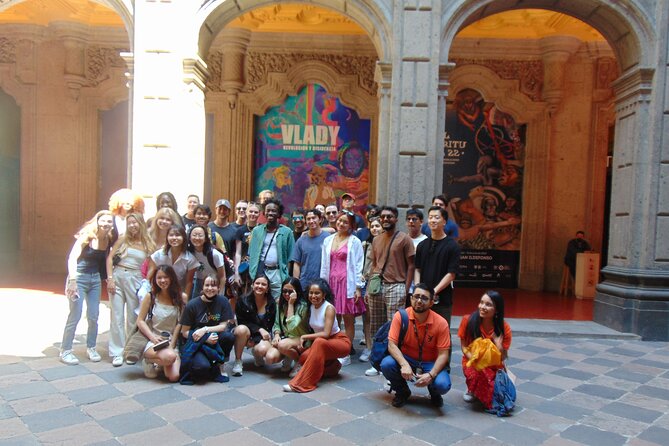
The guides are the main reason this tour earns such strong marks. Balaam is repeatedly praised for his passion for Mexican art, politics, and history. He has a way of explaining symbols while also connecting them to Aztec origin stories, Indigenous religious themes, the conquest, and the Mexican Revolution.
Miguel receives similar praise for his energy and warmth. He has been described as an art historian and history enthusiast who can adapt the route to a group’s interests. He also adds details about buildings, archaeological excavations, and street food encountered along the way.
That flexibility matters. You may arrive wanting only Diego Rivera, then find yourself asking about Orozco’s darker view of power or Siqueiros’s political ideas. A good guide can follow those questions without losing the main thread.
The English is generally described as strong, though one participant found some explanations and questions hard to follow because of the guide’s accent. That is a fair consideration for anyone who depends on very precise verbal interpretation. The subject is complex, and the tour works best when you are comfortable asking for a point to be repeated.
The group limit is 25 people. That is not a tiny private tour, and a group of a dozen can feel large inside crowded courtyards or while standing before a mural. On the other hand, some departures are much smaller. One Sunday afternoon booking had only one participant, leading to a very personal route and plenty of questions.
Walking, timing, and the real pace
The advertised duration is about one to three hours, but you should plan for close to three hours if the tour visits the main sites. Most of the experience is spent standing and walking through the Historic Center.
Comfortable shoes are essential. The distance between buildings, time spent on hard floors, and pauses before large murals can wear you down. Slow walkers may have trouble keeping up, particularly when the group moves from one building to another.
The tour begins at San Ildefonso and ends at Bellas Artes, so you are not returned to the starting point. That is useful if you plan to continue around Alameda Central or explore the Bellas Artes area afterward. Transportation is not included, so arrange your own way to the meeting point and onward from the finish.
Morning and afternoon start times are offered. I would choose the time that leaves room for a relaxed meal and some recovery afterward, rather than trying to squeeze in another major museum immediately. The Historic Center has plenty to see, and the mural tour is more enjoyable when you are not watching the clock.
Guides have also shown flexibility with bathroom breaks and unplanned problems. In one case, a protest temporarily closed the Public Education Ministry, and the guide adjusted the route so the group could return when it reopened. That does not guarantee every disruption will be handled the same way, but it shows the value of having a local person managing the day.
Is $51 a fair price?
At $51 per person, this is not the cheapest way to look at murals in Mexico City. You are paying for an English-speaking guide, interpretation across several sites, and museum entrance tickets where included.
The value depends on how much explanation you want. If you already know Rivera, Orozco, Siqueiros, and the political history of Mexican muralism, you might prefer visiting independently and spending more time at each work. If the symbols, historical references, and politics are unfamiliar, the guide can turn a series of overwhelming walls into a clear story.
The price also makes group size important. A small departure gives you more chances to ask questions and more room for the guide to adjust the route. A full group of 25 will feel less personal, especially in busy public buildings.
Group discounts are available, which may improve the value for families or larger parties. Gratuity is not included, so budget for that separately if the guide provides the kind of service you value. Transportation is also not included, including any taxi or e-bike transfer you may choose during the walk.
Who will get the most from this tour?
I would choose this tour if you want to understand what the murals mean, not merely photograph them. It suits first-time visitors who want an art and history lesson early in a Mexico City stay, as well as anyone with a special interest in Rivera.
It is also a good fit for families with older children who can handle a three-hour walk and follow political or historical explanations. The Public Education Ministry’s connection to schooling, books, and public art gives the subject a wider angle than a standard museum visit.
Couples, solo visitors, and small business groups can all fit comfortably, though the experience changes with group size. Solo visitors may benefit most from the chance to ask questions. Groups with mixed walking speeds should discuss that before booking.
I would be cautious if you have limited stamina, need a fully seated activity, or want a fixed route with no substitutions. Tuesday is a poor choice if the Education Ministry is essential. I would also confirm Bellas Artes admission before paying, since the inclusion details are not perfectly consistent.
Booking and cancellation details
Confirmation is sent at booking. The meeting point is near public transportation, and most people can take part, but the route requires sustained walking and standing.
You can cancel for a full refund up to 24 hours before the local start time. Cancellations or changes made within 24 hours are not refunded or accepted. Since the tour is often booked around 16 days ahead, reserve early if you need a particular morning or afternoon time.
Should you book the Mexico City mural walk?
Book it if you want the political, cultural, and personal stories behind Mexico’s murals. The strongest part is the guide’s interpretation, especially with Balaam or Miguel, not simply the number of buildings visited.
I would book on a non-Tuesday, wear serious walking shoes, and allow three hours. Confirm the Bellas Artes ticket situation before departure. With those details handled, this is a strong introduction to Mexico City’s public art and one of the better ways to see Rivera’s work as part of a larger national story.
FAQ
How much does the mural walking tour cost?
The listed price is $51 per person. Group discounts are available.
How long does the tour last?
The stated duration is approximately one to three hours. Many routes take close to three hours because they include several buildings and substantial walking.
Where does the tour begin?
The tour begins at the Former College of San Ildefonso, Justo Sierra 16, in Mexico City’s Historic Center.
Where does the tour end?
The scheduled end point is Palacio de Bellas Artes on Juárez Avenue in the Historic Center.
Which places are included in the usual route?
The planned stops are the Former College of San Ildefonso, the murals at the Ministry of Public Education, and Palacio de Bellas Artes.
Is the Ministry of Public Education open every day?
No. The Ministry is closed on Tuesdays. The tour uses alternate mural sites and museums on that day, including the Diego Rivera Mural Museum.
Is transportation included?
No. Transportation is not included. The tour is a walking experience, and any taxi or other transfer is paid separately.
What is the cancellation policy?
You can cancel at least 24 hours before the start time for a full refund. Cancellations or changes made less than 24 hours before the experience are not accepted and are not refunded.
More Historic Sites in Mexico City
- Mexico City Historical Centre Food Tour with 7 Authentic Tastings
★ 5.0 · 723 reviews - Mexico City: Guided walking tour through the most historic parts of the city.
★ 4.5 · 172 reviews - Private Walking Tour Gems of the Historic Center of Mexico City
★ 5.0 · 87 reviews - Mexico City: Historical walking tour of Tenochtitlan
★ 4.9 · 69 reviews
More Walking Tours in Mexico City
- Frida Kahlo VIP [Museum Tickets Included] Walk, Markets & Churros
★ 5.0 · 982 reviews - Anthropology Museum Private Experience Walking Tour
★ 5.0 · 355 reviews - Walking Tour in Mexico City for Exploring their Cultural Heritage
★ 5.0 · 245 reviews - Muralist Art Semi Private Walking Tour in Mexico City Downtown
★ 5.0 · 188 reviews
New on the Mexico City list
- Day of the Dead Tour in San Andres Míxquic From Mexico City★ 3.7 · 52 reviews
- Half-Day Tour to Teotihuacan Pyramids from Mexico City★ 5.0 · 53 reviews
- Xochimilco floating gardens, Coyoacan and UNAM murals★ 4.0 · 53 reviews
- Guided Tour of Coyoacan and Leon Trotsky Museum★ 5.0 · 53 reviews
- Gay Side of History through Plazas & Temples★ 4.5 · 53 reviews
- Flavors of Mexico City: A Tasty Urban Expedition★ 4.5 · 53 reviews
- Butterfly Monarch Tour from Mexico City★ 5.0 · 53 reviews
- From Mexico City: Cholula Pyramid & Puebla Small Group Tour★ 4.6 · 54 reviews
Mexico City Tours, compared.
Teotihuacan, Guadalupe Shrine & Tlatelolco Day Tour with Lunch
Read our review →
Xochimilco, Coyoacan and Frida Kahlo with Optional Lunch
Read our review →
Balloon flight + Breakfast in cave + Pyramids + Pick up CDMX.
Read our review →
Teotihuacan pyramids morning or afternoon without tourist traps
Read our review →
Teotihuacan Early Access Guided Tour with optional Lunch
Read our review →
Balloon flight + pick up in CDMX + Breakfast in Cave + Pyramids
Read our review →
Balloon Flight + Cave Breakfast + Pick Up from CDMX or We Fly
Read our review →
Teotihuacan, Tlatelolco & Guadalupe Shrine Tour
Read our review →Browse the lists this tour appears in