
Reviewed · MEXICO CITY TOURS
Mexico City: Anthropology Museum Tour with Historian
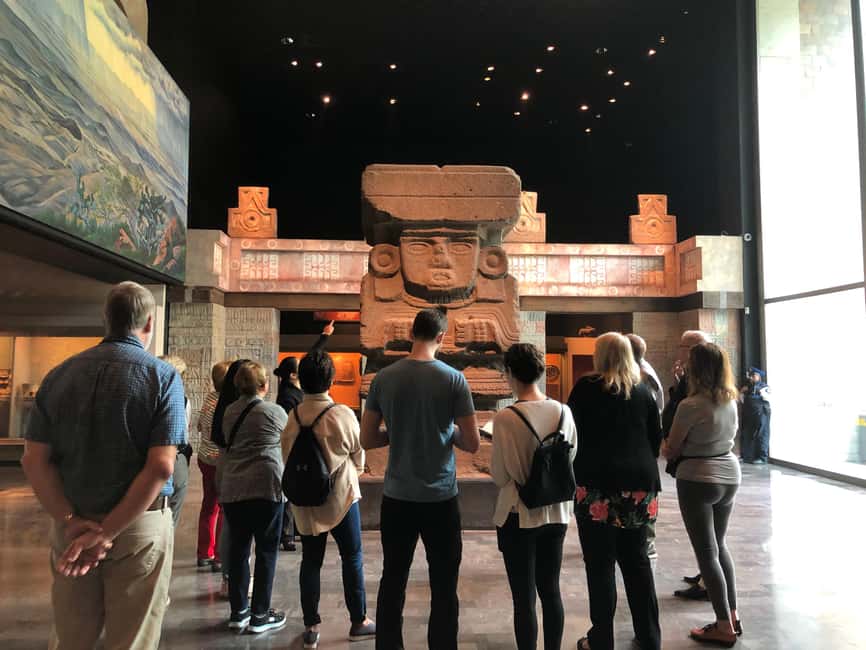
The best thing about this Anthropology Museum tour is its clear story. Instead of sending you from one gallery to another with a pile of dates, the historian connects symbols, farming, trade, writing, ritual, and art across Mesoamerica. The Sun Stone, an Olmec colossal head, Teotihuacán murals, and Pakal’s tomb replica become part of one long conversation.
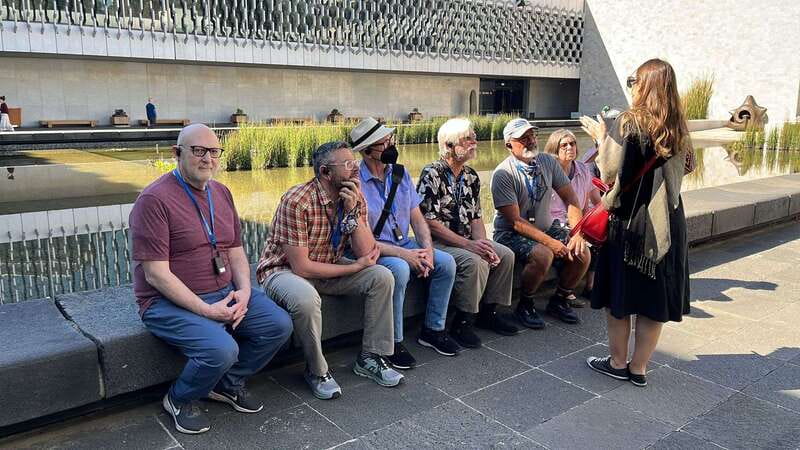
I like the way the tour gives equal weight to famous objects and everyday skills, such as weaving, pigment making, and the many uses of agave. I also like the small-group format, limited to 10 people, and the guides Natalia and Hector, who are praised for clear English, humor, strong teaching, and a talent for answering questions.
The main drawback is simple: three hours is not enough for a museum this large. Some visits have run well beyond the planned time, so do not schedule a tight appointment afterward. At $175 per person, this is a serious spend, but it can be good value if you want context rather than a quick look at the headline objects.
Key points to know before booking
- The tour links several civilizations: Olmec, Teotihuacán, Mexica, and Maya objects are explained as part of a connected Mesoamerican world.
- The famous Aztec Calendar has a correction: You will learn why the Sun Stone is not really a calendar and what it was made to express.
- Agave gets proper attention: Fibers, tools, household objects, spinning, weaving, and natural dyes show how much this plant mattered.
- Teotihuacán is presented as multicultural: The city is explored as a large center shaped by many peoples, not as the work of one simple group.
- Maya writing has a gripping story: Colonial records, missing manuscripts, and a Russian soldier’s work after World War II all form part of the tale.
- You meet at the museum itself: Find your guide in the main lobby near the ticket booth, looking for the WALK MEXICO logo.
Why a historian changes the museum visit
Mexico City’s National Museum of Anthropology is easy to admire and easy to misunderstand. Its galleries cover an enormous stretch of time and a wide area of Mesoamerica. Without help, you can see a colossal head, a jade mask, a painted vessel, and a model of Tenochtitlán, yet miss the links between them.
This tour gives you a working map. You learn that Mesoamerica was not one empire or one people. It was a broad cultural region defined by shared customs, languages, crops, technologies, and ideas about the universe. Those connections help you read the displays instead of simply collecting photographs.
The guides are central to the experience. Natalia is an art historian with advanced academic training, and her approach combines images, stories, and close looking at the objects. Hector, a former college professor, is praised for his lively delivery, strong voice, and ability to handle difficult questions without losing the group.
That teaching style matters here. A guide can tell you what an object is, but a good historian also explains why its shape, material, position, or myth mattered. The difference is the gap between seeing a museum and understanding it.
More City Tours in Mexico City
- Mexico City: Teotihuacan, Tlatelolco & Guadalupe Shrine Tour
★ 4.6 · 3,773 reviews - Teotihuacan Hot Air Balloon Flight from Mexico City / Volare
★ 5.0 · 3,262 reviews - Teotihuacan Private Tour from Mexico City
★ 5.0 · 1,890 reviews
Starting with architecture and the famous fountain
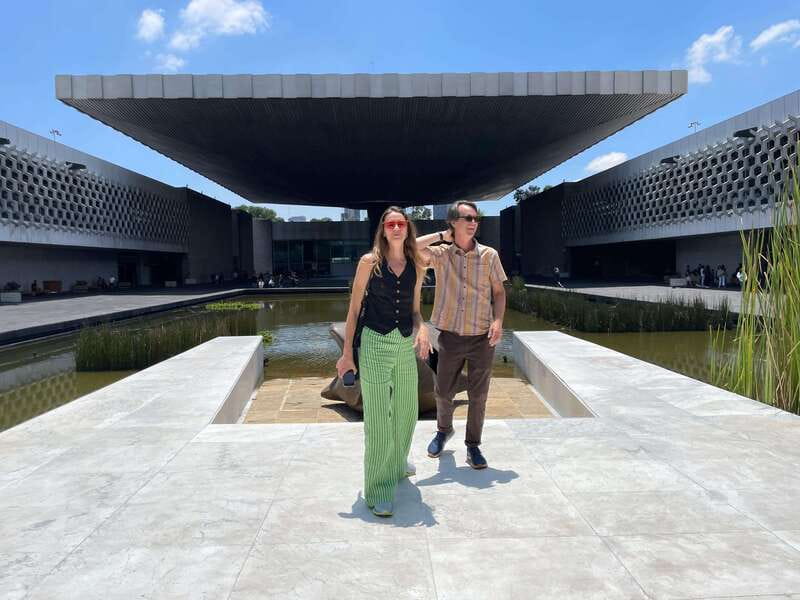
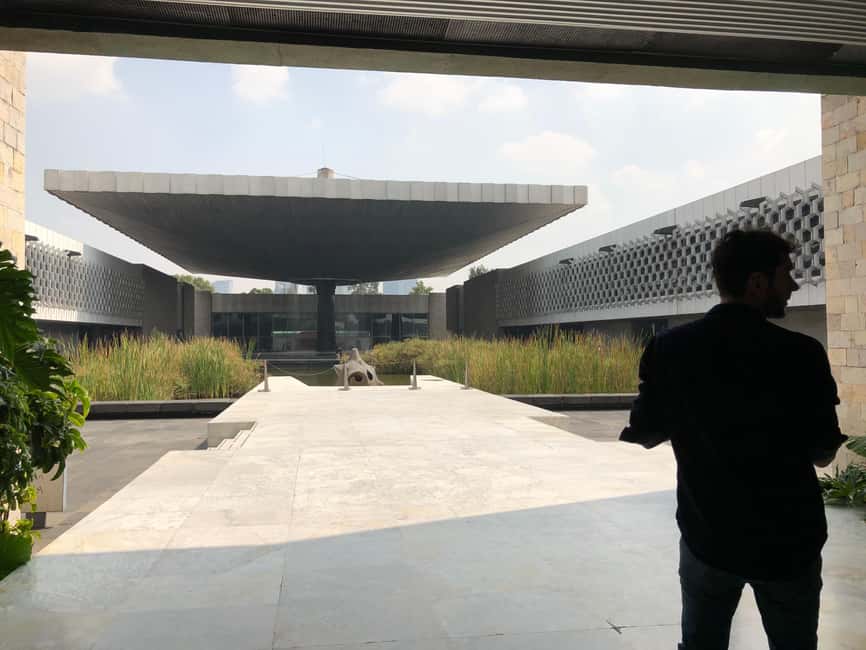
The visit begins with the museum itself. Before the ancient objects take over, you learn how architects and artists worked together to create a modern building that refers to Mesoamerican forms and ideas.
This opening is useful because the museum is not a neutral box. Murals, monumental replicas, symbolic details, and the arrangement of its spaces all shape how Mexico’s past is presented. You get an introduction to the modern decision to honor Indigenous cultures through architecture, not only through objects in glass cases.
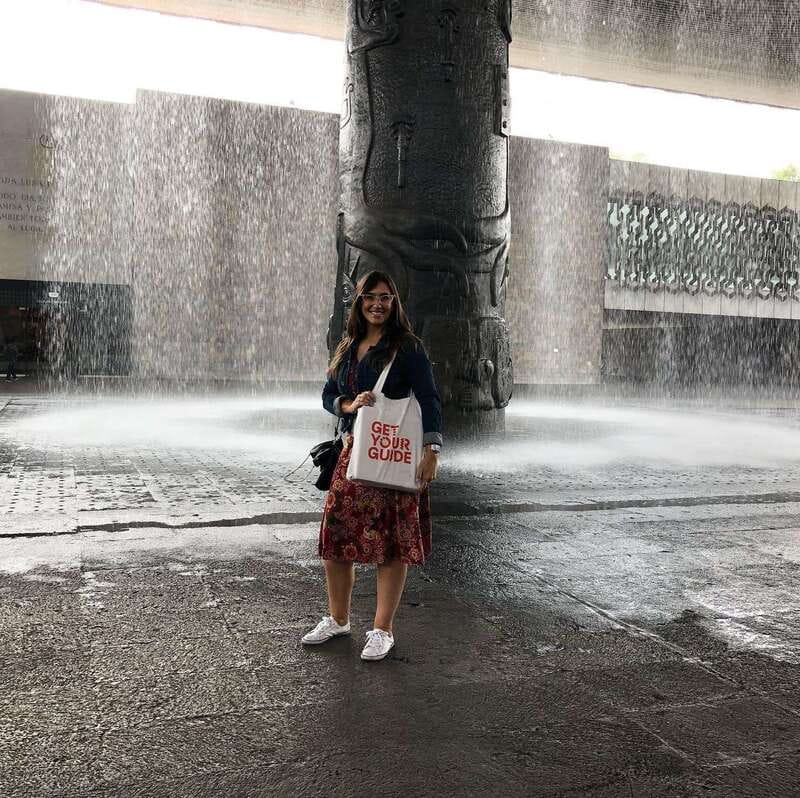
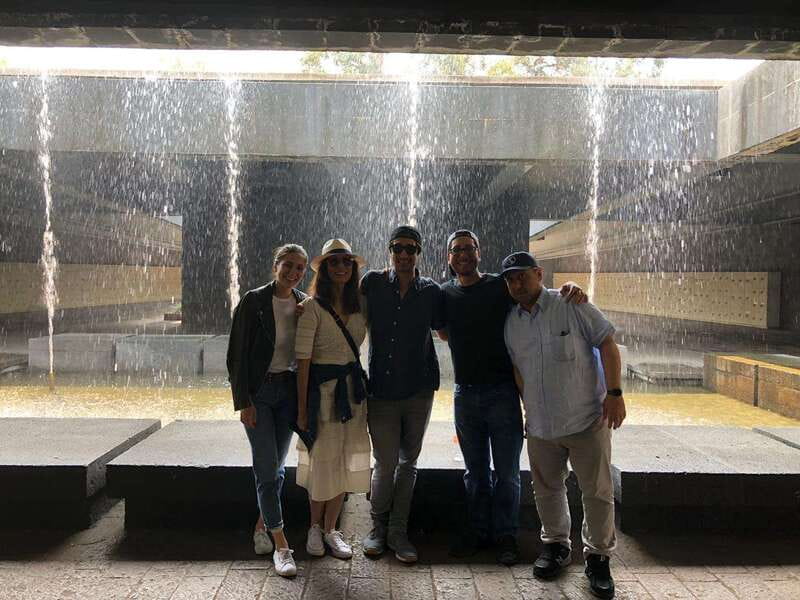
Then you step into the courtyard to see the great water feature. The fountain is one of the museum’s most memorable sights, and the guide explains its symbolism rather than treating it as a quick photo stop.
This early section also helps with orientation. You begin to see the museum as a designed argument: many cultures, many regions, and many centuries brought together under one roof.
What Mesoamerica means, and why the term helps
The Mesoamerica section introduces the definition associated with Paul Kirchhoff. This is not just a vocabulary lesson. It gives you a way to understand why societies separated by distance could still share recognizable habits and beliefs.
The guide points to common agricultural systems, languages, cosmological ideas, and cultural practices. You start to see that exchange did not mean every society was the same. Instead, communities adapted shared ideas to local materials, landscapes, political systems, and artistic traditions.
I find this one of the most useful parts for first-time visitors. Many people arrive with a mental list of Maya, Mexica, Olmec, and Teotihuacán as separate subjects. The museum can reinforce that division if you walk alone. The tour keeps asking a better question: what moved between these societies, and how did each one change it?
That question continues through the rest of the visit.
Agave, textiles, and the practical side of ancient life
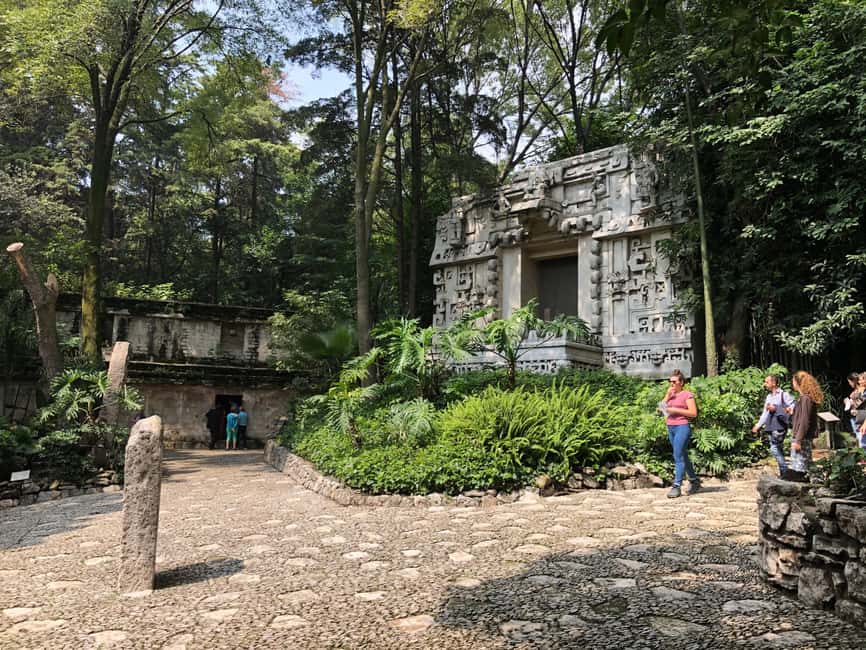
The textile displays bring the ancient world down to hand level. You examine looms, garments, and woven materials from across Mesoamerica while learning how people spun, dyed, and shaped fibers.
Agave receives special attention. It supplied fibers, tools, and household items, making it far more than a crop with one familiar use. The guide explains how natural pigments and organic dyes added color to cloth and ritual objects.
This section is a good counterweight to the giant stone monuments. Monumental sculpture gets the photographs, but textiles and household materials reveal skill, labor, and daily needs. They also show that technology is not limited to metal tools or large buildings. A loom, a fiber, and a dye can tell you a great deal about a society’s resources and social organization.
For families, this may be one of the easier sections to discuss. You can ask how a plant became a fiber, how color was made, or why certain garments were used for ceremony. The experience is not limited to people who already know ancient Mexican history.
More Museums in Mexico City
- CDMX: Xochimilco, Coyoacan, Frida Kahlo Museum & Murals Tour
★ 4.4 · 3,025 reviews - Chapultepec Castle & Anthropology Museum Tour
★ 4.5 · 1,348 reviews - Frida Kahlo VIP [Museum Tickets Included] Bike, Markets & Churros
★ 5.0 · 1,072 reviews - Anthropology Museum Guided Tour
★ 4.5 · 1,035 reviews
Cultural blending in clothing and ceremony
The tour next moves through ritual clothing and ceremonial objects. Here the subject is cultural blending, including the way contact and exchange shaped festivals, body decoration, and artistic identity.
This section helps prevent a common mistake: treating cultural traditions as sealed off from one another. Ideas traveled. Styles changed. Ritual practices were borrowed, reshaped, and given new meaning.
The displays are visually strong, but the guide’s explanation keeps them from becoming a parade of costumes. You learn to look for signs of status, ritual purpose, regional identity, and contact between communities.
The topic is also a reminder that culture is not frozen. The objects may be ancient, but the process they show is familiar. People adopt, alter, and combine ideas all the time.
The Olmec colossal head and the question of influence
The Olmec gallery brings you face to face with one of the museum’s major icons: a colossal head. Its scale alone makes it a powerful stop, but the real value is learning why Olmec culture is often called the mother culture of Mesoamerica.
The guide discusses the Olmec influence on later artistic styles and religious ideas. This does not mean every later society simply copied the Olmec. The useful point is that certain visual and religious concepts traveled, changed, and reappeared in new settings.
You will want time here. A giant stone head can seem self-explanatory, yet questions about how it was made, what it represented, and how its influence is understood require more than a quick caption.
This is where an art historian can add real value. The tour encourages you to read the face, proportions, material, and scale as choices, not just as decoration.
Mexica engineering, Templo Mayor, and the Sun Stone
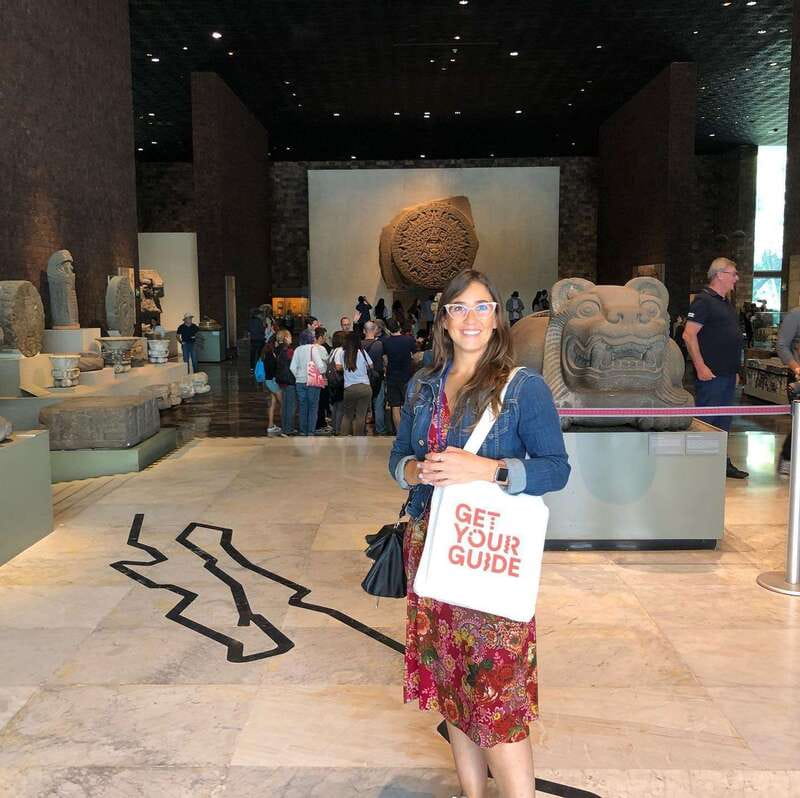
The Mexica gallery is likely to be the most familiar section for many people, but it still corrects several popular misconceptions.
The famous Sun Stone is often called the Aztec Calendar. The guide explains its proper name and meaning, showing why the object is more than a device for counting days. Its imagery expresses Mexica ideas about time, gods, sacrifice, and the structure of the universe.
That explanation makes the stone easier to read. Without it, the dense carving can look like an impressive puzzle. With it, you have a set of ideas to follow through the symbols.
The gallery also explores Templo Mayor, the great Mexica ceremonial center. A scale model shows how the ancient city lies below modern colonial Mexico City. The model is especially helpful because the present-day city can hide the old one almost completely.
You also learn how the Mexica built and managed their city with chinampas, artificial islands, bridges, aqueducts, and a complex hydraulic system. This part broadens the picture of Tenochtitlán. It was not only a place of temples and warriors. It depended on food production, water control, transport, and careful urban planning.
For me, this is one of the strongest reasons to take the guided route. The objects are impressive, but the city model and engineering story help you picture how the society worked.
Teotihuacán as a city of many peoples
The Teotihuacán gallery moves the story into one of Mesoamerica’s most important urban centers. The guide presents it as a multicultural metropolis inhabited by people from different backgrounds.
That framing is valuable. Teotihuacán is sometimes reduced to its pyramids and mystery. Here you look at the city’s growth, its possible connections with other communities, and the theories about its decline.
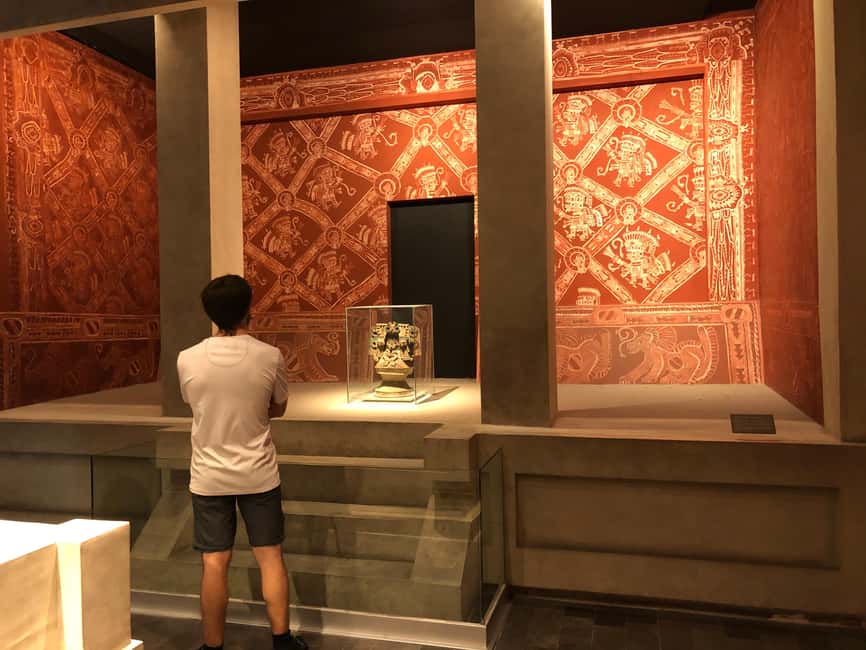
The gallery includes refined ceramics, obsidian objects, mural fragments, and colorful architectural replicas. These details show both technical skill and a strong concern with design. Obsidian, in particular, points to the importance of material control and long-distance exchange.
You also hear that the city’s origins and decline remain debated. A good tour does not pretend every question has one final answer. Instead, it explains what scholars think and where uncertainty remains.
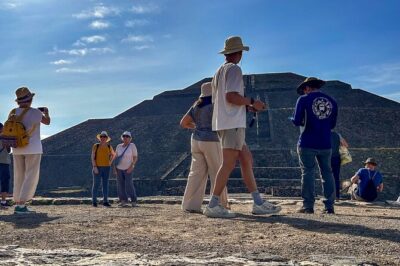
This can be one of the most rewarding stops for anyone who has visited the pyramids at Teotihuacán. The outdoor site gives you scale. The museum gives you objects, color, and social context.
Maya writing, portraits, jade, and Pakal’s tomb
The final major gallery focuses on the Maya. You see ceramic portraits, painted vessels, and jade carvings, then hear how Maya writing was deciphered.
The story stretches from colonial archives and lost manuscripts to the work of a Russian soldier after World War II. It is a reminder that decipherment was not a single flash of genius. It took surviving evidence, old records, competing ideas, and years of patient work.
This explanation gives written symbols human stakes. A carved sign is not merely an ornament. It can record names, titles, events, and beliefs, allowing a society to speak across centuries.
The tour ends at a replica of Pakal’s tomb, one of the museum’s most dramatic spaces. The replica gives you a sense of the original burial setting and lets the guide explain why Pakal remains such an important figure.
There is also a remarkable modern chapter: on Christmas Eve in 1985, thieves stole Pakal’s mask along with many other treasures from the museum. That story adds an unexpected turn near the end of the visit. The museum is not only about ancient achievements. It also has its own history of preservation, loss, and recovery.
How the three-hour format works in real life
The scheduled duration is three hours, but you should treat that as a guide rather than a hard guarantee. One visit lasted close to four and a half hours, and another highlights tour ran a little over three hours.
That extra time can be a benefit if you enjoy asking questions. It can also create problems if you have a lunch reservation, museum booking, or evening event immediately afterward. I would leave a generous gap.
The group is limited to 10 people, which keeps the experience more personal than a large coach-style tour. Headsets are available for large groups, though the small-group size should make it easier to hear and speak with the guide.
You meet at the Anthropology Museum’s main lobby, near the ticket booth. Look for the guide holding the WALK MEXICO project logo. Transportation, food, and drinks are not included, so plan your route to the museum separately.
The ticket is included, and the tour is offered in English or Spanish. It is wheelchair accessible. Children may attend, but an adult must accompany them.
Is $175 per person fair value?
At $175 per person, this is not a casual add-on. You are paying for a three-hour guided visit, museum admission, and a historian with graduate academic training.
The price makes the most sense if you care about interpretation. A solo museum visit costs less, but you will need to build the connections yourself. Since the museum is large and the galleries cover many cultures, the guide can save you from spending your limited time on objects that do not match your interests.
It is also a better deal for people who ask questions. Natalia’s use of slides and visual aids has helped make difficult subjects easier to follow, while Hector’s university teaching background suits visitors who want fuller explanations.
If you only want to see the Sun Stone and leave, the price is harder to justify. If you want to understand how Olmec ideas, Mexica engineering, Teotihuacán society, and Maya writing fit into a larger story, the cost is easier to defend.
You can also remain in the museum after the guided visit, giving you a chance to return to a favorite gallery or see sections the tour did not cover.
Who should book this museum tour?
I would choose this experience for a first visit to the museum, especially if you have only one day for Mexico City’s major cultural sights. It also suits history fans, art students, families with curious older children, and anyone who finds large museums tiring without a clear route.
The tour works well for English speakers. The guides have been praised for clear English, and the format allows questions instead of forcing you to follow a fixed lecture from a distance.
It may not suit you if you prefer slow, private looking at every object, or if you want to cover every room. Three hours gives you a strong route through major sections, not a complete survey of the building.
Book it if you want the museum to make sense. Skip it if your main goal is a brief independent visit and you are comfortable reading labels and deciding what matters on your own.
FAQ
Where does the tour meet?
You meet your guide in the Anthropology Museum’s main lobby near the ticket booth. The guide will have the WALK MEXICO project logo.
How long does the tour last?
The scheduled duration is three hours. Some visits have lasted longer, including one that ran close to four and a half hours, so leave extra time afterward.
What languages are available?
The tour is offered in English and Spanish.
Is the museum ticket included?
Yes. Museum admission is included in the tour price.
Is transportation included?
No. Transportation, pickup, and drop-off are not included.
How large is the group?
The tour is limited to 10 participants. Headsets are provided for large groups so you can hear the guide.
Is the tour wheelchair accessible?
Yes, the activity is wheelchair accessible.
Can children join the tour?
Yes, but an adult must always accompany children.
Should I book the tour if I want to stay longer at the museum?
Yes. You can stay in the museum for the rest of the day after the guided visit, giving you time to revisit favorite displays or explore galleries outside the main route.
What is the cancellation policy?
You can cancel up to 24 hours in advance for a full refund. You can also reserve now and pay later.
New on the Mexico City list
- Day of the Dead Tour in San Andres Míxquic From Mexico City★ 3.7 · 52 reviews
- Half-Day Tour to Teotihuacan Pyramids from Mexico City★ 5.0 · 53 reviews
- Xochimilco floating gardens, Coyoacan and UNAM murals★ 4.0 · 53 reviews
- Guided Tour of Coyoacan and Leon Trotsky Museum★ 5.0 · 53 reviews
- Gay Side of History through Plazas & Temples★ 4.5 · 53 reviews
- Flavors of Mexico City: A Tasty Urban Expedition★ 4.5 · 53 reviews
- Butterfly Monarch Tour from Mexico City★ 5.0 · 53 reviews
- From Mexico City: Cholula Pyramid & Puebla Small Group Tour★ 4.6 · 54 reviews
Mexico City Tours, compared.
Teotihuacan, Guadalupe Shrine & Tlatelolco Day Tour with Lunch
Read our review →
Xochimilco, Coyoacan and Frida Kahlo with Optional Lunch
Read our review →
Balloon flight + Breakfast in cave + Pyramids + Pick up CDMX.
Read our review →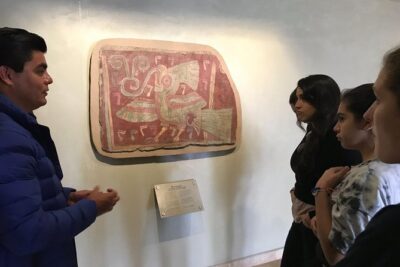
Teotihuacan pyramids morning or afternoon without tourist traps
Read our review →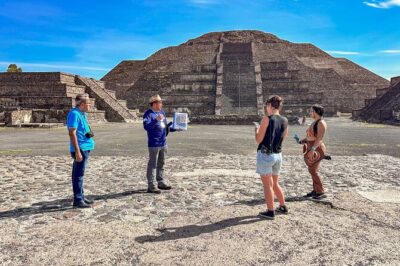
Teotihuacan Early Access Guided Tour with optional Lunch
Read our review →
Balloon flight + pick up in CDMX + Breakfast in Cave + Pyramids
Read our review →
Balloon Flight + Cave Breakfast + Pick Up from CDMX or We Fly
Read our review →
Teotihuacan, Tlatelolco & Guadalupe Shrine Tour
Read our review →Browse the lists this tour appears in