
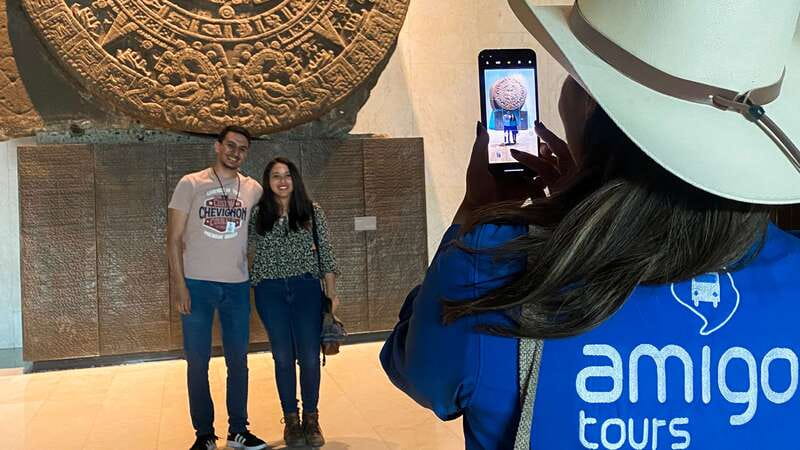
Reviewed · MEXICO CITY TOURS
Mexico City: Chapultepec Castle and Anthropology Museum Tour
Mexico City’s best history lesson comes in two parts: the National Museum of Anthropology explains the civilizations that shaped Mexico, while Chapultepec Castle shows a later chapter of conquest, empire, and national power. The pairing gives you a useful before-and-after view of the country.
I like the way a bilingual guide such as Alex, Lili, Antonio, Gio, or Leonardo can connect objects and events instead of leaving you to read endless Spanish-only labels. I also like the coffee and snack pause in Chapultepec Park, plus the castle’s marble stairways, murals, stained glass, and city views. The tradeoff is simple: five hours is not enough to see every room, and the day involves a good deal of walking, including an uphill stretch.
Key points to know before booking
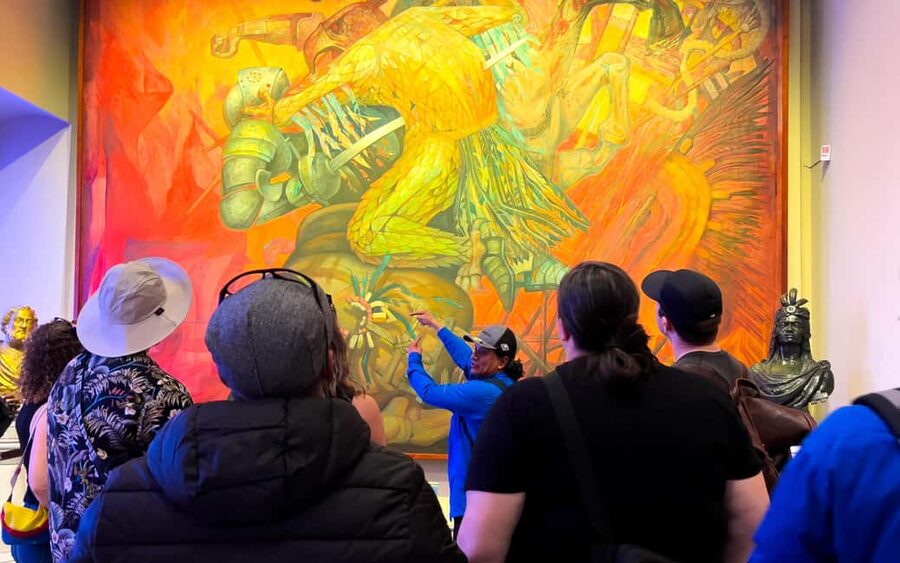
- Two major sights in one half-day: Start with pre-Hispanic Mexico at the Anthropology Museum, then move to Chapultepec Castle and the imperial era.
- A guide adds real value: Many displays have limited English explanation, so a bilingual guide helps you understand what you are seeing.
- The museum is enormous: You will see selected highlights, not every gallery. Plan a return visit if ancient Mexico is your main interest.
- Expect a walk through the park: The route includes about 10 minutes to the break area, a 20-minute park walk, and roughly 25 minutes on foot toward the castle.
- The castle requires an uphill approach: The pace can be managed, but comfortable shoes and a solid breakfast matter.
- Rain can change the plan: Chapultepec Castle may close for security reasons on rainy days, with a partial refund if that happens.
Why these two sites belong together
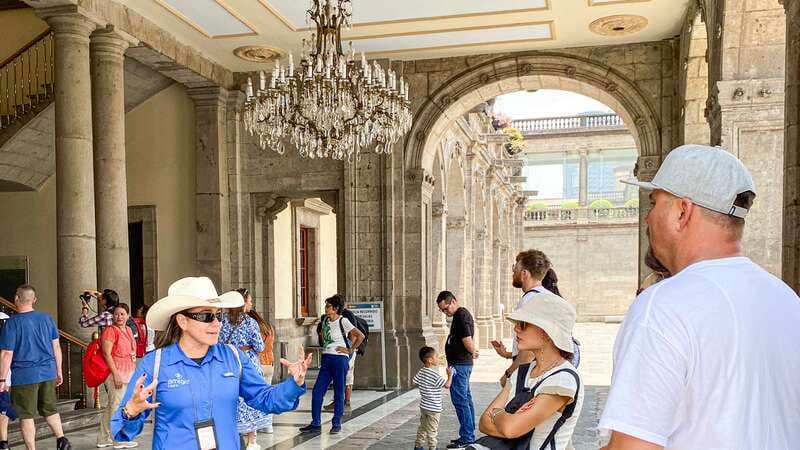
The National Museum of Anthropology and Chapultepec Castle tell very different stories, but that contrast is the point. At the museum, you encounter the Maya, Toltec, Aztec, and other peoples whose beliefs, art, cities, and political systems shaped Mesoamerica.
At the castle, the focus shifts to Mexico’s later centuries. You see the building associated with Emperor Maximilian I of Habsburg, European royal decoration, military and political history, and the complicated relationship between Mexico and foreign powers.
I find this combination more useful than visiting either sight alone. The museum gives you the long cultural background. The castle helps explain how Mexico’s later rulers tried to present themselves, and how European styles were brought into Mexican public life.
The order begins at the Anthropology Museum and finishes at the castle. That arrangement works well if you want to build toward the hilltop views and grand rooms. It also means you should not expect to finish back where you started, so keep your next appointment flexible.
More City Tours in Mexico City
- Mexico City: Teotihuacan, Tlatelolco & Guadalupe Shrine Tour
★ 4.6 · 3,773 reviews - Teotihuacan Hot Air Balloon Flight from Mexico City / Volare
★ 5.0 · 3,262 reviews - Teotihuacan Private Tour from Mexico City
★ 5.0 · 1,890 reviews
Beginning with Mexico’s ancient cultures
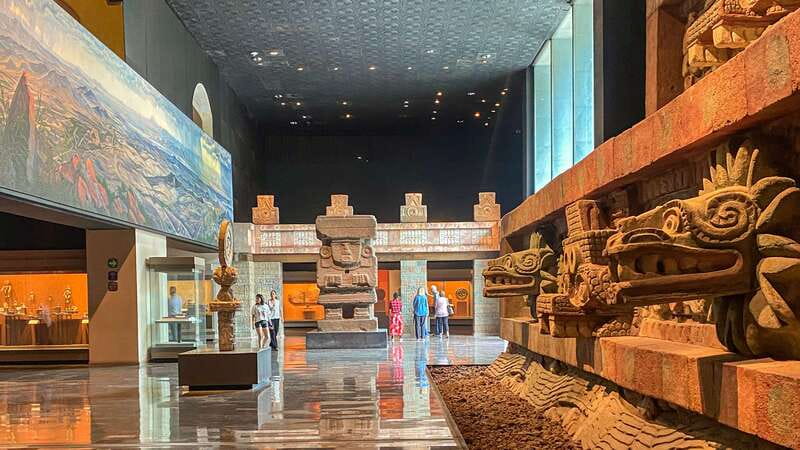
The National Museum of Anthropology is the largest and most demanding part of the visit. The tour allows about 100 minutes inside, which is enough for a guided introduction and major highlights, but not enough for a full reading of the museum.
That limitation is not a flaw in the tour so much as a fact of the building. The museum contains far more material than anyone can absorb in one short visit. Without a plan, you might spend too long on the first galleries and then rush through the sections you most wanted to see.
A guide helps you make choices. You might focus on the Aztec and Maya collections, as many guests do, or move through a broader selection of rooms covering the Toltec and other ethnic groups. Your guide can explain why an object matters, point out links between cultures, and keep the story moving when the building begins to feel overwhelming.
The need for a bilingual guide is especially clear here. Some signs and exhibit descriptions are not translated into English, so an English-speaking visitor can miss useful context. A good guide fills that gap without forcing you to stop and translate every label.
The strongest guides create a clear structure rather than simply listing dates and names. Alex has been praised for answering questions and supplying context. Gio is noted for making the museum manageable and giving artifacts more background. Nadia is described as concise and engaging, while Antonio is praised for helping visitors focus on meaningful sections.
Those names are not a guarantee of your assigned guide, but they give you an idea of the standard people hope for. Other guides mentioned by name include Leonardo, Lili, Alan, Hector, Roberto, Alicia, Jacqueline, Sal, David, Francisco, Jacky, Tona, Eddy, and Ligia. The recurring strength is a personal, conversational approach to Mexican history.
A short break in Chapultepec Park
After the museum, the group walks toward Avenida Grutas for a break of about 20 minutes. The planned pause is listed for coffee, but you may also find simple snacks and drinks nearby.
This is a useful reset between two serious museums. You have time to sit, get coffee or juice, and catch your breath before continuing through Chapultepec Park. A few visitors have enjoyed buying mango, churros, or elote from vendors outside the museum, though food is not included in the tour.
The break is also the point where the physical side of the tour becomes clearer. The full route includes walking between the museums and through the park. One section takes about 20 minutes, followed by another walk of around 25 minutes toward Chapultepec Castle.
The schedule does not include a long lunch stop. The general description refers to a lunch break after the castle, while the detailed route lists a short coffee break. I would treat this as a snack pause rather than a proper meal and eat a good breakfast before you arrive.
A few people may want another rest or restroom stop. The day is active, and the museum visits themselves involve standing and walking. If you have a tight schedule or limited stamina, ask about the pace at the start and keep water available for the route. Water restrictions inside the museums have been a concern for some people, so do not count on carrying a bottle through every gallery.
Walking uphill to Chapultepec Castle
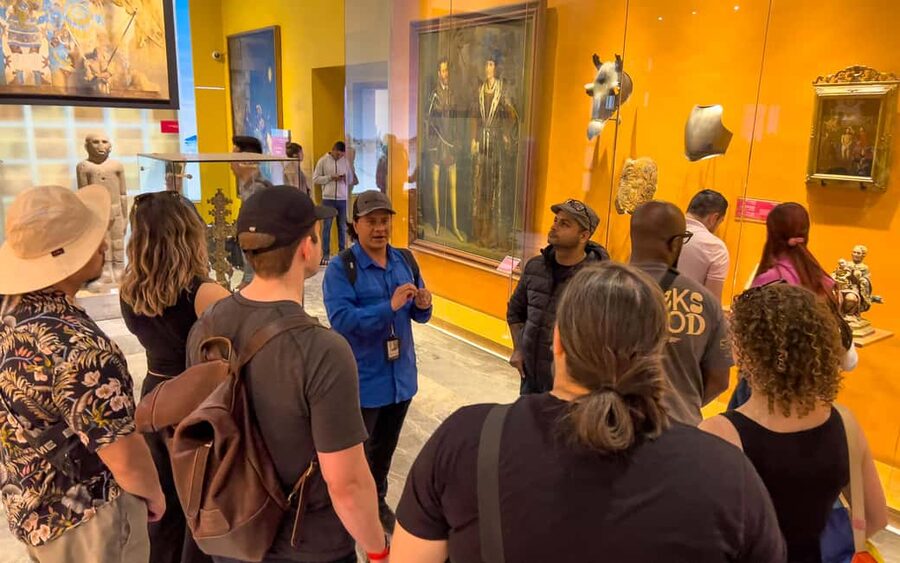
Chapultepec Castle sits on Chapultepec Hill, a location once sacred to the Aztecs. The approach through the park is part of the experience, but it is not flat. You will walk uphill on the castle path, so comfortable shoes are more important here than fashionable ones.
The climb is manageable for many people, especially when the guide sets a steady pace. Alex, for example, has been praised for slowing down and talking along the way, making the climb feel less tiring. Still, allow for the fact that this is not a coach-based sightseeing tour. You move between the sites on foot.
The park itself gives you a change of mood after the indoor museum. You are no longer concentrating on display cases. Instead, you are crossing a large city park toward a hilltop building that has played several roles in Mexican history.
If you have children, older family members, or anyone recovering from illness, this is the part to consider most carefully. The guide can help with pacing, but the route remains a walk with an uphill finish. The experience suits people who enjoy active sightseeing more than those looking for a slow, seated museum visit.
More Museums in Mexico City
- CDMX: Xochimilco, Coyoacan, Frida Kahlo Museum & Murals Tour
★ 4.4 · 3,025 reviews - Chapultepec Castle & Anthropology Museum Tour
★ 4.5 · 1,348 reviews - Frida Kahlo VIP [Museum Tickets Included] Bike, Markets & Churros
★ 5.0 · 1,072 reviews - Anthropology Museum Guided Tour
★ 4.5 · 1,035 reviews
Inside the former imperial residence
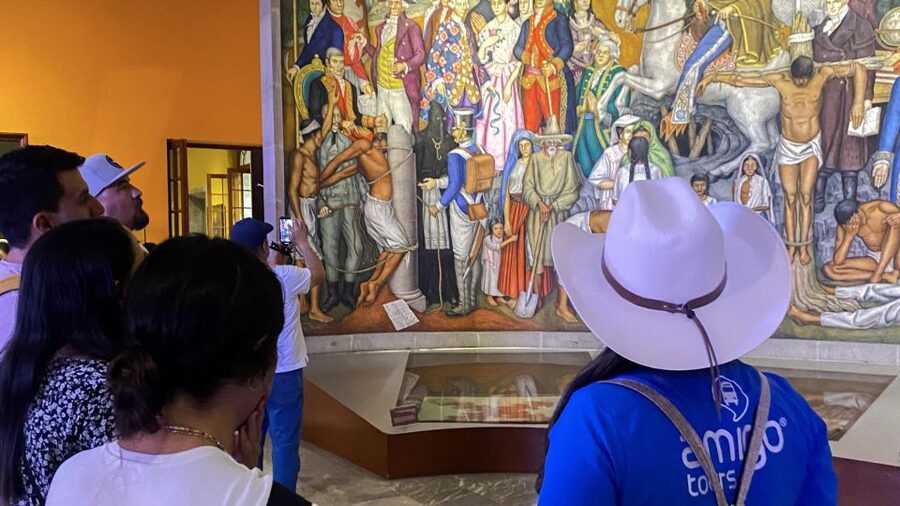
Chapultepec Castle, also called the National Museum of History, is the visual reward at the end of the route. Its rooms feature classical European ornament, marble stairways, sculptures, and busts of major figures from Mexican and Spanish colonial history.
The building’s European style makes sense in the context of Maximilian I of Habsburg, the Mexican emperor whose residence was here. The castle lets you examine how power was presented through architecture, decoration, portraits, and grand ceremonial spaces.
Look for the contrast between the setting and the political story. The building has the feel of a royal residence, yet the history around Maximilian is tied to Mexico’s struggle over foreign intervention and national sovereignty. That tension gives the castle more substance than a quick look at an elegant building might suggest.
You may encounter sculptures or busts connected with figures such as the Aztec emperor Cuauhtémoc and Hernán Cortés. Seeing those names represented within the same historic complex gives your guide plenty to explain about competing versions of Mexico’s past.
The castle visit lasts about 100 minutes. That is enough time for the main rooms, central features, and views, but you may want longer for the gardens and details. One visitor lost garden time after waiting for late arrivals and needing to leave for another tour. That is a reminder to avoid scheduling something immediately after this experience.
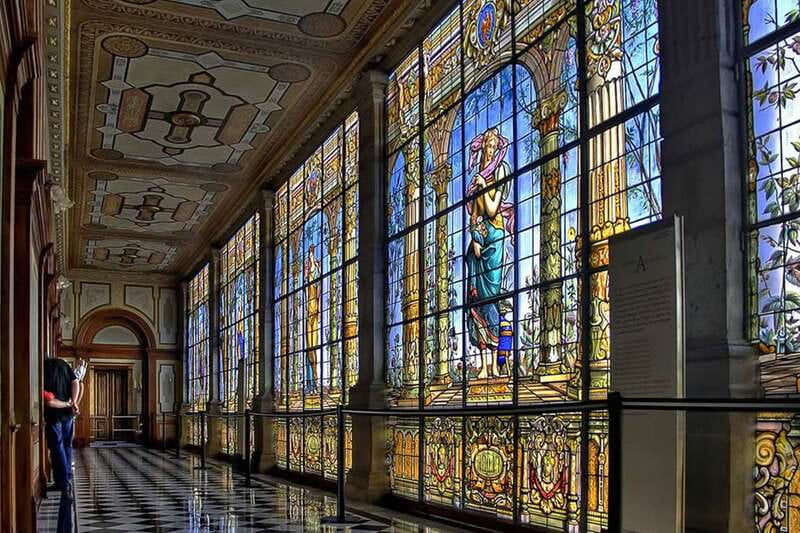
The views from the hill are one of the castle’s strongest features. You get several perspectives over Mexico City, adding a sense of scale after hours spent studying objects and rooms. Stained glass and large murals are also among the details that reward a slower look.
The tour finishes at Chapultepec Castle, which is convenient if you plan to stay in the area or continue sightseeing nearby. It is less convenient if you need to return to the Anthropology Museum, so check your meeting and finishing points before booking other plans.
What the guide changes
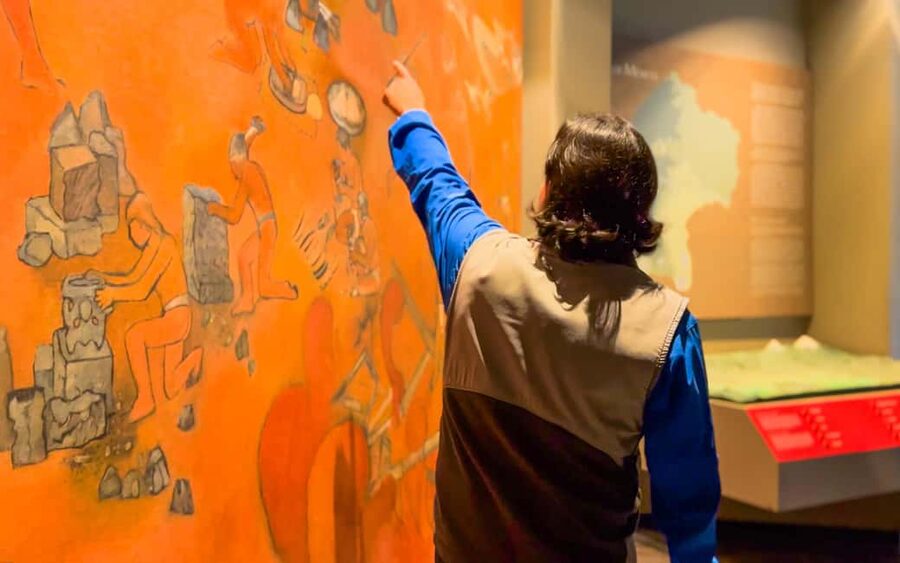
This tour is most valuable when your guide does more than point out famous objects. The best experience comes from explanations that connect a sculpture, mural, or room to a larger question: who built it, who used it, what it says about Mexican identity, and how later generations remembered it.
The guides praised most warmly include Leonardo for his passion and clear directions, Lili for her patience and broad command of Mexican history, Alex for his energy and careful pacing, and Antonio for his ability to make both sites understandable. Ligia is noted for weaving culture and historical context into an easy conversation. Jacqueline has been especially appreciated on private tours for taking time with questions and photographs.
A guide can also make the day more comfortable in small ways. Several guides have helped take photos, kept groups together, handled tickets, and answered questions that the signs do not address. For a solo visitor, that practical help can be welcome.
The quality may vary from one guide to another. One person felt the guide was stronger at the Anthropology Museum than at the castle. Another found the guide a little impatient, while a separate family felt uncomfortable about bringing children. These are not reasons to reject the tour, but they are good reminders that a group experience depends on the individual guide and the group’s pace.
Private groups are available. If you care about spending longer with a favorite gallery, asking many questions, traveling with children, or taking frequent photographs, a private option may offer better control. A standard group tour is likely the better value if your main goal is an efficient introduction to both landmarks.
Is $47 a fair price?
At $47 per person, the tour includes admission to both Chapultepec Castle and the National Museum of Anthropology, along with a live guide in English or Spanish. That makes the price reasonable if you value help with navigation and interpretation.
The museum alone can consume a full day, and the castle deserves serious attention too. You are not paying simply to enter two buildings. You are paying for a plan that selects important sections, explains difficult material, and moves you between the sites without requiring you to work out the route yourself.
The value is strongest for first-time visitors to Mexico City, people who do not speak Spanish, and anyone who wants a historical framework early in a trip. It is less appealing if you prefer to read every label, set your own pace, or spend several hours in one museum.
Remember that food is not listed as included. Bring money for coffee or snacks during the break, and plan your main meal separately. The five-hour duration also means the tour occupies a substantial part of your day, though the two major admissions and guide service make it a practical use of that time.
Free cancellation up to 24 hours before the start and the option to reserve now and pay later add useful flexibility. Chapultepec Castle may close without warning on rainy days for security reasons. If that happens, a partial refund is provided, but you should not book a nonrefundable activity immediately afterward.
Who will enjoy this tour most?

I would choose this experience if you want a clear introduction to Mexico City’s past but do not want to spend your first museum day planning routes and reading every wall label.
It suits:
- First-time visitors who want both pre-Hispanic and imperial history
- English or Spanish speakers who want a live bilingual guide
- Solo visitors who appreciate help with photographs and navigation
- Families and couples comfortable with several hours of walking
- History fans who prefer interpretation to independent browsing
- Visitors who want an efficient overview before returning to the museum alone
I would think twice if you need frequent seated breaks, dislike uphill walking, or want a slow visit with time for every gallery. The museum is simply too large for a full treatment in 100 minutes. Treat this as an expertly guided introduction, not the final word on either site.
Practical tips for a smoother day
Eat before you arrive. The scheduled break is short, and it is better used for coffee, juice, or a snack than as your only meal.
Wear shoes suited to pavement, park paths, and the uphill route to the castle. The day is not extreme, but it is active.
Keep your schedule open after the tour. The castle gardens and rooms can hold your attention, and late arrivals or group timing can reduce the time available at the end.
Ask questions early. Guides such as Alex, Antonio, Gio, Lili, and Leonardo are praised for handling questions, but a five-hour schedule moves quickly. If you are especially interested in the Aztecs, Maya, Maximilian, murals, or military history, say so at the beginning.
If you are traveling with children, explain your needs to the guide at the start. The experience can work for families, but it asks children to walk, listen, and stay with the group for much of the day.
Plan for selected highlights at the Anthropology Museum. If you want to see more, return later with the admission information provided for your visit and explore independently at a slower pace.
Should you book it?
Book this tour if you want the two most important history stops in Chapultepec explained in one organized outing. The strongest reason to go is the guide: a good one turns a huge museum and a complex castle into a story you can follow.
The main compromises are the brisk museum schedule, the lack of a full meal break, and the amount of walking. At $47, I consider it a good buy for first-time visitors who want context and direction. If you already know Mexico City well or prefer complete freedom, visit independently and give the Anthropology Museum a full day. For most people seeking a strong first look at Mexico’s past, this tour is a sensible choice.
FAQ
How long does the tour last?
The tour lasts five hours. The scheduled visits at the Anthropology Museum and Chapultepec Castle are each about 100 minutes, with walking and a short break between them.
Which languages are available?
The live guide is available in English or Spanish.
Where does the tour begin?
The stated starting location is the Museo Nacional de Antropología. The exact meeting point may vary depending on the option booked, so check your confirmation carefully.
Where does the tour finish?
The tour finishes at Chapultepec Castle.
Is lunch included?
Food is not listed among the inclusions. The route includes a roughly 20-minute break for coffee, and you can plan to buy snacks during that pause.
Is admission included?
Yes. Entrance to Chapultepec Castle and the National Museum of Anthropology is included, along with the guide.
What happens if Chapultepec Castle closes because of rain?
For security reasons, the castle may close without notice on rainy days. If it closes, a partial refund is provided.
Can I cancel the booking?
You can cancel up to 24 hours in advance for a full refund. The activity also offers a reserve-now, pay-later option.
New on the Mexico City list
- Day of the Dead Tour in San Andres Míxquic From Mexico City★ 3.7 · 52 reviews
- Half-Day Tour to Teotihuacan Pyramids from Mexico City★ 5.0 · 53 reviews
- Xochimilco floating gardens, Coyoacan and UNAM murals★ 4.0 · 53 reviews
- Guided Tour of Coyoacan and Leon Trotsky Museum★ 5.0 · 53 reviews
- Gay Side of History through Plazas & Temples★ 4.5 · 53 reviews
- Flavors of Mexico City: A Tasty Urban Expedition★ 4.5 · 53 reviews
- Butterfly Monarch Tour from Mexico City★ 5.0 · 53 reviews
- From Mexico City: Cholula Pyramid & Puebla Small Group Tour★ 4.6 · 54 reviews
Mexico City Tours, compared.
Teotihuacan, Guadalupe Shrine & Tlatelolco Day Tour with Lunch
Read our review →
Xochimilco, Coyoacan and Frida Kahlo with Optional Lunch
Read our review →
Balloon flight + Breakfast in cave + Pyramids + Pick up CDMX.
Read our review →
Teotihuacan pyramids morning or afternoon without tourist traps
Read our review →
Teotihuacan Early Access Guided Tour with optional Lunch
Read our review →
Balloon flight + pick up in CDMX + Breakfast in Cave + Pyramids
Read our review →
Balloon Flight + Cave Breakfast + Pick Up from CDMX or We Fly
Read our review →
Teotihuacan, Tlatelolco & Guadalupe Shrine Tour
Read our review →Browse the lists this tour appears in