
Reviewed · MEXICO CITY TOURS
Private tour with Archaeologist at National Anthropology Museum
The best reason to book this tour is simple: Mexico City’s National Anthropology Museum is enormous, and archaeologist David Huesca, known as Pakalito or Paquito, gives you a clear path through it. Instead of treating the museum as a parade of famous Aztec and Maya objects, he explains the many cultures, regions, and time periods that shaped Mesoamerica.
I like the private format, which lets David adjust the pace for adults, children, or serious history fans. I also like his use of images and historical documents on an iPad, especially when an artifact needs more context than the museum label can provide. The main drawback is that three hours can only cover selected galleries, so you will need another visit if you want to study everything at length.
Key points to know before booking
- David Huesca leads the tour: He is an archaeologist and the guide known as Pakalito, Paquito, or the Young Archaeologist.
- The museum is treated as a story, not a checklist: You learn about religion, politics, trade, architecture, and daily life across several Mesoamerican cultures.
- It is a private English-language experience: Only your own group participates, with room for questions and adjustments.
- Digital visual aids add useful context: David uses images, illustrations, and historical documents on an iPad.
- The three-hour route focuses on major highlights: It helps you make sense of a huge collection, but it is not a full study of every gallery.
- The price is $98 per person: Admission and guide service are included, while food and drinks are not.
Why this museum needs a guide
Mexico City’s National Anthropology Museum is one of those places that can be both thrilling and tiring. Its collection covers the Indigenous cultures of Mexico across long stretches of time, with major galleries devoted to civilizations such as Teotihuacan, the Mexica, the Maya, Oaxaca’s cultures, and other peoples often left out of a first-time introduction to Mexico.
The trouble is not a lack of information. It is the sheer amount of it. You can walk from a monumental stone sculpture to a display about religious practice, then into a room about political power, without always seeing how the pieces connect.
That is where this tour earns its keep. David’s stated goal is to show you that pre-Hispanic Mexico extends well beyond the Maya and Aztecs. He places objects within a wider story of changing societies, regional customs, belief systems, economies, and built environments.
I especially like that approach for a first visit. You do not simply hear the name of an object and move on. You are encouraged to ask what it meant, who used it, and what it reveals about the people who made it. That turns the museum from a storehouse of impressive objects into a place where you can follow ideas across time.
More Museums in Mexico City
- CDMX: Xochimilco, Coyoacan, Frida Kahlo Museum & Murals Tour
★ 4.4 · 3,025 reviews - Chapultepec Castle & Anthropology Museum Tour
★ 4.5 · 1,348 reviews - Frida Kahlo VIP [Museum Tickets Included] Bike, Markets & Churros
★ 5.0 · 1,072 reviews
Meeting David Huesca, the Young Archaeologist
David Huesca presents himself as A Young Archaeologist, and the nickname fits the tone of the experience. He brings formal archaeological training, but his style is described as warm, funny, patient, and energetic rather than stiff or academic.
That balance matters. Archaeology can become hard going when every explanation is loaded with dates and technical terms. David’s strength is taking difficult material and making it understandable to people with different backgrounds. Families with young children, adults who are new to Mexican history, and history fans can all receive a different level of explanation during the same private tour.
He also answers questions directly and gives you time to process what you are seeing. That is easier in a private group than in a large scheduled tour, where the guide must keep moving and the subject often gets reduced to a short speech.
The visual material on his iPad is another practical touch. An image, reconstruction, illustration, or historical document can help explain an object in a way that a display label cannot. You might see how a building once looked, compare a symbol with another example, or follow a timeline while standing in front of the actual artifact.
If you have a particular interest, tell David before the tour. The experience can be adapted to your group, and the guide is prepared to focus more closely on subjects that matter to you.
Following Mesoamerica beyond the usual names
Many first-time visitors arrive knowing a little about the Aztecs and perhaps the Maya. Those are important parts of the story, but they are not the whole story. This tour deliberately widens the frame.
You can expect to discuss the major cultures represented in the museum, including their regions and changes over time. The exact route depends on your group and the guide’s judgment, but the purpose is to visit important exhibition halls and connect their major works.
The themes are broad:
- Religion and the meanings attached to symbols and rituals
- Political power and the organization of society
- Trade and economic life
- Architecture and urban planning
- Traditions and regional identity
- The ways cultures changed, interacted, and continued over time
This is valuable because a museum object rarely explains itself. A carved figure might be beautiful, but its meaning becomes more useful when you understand the belief system around it. A monumental sculpture says more when you know something about the ruler, city, ceremony, or public setting connected to it.
David’s method also helps you compare cultures without flattening them into one general idea of ancient Mexico. The Maya, Mexica, Teotihuacanos, and other peoples developed distinct traditions. Seeing those differences is one of the main rewards of the tour.
Three hours inside the National Anthropology Museum
The tour lasts about three hours and includes museum admission. That is a sensible length for a guided overview. You have enough time to build a framework, see major works, ask questions, and take sitting breaks when needed, without trying to absorb the entire institution in one exhausting push.
The museum is large enough that an unplanned visit can leave you feeling as if you saw plenty but remembered little. David helps you use your time more efficiently by selecting major points and explaining why they matter.
That does not mean you will inspect every object or read every label. You should think of the tour as a guided first pass. Afterward, you may want to return independently to galleries that caught your interest.
Several practical details make the pace manageable. The tour is private, so your group does not have to match the speed of strangers. David has also been described as offering breaks when needed, which is useful for families and anyone who finds long museum visits tiring.
A moderate level of physical fitness is recommended. You should be comfortable spending several hours moving through museum spaces and standing for explanations. Wear sensible shoes and keep your schedule realistic, especially if you plan another major attraction immediately afterward.
More museums around Mexico City:
- Anthropology Museum Guided Tour
★ 4.5 · 1,035 reviews - Frida Kahlo VIP [Museum Tickets Included] Walk, Markets & Churros
★ 5.0 · 982 reviews - EXCLUSIVE TOUR Frida Kahlo Museum – SMALL GROUPS
★ 5.0 · 901 reviews - Mexico City: Anthropology Museum Guided Visit
★ 4.4 · 708 reviews
What makes the explanations useful
The most valuable part of the experience is not simply having someone point out famous pieces. It is learning how to look at them.
David explains symbolism and gives historical timelines that help you place each culture in relation to the others. That timeline work is especially useful because Mesoamerican history is not one neat sequence. Different societies rose, changed, traded, fought, and continued across overlapping periods.
The result is a better understanding of why two objects from different rooms may share a theme, while two similar-looking objects may have very different meanings. You begin to notice links involving gods, rulers, animals, ritual objects, city planning, and artistic styles.
I also appreciate the focus on possible meanings. Ancient artifacts do not always come with one certain explanation. A good guide can describe the evidence, explain the leading interpretation, and make clear where questions remain. That is more honest and more interesting than pretending every symbol has a simple answer.
The visual support helps here. A written label might identify an object and provide a date. A guide can place it in a larger setting and show you related material at the same time.
A strong choice for families and mixed-interest groups
This tour is especially useful when people in your group have different ages or levels of interest. The museum can be a hard sell for a seven-year-old, while a history-minded teenager may want far more detail than the rest of the family.
David’s interactive approach helps bridge that gap. He uses questions, visual material, and stories rather than relying only on long explanations. Children can focus on figures, animals, symbols, and striking objects, while adults receive more context about politics, religion, and society.
Families with older children and teens can also use the museum as preparation for later sightseeing. The ideas introduced here may help you recognize cultural themes at other sites in Mexico City and beyond. The National Anthropology Museum can serve as a useful starting point before visiting places such as Teotihuacan, though this museum tour itself does not include transportation or a visit there.
Couples and adults traveling without children should not assume the tour is basic. David can go into more detail when a group wants it, and the private setting makes it easier to follow a subject that catches your attention.
Is $98 per person a fair price?
At $98 per person, this is not the cheapest way to enter the museum. Admission is included, but you are paying mainly for David’s time, preparation, archaeological background, private attention, and digital support material.
For a solo visitor who enjoys reading labels and setting an unhurried pace, independent admission may be enough. You can save money and return to favorite rooms as long as your schedule allows.
The calculation changes for a first visit, a short stay in Mexico City, or a group that wants a clear introduction. The museum is vast, and a well-planned three-hour route can prevent you from spending your limited time wandering without a sense of priority.
The private format also improves the value for families or small groups. You are not paying for a generic lecture delivered to a crowd. You can ask questions, request more detail, and adjust the pace to suit your group.
I would book it early if the timing matters to you. The experience is often reserved well ahead of the date, with an average booking lead time of about 29 days. Confirmation is sent within 48 hours, subject to availability, so do not leave it until the final day of your trip if you want this specific guide and time slot.
Timing, meeting point, and practical planning
You meet at the National Anthropology Museum on Avenida Paseo de la Reforma in Chapultepec, in the Polanco area of Mexico City. The tour finishes back at the same meeting point.
The stated operating schedule is Tuesday through Saturday, from 9:00 a.m. to 3:00 p.m., for the period listed through February 24, 2027. Check the available start time when booking, since the museum visit must fit within those operating hours.
The museum is near public transportation, which makes the meeting point practical if you are staying elsewhere in Mexico City. Build in extra time to reach Chapultepec, since city traffic can be slow and unpredictable.
Food and drinks are not included. Plan those separately, and avoid scheduling a rushed meal in the middle of the tour. Three hours is long enough that you will want to be comfortable before you begin.
Service animals are allowed. The activity requires moderate physical fitness, and the information provided does not promise a fully accessible route, so contact the provider if your group has specific mobility needs.
The tour requires good weather. That may seem unusual for an indoor museum experience, but the stated terms allow the provider to move the booking or offer a full refund if poor weather causes cancellation.
The limits of a guided museum visit
A private guide cannot remove every challenge. The museum remains large, and three hours can only give you a well-chosen selection of its rooms and objects.
You may also find that the pace feels quick if you want to photograph, read every panel, or linger over each display. The strength of this experience is interpretation, not unlimited free time.
English-language explanations are included, which is helpful if you are not comfortable reading Spanish museum labels. Still, you may want to return on your own afterward if a particular gallery interests you.
The price can also feel high for a short museum visit, especially for a solo traveler. Its value is strongest when you care about context, want to ask many questions, or are traveling with a private group that needs a flexible pace.
These are not reasons to dismiss the tour. They simply explain what you are buying: an informed route through a very large museum, not a leisurely day of independent browsing.
Who should book the Young Archaeologist tour?
I would choose this tour if you are visiting the National Anthropology Museum for the first time and want the major ideas to make sense from the start. It is also a good fit if you plan to visit archaeological sites elsewhere in Mexico and want a foundation before you go.
Book it if you enjoy asking questions, want symbolism explained, or prefer stories and connections to isolated facts. Families with children and teens should find the private format especially helpful.
It is less suited to you if your main goal is quiet, independent study or if you already have a strong academic background in Mesoamerican archaeology and want to spend hours on one narrow subject. You may still appreciate David’s perspective, but you should discuss your priorities ahead of time.
The best scheduling tip is to place this tour early in your Mexico City stay. The historical framework can make later visits to archaeological sites, churches, public monuments, and other museums easier to understand.
Should you book it?
If you want more than a quick look at Mexico City’s National Anthropology Museum, I think this is a strong choice. David Huesca brings archaeological training, clear explanations, humor, patience, and carefully prepared visual aids to a museum that can otherwise feel overwhelming.
The most important benefit is the wider view. You will not leave thinking that pre-Hispanic Mexico means only Maya and Aztec civilization. You will have a better sense of the many peoples, regions, beliefs, political systems, and artistic traditions represented under one roof.
At $98 per person, it is a premium museum visit. But for a private English tour with admission included, it offers real value when your time is limited or your group wants personal attention. Book it for orientation, interpretation, and a lively introduction. Then return on your own if one gallery deserves a slower look.
FAQ
How long does the private anthropology museum tour last?
The tour lasts approximately three hours.
Is museum admission included?
Yes. The entrance fee is included in the tour price.
Is the tour conducted in English?
Yes. The experience is offered in English.
Who leads the tour?
The tour is led by archaeologist and professional guide David Huesca, also known as Pakalito or Paquito.
Where does the tour begin and end?
It begins at the National Museum of Anthropology on Avenida Paseo de la Reforma in Chapultepec and ends back at the same meeting point.
Can I cancel for a full refund?
Yes. You can cancel at least 24 hours before the start time for a full refund. Cancellations or changes made less than 24 hours before the start time are not accepted for a refund.
New on the Mexico City list
- Day of the Dead Tour in San Andres Míxquic From Mexico City★ 3.7 · 52 reviews
- Half-Day Tour to Teotihuacan Pyramids from Mexico City★ 5.0 · 53 reviews
- Xochimilco floating gardens, Coyoacan and UNAM murals★ 4.0 · 53 reviews
- Guided Tour of Coyoacan and Leon Trotsky Museum★ 5.0 · 53 reviews
- Gay Side of History through Plazas & Temples★ 4.5 · 53 reviews
- Flavors of Mexico City: A Tasty Urban Expedition★ 4.5 · 53 reviews
- Butterfly Monarch Tour from Mexico City★ 5.0 · 53 reviews
- From Mexico City: Cholula Pyramid & Puebla Small Group Tour★ 4.6 · 54 reviews
Mexico City Tours, compared.
Teotihuacan, Guadalupe Shrine & Tlatelolco Day Tour with Lunch
Read our review →
Xochimilco, Coyoacan and Frida Kahlo with Optional Lunch
Read our review →
Balloon flight + Breakfast in cave + Pyramids + Pick up CDMX.
Read our review →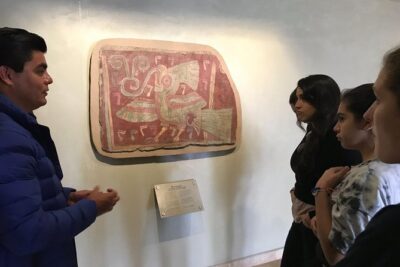
Teotihuacan pyramids morning or afternoon without tourist traps
Read our review →
Teotihuacan Early Access Guided Tour with optional Lunch
Read our review →
Balloon flight + pick up in CDMX + Breakfast in Cave + Pyramids
Read our review →
Balloon Flight + Cave Breakfast + Pick Up from CDMX or We Fly
Read our review →
Teotihuacan, Tlatelolco & Guadalupe Shrine Tour
Read our review →Browse the lists this tour appears in